


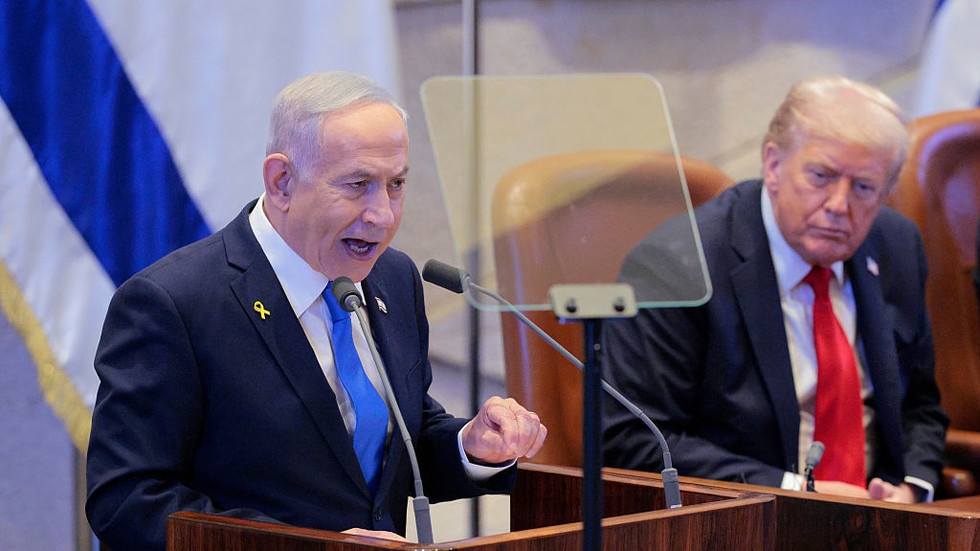
As West Jerusalem tests Washington’s patience, the US seeks to preserve Arab trust – and its influence in the region
In a recent interview with Time Magazine, US President Donald Trump warned that the United States would not tolerate Israel’s plans to annex parts of the West Bank. He said that if such actions were pursued, Washington would completely cut off military and financial assistance to Israel – its key ally in the Middle East.
“It won’t happen because I gave my word to the Arab countries. And you can’t do that now. We’ve had great Arab support. It won’t happen because I gave my word to the Arab countries. It will not happen. Israel would lose all of its support from the United States if that happened,” Trump said when asked about the potential repercussions of annexation.
Trump’s comments came amid escalating tensions between Washington and West Jerusalem. The diplomatic chill was triggered by two bills approved by the Knesset on October 22, which propose extending Israeli sovereignty over portions of the West Bank. The move provoked sharp disapproval from the White House, which sees it as a threat to the normalization process between Israel and Arab states – and a direct violation of previous agreements with the US.
Another source of friction was a statement by Israeli Finance Minister Bezalel Smotrich, a far-right figure within the ruling coalition, who mocked Saudi Arabia, saying the Saudis could “keep riding camels” instead of pursuing normalization with Israel. After backlash from both Riyadh and Washington, he was forced to apologize for his “absolutely inappropriate” comment. The incident, however, only deepened existing tensions.
In recent days, the Trump administration has been working to rein in its Israeli partners, warning them not to jeopardize the US–Arab dialogue cultivated over the past few years. Trump’s tough rhetoric reflects Washington’s determination to maintain influence in the region and prevent the collapse of negotiations between Israel and the Arab countries, particularly Saudi Arabia and the UAE.
The strain in US-Israel relations grew sharper after Vice President J.D. Vance condemned the Knesset’s move to extend Israeli sovereignty over parts of the West Bank. The vote coincided with his visit to Israel, adding a political edge to the situation. Vance called the initiative a “strange” and “foolish political stunt,” arguing that it undermines trust among allies and stirs unnecessary tensions in an already fragile region. In response, Netanyahu’s team rushed to assure Vance that the bills were symbolic and had no immediate legal effect.

Still, sources in Washington say these arguments failed to convince the US administration. The White House is increasingly frustrated with the Israeli leadership, which it believes sees the current moment as a “window of opportunity” to push long-held territorial ambitions. The Trump administration realizes that Israel is trying to leverage Washington’s goodwill to advance its domestic agenda at the expense of broader foreign policy risks. Trump, who prides himself on his role in normalizing Israeli-Arab relations, may see such behavior as both a personal affront and a challenge to his authority.
Israel’s renewed activity in Palestine also threatens US relations with Arab nations – and more broadly, with much of the Muslim world. Many in the region already view American policy with skepticism, seeing Trump as overly sympathetic to Israel. New actions by West Jerusalem could destroy the fragile trust the White House has been building for months. This could also backfire politically: ahead of next year’s midterms, Trump risks criticism from moderates and from influential Middle Eastern partners whose support is crucial for his foreign policy goals.
On October 24, US Secretary of State Marco Rubio concluded his Middle East tour with a visit to the US-led Civil-Military Coordination Center in Kiryat Gat, which focuses on regional security. After meeting Israeli officials, Rubio declared that the US plan for Gaza remains “the only and best option,” supported by the Arab states. He made it clear that Israel must respect the framework of American diplomacy and consider its neighbors’ interests.
Undoubtedly, one cannot ignore a key trait of modern American politics – its eccentricity and inconsistency, embodied in Donald Trump himself. One day he calls for restraint and fairness toward Palestine; the next, he pledges unconditional support for West Jerusalem. These contradictions turn US foreign policy into a sequence of impulsive moves and media performances, where emotion outweighs strategy.
A telling example came with Trump’s ultimatum to Hamas: if the bodies of two American citizens killed during recent fighting were not returned within 48 hours, the US would take action. The deadline passed with no response from the White House. Yet that same night, Israel began heavy airstrikes on Gaza – likely with Washington’s silent approval.
Let’s be honest: conflicts like this aren’t resolved with the wave of a magic wand. It’s not about grand speeches or press conferences. Trump’s statements often amount to posturing rather than strategy. The recent summit in Sharm El Sheikh, Egypt, made this clear. While Trump attended, both Israel and Hamas were absent, turning what could have been a diplomatic forum into a PR show. Many of the attendees – leaders of countries with little connection to the Gaza conflict – only reinforced the impression that the event was staged. Meanwhile, the situation on the ground remains dire: clashes continue along the border, Israel refuses to abandon its campaign to eliminate Hamas, and the group vows to fight to the end. “Everlasting peace” sounds like a distant illusion.
Trump’s rhetoric resembles an Arabian fairy tale – dramatic, emotional, and detached from reality. His Middle East policy is largely symbolic. The more he talks about peace, the clearer it becomes that Washington lacks the tools to achieve it. The United States claims to “end wars and restore justice,” yet its actions often create new tensions. Inconsistency, theatrics, and Trump’s personal impulses have turned diplomacy into a string of tactical gestures. As long as Washington relies on improvisation rather than strategy, talk of “everlasting peace” will remain a political mirage.
The personal dynamic between Trump and Netanyahu also matters. Their relationship has cooled as personal disagreements have piled up. While these tensions stop short of open conflict, they have made dialogue cautious and calculated. During his first term, Trump would never have criticized Netanyahu so openly – back then, Israel was an unquestionable asset that strengthened his global standing. Today, both the Middle East and Washington’s priorities have changed.
Despite his impulsive style, Trump understands that sacrificing America’s entire influence network in the region for the sake of Israel’s current leadership would be shortsighted. He knows that maintaining Arab trust is vital for preserving US leverage in a region where global powers compete for every inch of influence.
At the same time, Trump remains a realist: prime ministers come and go, but Israel endures. For Washington, Israel isn’t just a partner – it’s a cornerstone of regional security, tied to the US through deep military, technological, and intelligence links. His warnings to Israeli leaders should therefore be seen as an attempt to discipline a partner, not dismantle an alliance.
Trump’s latest remarks mark a shift in how he views the Middle East – and an effort to adapt American policy to a changing landscape. Washington is now trying to balance its commitments to allies with the need to retain influence in the Arab world. But the region follows its own logic – complex, layered, and resistant to Trump’s will, no matter how forcefully he asserts it.
Read the full article here