


Congress returns to session Monday and kicks off a December sprint to address expiring Affordable Care Act subsidies and prevent health insurance premium hikes for millions of Americans.
Members of both parties acknowledge success hangs on one question: Will President Donald Trump ever figure out what he wants?
Since lawmakers left town 10 days ago, the picture has only grown foggier. Early in their holiday break, Trump appeared to be on the precipice of announcing a framework to temporarily extend the Obamacare subsidies with new eligibility restrictions, only to pull back after a mountain of internal GOP criticism.
In his only comments on the matter, Trump injected more uncertainty last week, saying he doesn’t want to extend the subsidies but understands it might be necessary.
The mixed signals have left the various factions on Capitol Hill trying to figure out where Trump will ultimately come down — and how to entice the president to back their side in a thorny policy fight that could have major political consequences in next year’s midterm elections.
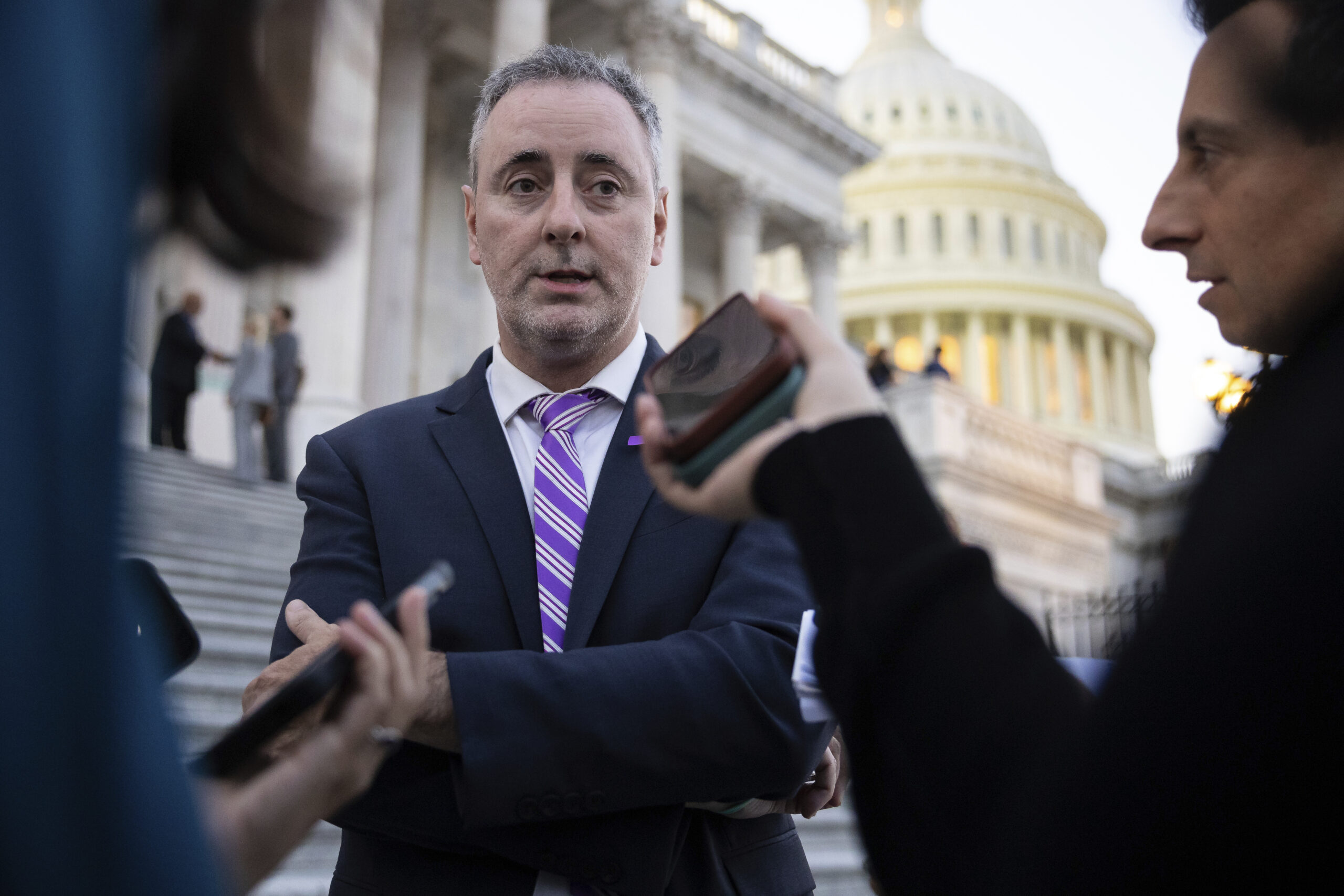
“The president has got to sign whatever we do, otherwise it’s a legislative exercise,” said Rep. Brian Fitzpatrick (R-Pa.), who is drafting what he describes as a bipartisan proposal that would largely align with the leaked White House framework.
But Fitzpatrick and other lawmakers are quickly running out of time to pin Trump down. The Senate will vote next week, as soon as Dec. 9, on a health care proposal. It’s unclear what will be in the bill, but it’s the fulfillment of a promise Majority Leader John Thune made to Democrats as part of a deal to end the 43-day government shutdown.
“The question is, how quickly can something come together?” Thune said before leaving Washington for Thanksgiving.
Or as Fitzpatrick put it, “Time is not our friend.”
Fitzpatrick and other centrists are looking to build bipartisan support for an extension of the subsidies, a priority for Democrats, with new income restrictions and other safeguards, which are a priority for Republicans. Their efforts have loose backing from the Republican Main Street Caucus, whose chair, Rep. Mike Flood of Nebraska, quickly endorsed the contours of the leaked White House framework last week.
But others in the GOP want to pursue a more radical overhaul of Obamacare, with Sens. Bill Cassidy of Louisiana and Rick Scott of Florida pitching the president on plans centered around individual spending accounts. Scott even termed his vision as “Trump Health Freedom Accounts.”
Trump has kept Congress in limbo as lawmakers try to figure out what he will support. Republicans spent much of November thinking the president was turning away from extending the tax credits, only to be blindsided by news that the White House framework would do just that.
Most House and Senate Republicans, including senior members of leadership, learned details of the tentative White House proposal — and how quickly it could be rolled out — from media reports, including POLITICO’s. Their objections prompted the White House to scuttle the rollout.
A House Republican granted anonymity to discuss internal conference thinking acknowledged that it would have been “wiser” if the Trump administration had consulted directly with Hill GOP leaders before word of the framework leaked out.
The GOP lawmaker added that Trump “cannot please everyone” with any health plan.
“Most took it as a good sign that the [White House] initially accepted a modified extension,” the lawmaker said. “Yes, a subset complained but I think they’re in the minority.”
Getting an extension of the subsidies through the House and Senate, not to mention Trump, will require navigating a political obstacle course.
For one, the framework was silent on new abortion restrictions, which are a key demand for many Republicans and a deal-break for many Democrats.
“We’re not going to allow public funds to be used for funding abortion,” Sen. Mike Rounds (R-S.D.) told reporters before Thanksgiving.
While much of the GOP backlash to Trump’s unreleased framework was about how lawmakers found out about it, there’s a significant swath of Republicans who will simply never vote to extend anything related to Obamacare, according to three GOP aides granted anonymity to discuss internal dynamics.
In addition to the Scott and Cassidy plans, a coalition of House and Senate Republicans that includes key committee chairs are working behind the scenes on a range of possible health care proposals, but there’s no guarantee the GOP will fall in line behind the plans or whether the lawmakers will even produce a bill this year.
As a fail-safe, House GOP centrists are preparing to launch a discharge petition to force a floor vote on a subsidy extension. But they are also trying to give space to the Senate to see if a bipartisan deal can be reached, according to two Republicans granted anonymity to discuss the talks.
Some lawmakers are already looking at Jan. 30, the next government funding deadline, as the real cutoff for a health care deal, even though the credits would have expired by then. And some hard-liners want GOP leaders to embrace a party-line approach amid widespread skepticism among their colleagues that’s even doable.
Senate Finance Chair Mike Crapo (R-Idaho), whose committee shares oversight of the ACA, said he is “working to try to find a pathway to get some bipartisan solution” — not a partisan, filibuster-skirting bill Republicans could pursue under the budget reconciliation process.
“There are a lot of things going on,” he said. Crapo added that even if the promised Senate vote fails, “We will need to be continuing to work … with our colleagues on both sides of the aisle to try to find some broader health care solutions.”
Democrats were initially buoyed by news that Trump was preparing to endorse an extension of the subsidies, despite the eligibility restrictions, believing that it was a good sign that he was even thinking about it. But that optimism faded after witnessing the Republican backlash.
They have their own internal divisions over what their own strategy should be as the clock ticks. Senate Democrats, as part of the agreement with Thune, will get to decide what proposal they vote on. But they haven’t yet come to consensus and are expected to use a Tuesday caucus lunch to discuss their options.
A group of Democrats, including Sen. Jeanne Shaheen of New Hampshire and Rep. Tom Suozzi of New York, has been in close contact with Republican lawmakers including Fitzpatrick and Sen. Lisa Murkowski of Alaska about what could get bipartisan support. But others, such as independent Sen. Bernie Sanders of Vermont, want Democrats to instead embrace a sweeping health care plan that would have no chance of winning GOP votes but would give them a rallying point heading into the midterm elections.
That divide has haunted congressional Democrats since January as they’ve repeatedly struggled to unify at key moments. There’s also widespread skepticism that Republicans will ever agree to any health care plan that isn’t fully endorsed by Trump.
“That’s the trouble today: You can have good-faith negotiations with Republicans, but it just doesn’t matter until Donald Trump weighs in,” said Sen. Chris Murphy (D-Conn.). “The pollsters have obviously told them that they are going to get their clocks cleaned if they don’t fix the health care mess they created. They may hate the ACA and Barack Obama so much they are willing to lose an election.”
Nicholas Wu contributed to this report.
Read the full article here