

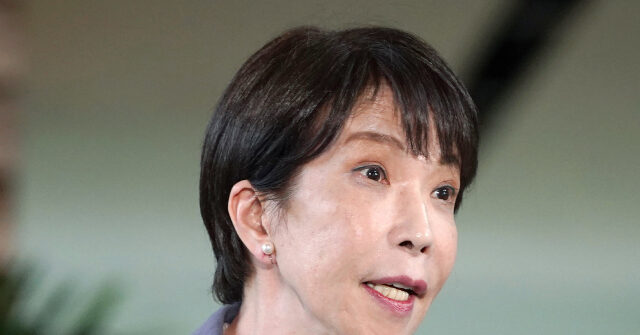
China’s state-run Global Times on Monday published a bizarrely overheated editorial criticizing Japanese Prime Minister Takaichi Sanae for refusing to kill a cockroach.
Among other things, the Chinese communist paper accused Takaichi of hypocrisy for approving weapons exports after sparing the insect’s life.
The anecdote that bugged Chinese propagandists was disclosed by Takaichi in a social media post on Friday. In the course of answering questions about her life in the prime minister’s official residence, she mentioned that she was “shocked when, one day, a cockroach suddenly scurried past my feet.”
Takaichi said she cannot bring herself to kill anything, including insects, because she was inspired to consider reincarnation and the interconnectedness of life by her childhood love for the manga series Phoenix by Tezuka Osamu. Tezuka regarded the story of the mythical immortal bird as his life’s work, begun in 1954, but unfortunately he died in 1989 before completing it.
“For the cockroach that ran through the official residence, I thought things like, ‘Maybe this life is also part of that long cycle of reincarnation,’” Takaichi mused in her social media post, “and for a while, I endured it, hoping it would somehow leave on its own – but when I told my secretaries about it, they were appalled.”
Takaichi’s secretaries proved to be much less reluctant to kill cockroaches than the prime minister was. She concluded by saying she “felt relieved, but also a little lonely, or maybe sad” after the cockroaches were eliminated from her residence.
Takaichi’s critics in Japan used her cockroach anecdote to slam the prime minister for everything from supposedly valuing insects more than human life to being frivolous and unserious for basing so much of her personal philosophy on a childhood comic book.
The Global Times gleefully piled on, and then some, capitalizing on the online cockroach controversy to vent Beijing’s spleen at Takaichi.
The Chinese Communist Party has loathed Takaichi since the moment she became prime minister because she said Japan would regard a Chinese invasion of Taiwan as a threat to its own security. A Chinese diplomat working in Japan threatened to behead Takaichi for her remarks about Taiwan.
“The intense public backlash over Takaichi’s remarks is not about whether she is genuinely squeamish about killing cockroaches,” the Global Times wrote. “Rather, it stems from her attempt to curate a benevolent personal image online to build momentum ahead of the upcoming cabinet reshuffle and personnel adjustments in September.”
“While showing reluctance to kill a cockroach, Takaichi is actively opening the floodgates for lethal weapon exports,” the editorial hissed, referring to Takaichi’s April 2026 revisions to Japan’s guidelines for transferring military equipment.
“The Japanese government can argue that arms exports are subject to strict legal reviews and aimed at deterrence rather than provocation,” the Global Times said, “but if a national leader relies on a ‘reverence for life’ to shape her public image, she must explain why Japan’s prudent arms export controls were dismantled under her watch,”
The lengthy editorial screed also worked in some shots at Takaichi for worrying about cockroaches instead of Japan’s rising cost of living index, and even claimed the Japanese prime minister cared more about bugs than the victims of disasters like the Kumamoto earthquake, which left many local residents without air conditioning during a hot summer.
The editorial concluded:
The public relations backlash against Takaichi’s comments does not stem from a lack of humor among Japanese citizens. Rather, when a prime minister injects private morality into political communication, the public naturally applies that same ethical yardstick to judge the administration’s governance.
Behind the opportunistic hyperventilating of the Global Times lies the simple political reality that Takaichi came into office as prime minister in October 2025 with stratospheric approval ratings and considerable star power, thanks to her status as Japan’s first female PM and her appealing, offbeat personal style.
A year later, those approval ratings have come back down to earth, and anything Takaichi does to draw attention to herself – such as ruminating on the meaning of a cockroach’s life – is likely to open the door to criticism.
Fortune pointed out on Sunday that Takaichi’s astounding personal energy and hard-driving work ethic – which she says can leave her as little as three hours a night to sleep – has gone from being a source of admiration among her constituents to becoming another angle for criticism.
Some of Takaichi’s detractors accuse her of setting a poor example for Japanese professional women and young girls by maintaining such a brutal pace at the age of 65, while others accuse her of cloistering herself at the prime minister’s residence to avoid dealing with lawmakers and the press.
Read the full article here