


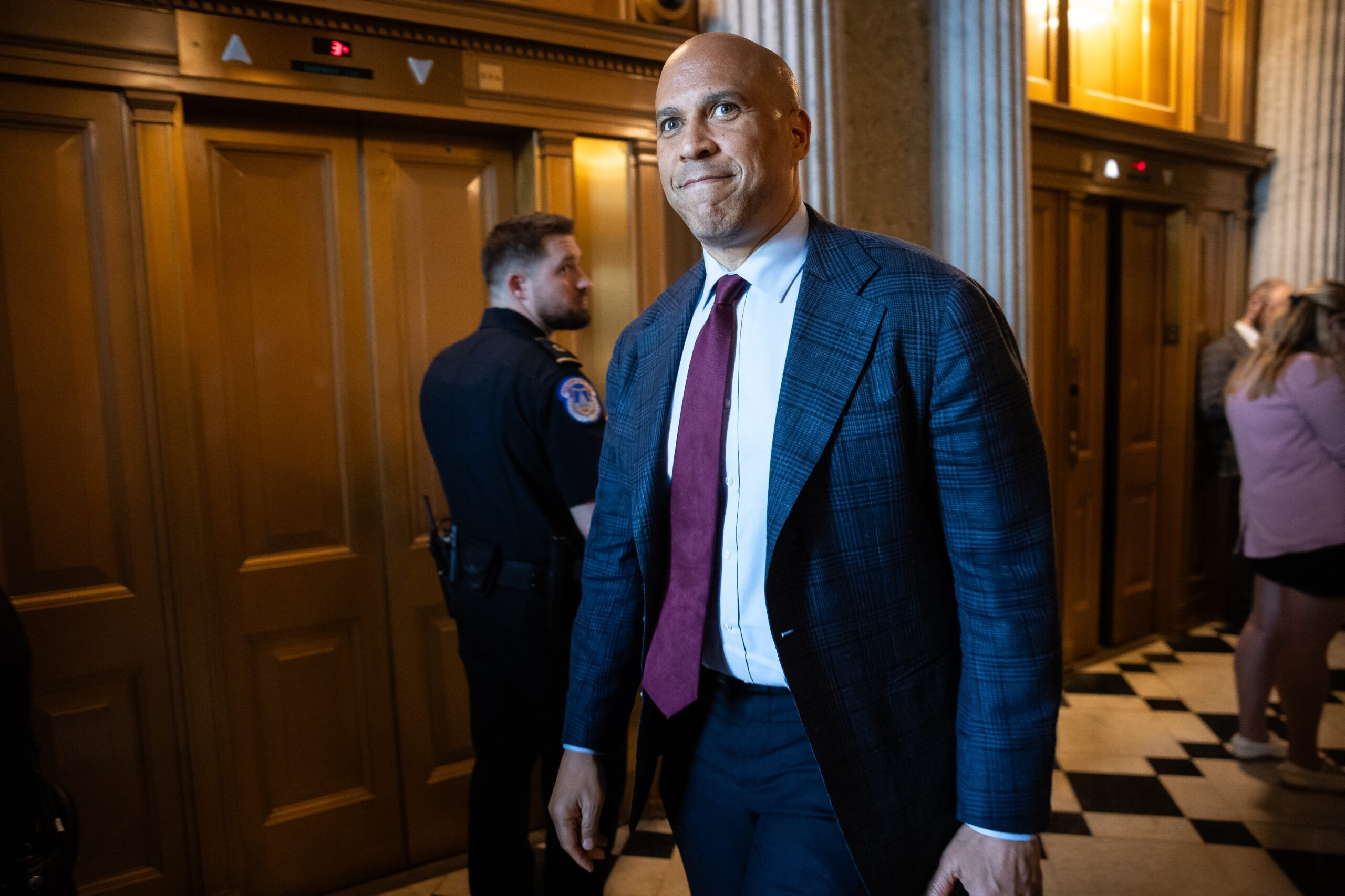
An ugly fight is brewing among Democrats about an unlikely issue: college sports regulation.
Senate passage of a White House-endorsed bill to overhaul college athletic rules could happen as soon as Thursday. But despite the bill’s bipartisan backing, Black Democratic lawmakers are warning their own party that supporting the measure risks exploiting Black athletes.
The debate spotlights a painful party divide that could also alienate a key demographic in Democrats’ voter base just weeks before the midterms.
“It is stunning to me,” Sen. Cory Booker told POLITICO Wednesday, pointing out about half of Senate Democrats have voted to advance the measure thus far.
“I am disappointed in a way I’ve never felt before in the United States Senate with my own caucus,” he said, referring to Democrats. “My caucus, some members of my caucus, are about to take away the rights for athletes to sue.”
Booker is backed by the Congressional Black Caucus, which for months has also pleaded with senators not to pass the Protect College Sports Act they argue strips the rights of student athletes while protecting the NCAA and its coaches. The group helped sink a similar measure in the House earlier this year. CBC member and House Minority Leader Hakeem Jeffries reiterated the group’s opposition to the legislation Wednesday.
“This is insane to me, especially because the revenue sports are disproportionately African American,” he said. “When has the Democratic Party stood up for taking away rights from disadvantaged minorities? When have we ever done what we’re about to do right now? It is wrong. It is unjust, and it will disproportionately affect African Americans.”
While a host of student and college groups, including the Thurgood Marshall College Fund and the United Negro College Fund, support the bill, both the AFL-CIO and the NAACP say they oppose it for denying student athletes labor protections and unduly benefiting athletic conferences.
Another vocal opponent of the measure, Sen. Chris Murphy, called the divide “a unique moment for Democrats.”
Top Commerce Democrat and bill sponsor Maria Cantwell has said the legislation attempts to restore order to college sports, where major football programs can consume resources that would have otherwise gone to women’s and Olympic sports.
Cantwell, in an interview, countered Booker’s concerns by saying the “historic bill … recognizes for the first time in federal law that student athletes get a percentage of the revenue, ticket sales, media rights, media sales, and sponsorship. Historic.”
A Democratic aide, who is supportive of the bill and was granted anonymity to speak candidly, referenced the number of student athletes who stand to benefit from the measure, “There’s nothing progressive about blocking new protections for 550,000 people just so you can strengthen the hand of the highest-earning 1% of them.”
Booker said without major changes, he would continue the fight if the Senate’s bill makes it to the House.
What else we’re watching:
— THUNE PUTS ODDS ON STAYING IN SESSION: Majority Leader John Thune said Wednesday night it’s more likely than not that senators remain in session next week, but the plan is “still to be determined.” “Just don’t make any plans yet. I would say right now still odds are we plan on being here next week, and I’d say that still looks like the case, but if that changes I’ll let you know,” Thune said. Senate Republicans are discussing whether to vote on a data center bill next week being championed by one of their most vulnerable incumbents, Sen. Jon Husted, according to two GOP senators granted anonymity to disclose private talks. They’re also waiting to see if a long-sought deal to overhaul the energy permitting process comes together, which Thune has indicated would trigger members staying in town next week.
— INSIDE THE FIERCE HOUSE GOP WAIVER FIGHT: A behind-the-scenes battle is playing out over several powerful House Republicans who don’t want to be forced out of their posts. House Republicans’ decades old three-term limit for panel leaders has grown less strict in recent years. Some want a crackdown, saying the turnover is needed to promote fresh ideas and leadership in the ranks. Three of the 20 sitting House chairs have signaled interest in applying for a waiver. If each follows through, it would be the first time so many exceptions have been sought at once.
Jordain Carney and Mia McCarthy contributed to this report.
Read the full article here