




Cuban Deputy Foreign Minister Carlos Fernandez de Cossio Dominguez on Friday sought to convince Canada to prop up the fading Communist regime in Havana, arguing that Canadian companies could lose billions from nullified contracts if the regime falls.
De Cossio praised Cuba’s “important trade relations” with Canada and the hefty investments Canadian companies have made in Cuba.
“Despite the fact that we do not have a coincidence in all the political and international positions, we have always known how to solve our problems, our differences, and work with them based on dialogue and based on mutual respect,” he said.
The Cuban official blamed America’s energy blockade for starving Cuba of the fuel it needs for “everything from energy for hospitals, for homes, for education, for industry, for the production of food, for agriculture, for transportation, for medical care, for the livelihoods of people.”
De Cossio claimed Cuba’s infamous nationwide blackouts are “not a result of Cuban inefficiency, not as the result of Cuba mismanagement of the electrical grid, but because the United States is depriving Cuba of fuel.”
De Cossio, formerly Cuba’s ambassador to Canada, was responding to Ottawa warning Canadian firms away from making new investments in Cuba last week, due to the island’s “ongoing liquidity crisis” and the collapse of its power grid.
“While opportunities exist, Cuba is not a suitable market for first-time exporters or companies seeking quick sales. In a context marked by a deep economic crisis, the main challenge for foreign companies is securing payment,” the Canadian trade commission advised.
The Canadian statement went out of its way to praise Cuba’s long history of doing business with Canada, and it applauded the Communist police state for making moves toward privatization over the past few years, but noted that “imports must still be handled through state-run specialized foreign trade companies” which often demand lengthy payment terms for their letters of credit.
Cuba’s private companies, on the other hand, usually pay in full — but they often employ “intermediaries or relatives abroad, which can raise transparency and compliance concerns.”
“Over the medium to long term, Cuba may offer opportunities for experienced investors willing to manage higher risks in exchange for long-term potential, provided reliable offshore payment mechanisms can be secured,” the Canadian bulletin said.
At the beginning of 2026, Canada effectively ended its program for helping Canadian businesses get established in Cuba due to “a convergence of rising financial risk and deteriorating economic conditions.”
Pro-regime activists in Canada told the Global News they were disappointed in Ottawa for not doing enough to prop up the tottering Communist tyranny in Havana.
“For three months, we’ve been asking the Canadian government to do something to help the crisis in Cuba,” said Julio Fonseca of the Canadian Network on Cuba.
“One of the first things it should do is to denounce the injustice of the blockade on the Cuban people for more than 65 years, which is nothing else but collective punishment on an innocent population with the goal of toppling its constitutional government,” Fonseca advised.
The Canadian foreign ministry said last week that it would consider providing “financial support to experienced organizations” to alleviate civilian suffering in Cuba, including agencies of the United Nations such as UNICEF and the World Food Program (WFP). Such measures fall far short of the direct support for the regime desired by its apologists.
Any meaningful support would have to include a supply of fuel to offset what Cuba lost from Venezuela after the fall of narco-terrorist dictator Nicolás Maduro. The Russians may, or may not, be attempting to challenge President Donald Trump’s blockade with a Hong Kong-flagged tanker full of fuel for Cuba, although on Friday the tanker broke off its approach to Cuba and headed for Trinidad and Tobago.
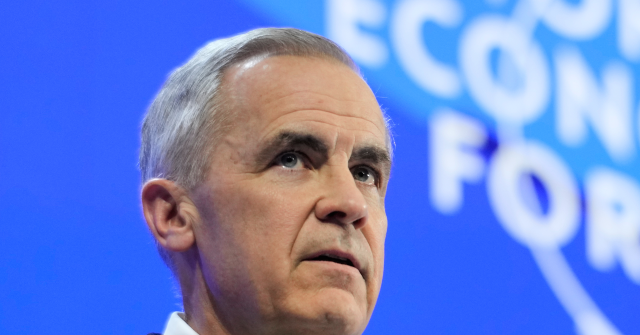
Ottawa’s Carleton University worried that the Cuba situation was a faceplant for Canadian Prime Minister Mark Carney’s call for the “middle powers” of the world to unite in a post-American world order at the World Economic Forum (WEF) in Davos, Switzerland in January.
“The Davos speech set high expectations. These are now, however, fading as Carney’s government wavers in sending robust aid to the people of Cuba and in denouncing the most recent unlawful coercive measures imposed by the U.S.,” the Carleton article said mournfully, noting that Canada lacks the power and money to offer the kind of rescue desired by supporters of Cuban Communism, and that for all of his bluster, Carney is afraid to provoke “American retaliation.”
Read the full article here


