


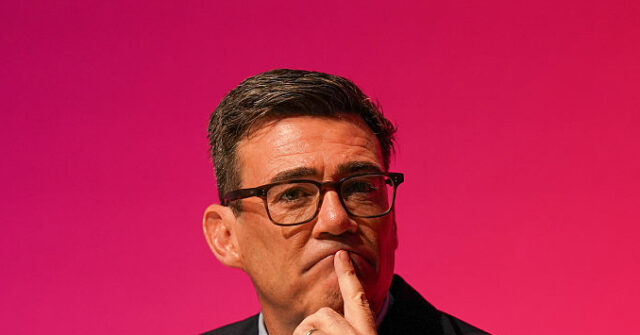
Britain’s Labour government is driving away voters by having such a censorious approach to freedom of speech, the Liberty campaigning group says their study shows.
The Labour approach to cracking down on protest “hate marches” could cost it voters at the next General Election, the 1934-founded National Council for Civil Liberties (‘Liberty’) has warned. Citing polling for the campaign group by More in Common, Liberty said a considerable majority of 58 per cent of voters said a “political party’s position on free speech” would affect how they vote, with 27 per cent of respondents said it would drive their decision “strongly”.
While Britain has recently undergone a change of government from one Labour leader to another, freedom of speech is one area that voters seem very inclined away from giving new Prime Minister Andy Burnham the benefit of the doubt on, with the vast majority saying he is no better than his censorious predecessor Sir Keir Starmer.
While freedom of speech abuses impacts a wide cross section of British society, the Liberty pitch to Labour to consider going easier on censorship is very much pitched in terms of benefitting its own would-be voters, rather than having any consideration of freedom of speech for those with dissenting politics. To that end, the examples used in the research all centre on crackdowns on hard-left pro-Palestine protests in recent years, including the declaration of the Palestine Action direct action group a terrorist organisation.
The Liberty research noted 52 per cent said politicians calling Palestine Action protests “hate marches” was bad for freedom of speech, while 43 per cent said arresting people for holding signs signifying support for the group was bad, too.
Curiously, the public was most split on whether simply banning the marches altogether was actually wrong. A third said it was good for freedom of speech to ban the protests, a third said it was bad, and the final third couldn’t answer either way.
Making an appeal to the Labour government for freedom of speech — or freedom for pro-Palestine activists, at least — the director of Liberty said in a statement:
The ability to express ourselves freely makes us all who we are, and free speech is of vital importance to the British public. These findings should serve as a stark wake-up call for the Government which has lost the public’s confidence on protecting this fundamental human right.
We’re fortunate to live in a nation shaped by many identities and perspectives, which means differences of opinion and sometimes uncomfortable views that could upset or offend others. This requires the Government to adopt a consistent, non-partisan approach to safeguard everyone’s right to speak freely while protecting people from discrimination.
The Prime Minister must show urgent leadership on an issue that is dividing the country, and change course away from heavier restrictions and towards a principled defence of free speech.
The director of Britain’s Free Speech Union, which campaigns with focus on these issues and boasts of defending censorship victims across the political spectrum, spoke around these issues last week.
In notes accompanying a speech given by Union founder Lord Young last week, it stated that “Between 1 January 2021 and 31 December 2025, 62,199 people were arrested in the UK on suspicion of committing just three communications offences” and observed that other counts put the figure even higher.
Lord Young said:
The British state also has non-legislative ways of monitoring and suppressing content it disapproves of. Andy Burnham used his first speech to the United Nations General Assembly this week to announce the creation of a National Centre for Information Defence. Emily Thornberry, chair of the Foreign Affairs Select Committee, welcomed it: “A British counter-disinformation centre is long overdue, and very welcome.”
… These surveillance agencies are always sold as a response to threats from hostile foreign states such as Russia, China and Iran. But they aren’t confined to monitoring foreign threats: more than half of them monitor and in some cases flag domestic content. The new centre was sold in the same way. Burnham justified it by citing Russian mis- and disinformation, but in the next breath he tied it to “community cohesion” and preventing a “distorted and untrue narrative about Britain”. In other words, it’s there to stop British people saying things about Britain that the Government would rather they didn’t.
Read the full article here