


After years of frost, the UK is choosing engagement over ideological crusades and geopolitical brinkmanship
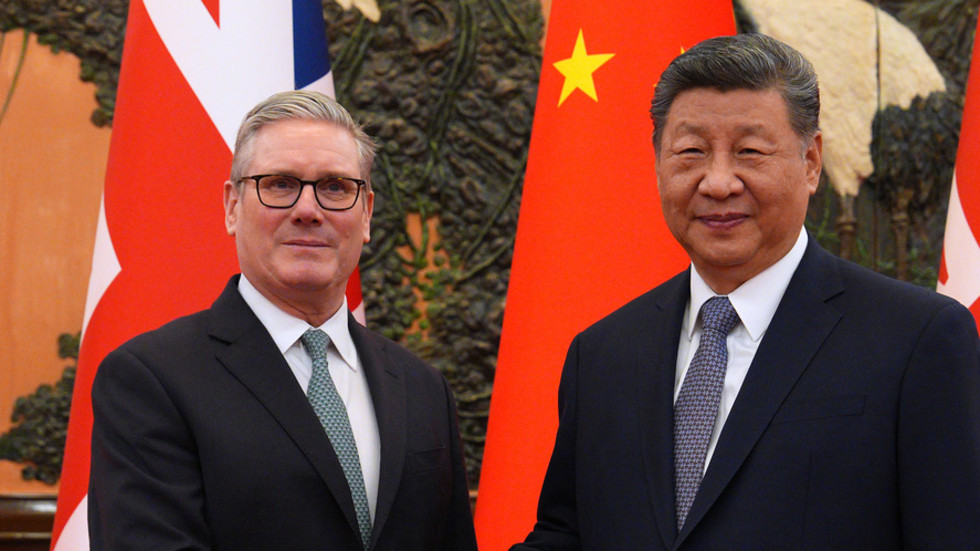
When Keir Starmer arrived in Beijing for a visit in late January, he did more than revive a diplomatic ritual. He stepped into a rapidly reshaping global order in which Western capitals, unsettled by geopolitical volatility and economic fragmentation, are recalibrating their China strategies in real time.
This was the first visit by a British prime minister in eight years, but it was hardly an isolated event. Over the past two months alone, leaders from France, South Korea, Ireland, Canada and Finland have made their way to Beijing. German Chancellor Friedrich Merz is due to visit later in February.
The clustering of these visits is not coincidental. It reflects a growing recognition among Western governments that the era of rhetorical confrontation without meaningful engagement is economically unsustainable – and strategically incoherent. For Britain, Starmer’s visit marks a decisive shift away from the ambivalence and paralysis that have defined the last few years. It also suggests that London, like many of its peers, is edging toward a more transactional and interest-driven relationship with Beijing, even as political mistrust persists.
Starmer arrived with a delegation of roughly 60 senior figures from British business and cultural institutions, a signal that the visit was as much about commerce as diplomacy. Since taking office in July 2024, his government has been explicit about its desire to “reset” relations with China and rebuild trade ties after years of strain. The emphasis, repeatedly described by British officials as “pragmatic,” is telling. It implies engagement without illusion: closer economic cooperation paired with guarded distance on politics and national security.
This balancing act is now a common refrain in the Western capitals. As global geopolitical tensions intensify – exacerbated by military conflicts, sanctions regimes, supply-chain shocks, and unpredictable America – China has reemerged as both an indispensable partner and a systemic rival. Britain’s recalibration mirrors a broader European and transatlantic trend: managing exposure rather than pursuing decoupling, and hedging risk instead of attempting containment.

The economic logic underpinning Starmer’s trip is difficult to ignore. In 2024, China was the UK’s seventh-largest export destination and its second-largest source of goods imports. While bilateral trade has grown since the pandemic, year-on-year flows have been volatile, reflecting both macroeconomic shocks and political uncertainty. More striking, however, is the trajectory of investment. UK foreign direct investment stock in China reached $21.8 billion in 2024, an increase of $9.6 billion from the previous year – an upward swing that suggests British firms are quietly deepening their China exposure even as political rhetoric hardened at home.
Downing Street was keen to emphasize the visit’s concrete outcomes. According to the government, the business delegation helped secure “billions of pounds” in export and investment deals, including around $3 billion in confirmed exports, $3.2 billion in expanded market access over five years, and hundreds of millions of dollars in new Chinese investment into the UK. For a services-heavy economy like Britain’s, which is currently exporting over $15 billion in services to China annually, these gains matter. While no free trade agreement on services exists, the two sides agreed to launch a feasibility study on a possible deal, a modest step but one that hints at longer-term ambitions.
Symbolism, too, played its part. China announced visa-free travel for British citizens for stays of up to 30 days, a move likely to boost business travel, tourism, and people-to-people exchanges. Beijing also agreed to cut import duties on Scottish whisky, a politically astute gesture toward one of the UK’s most iconic exports. These measures are small in macroeconomic terms but significant in tone, reinforcing the sense that both sides are interested in stabilizing – and cautiously expanding – their relationship.
Corporate announcements added further weight. AstraZeneca revealed plans to invest $20.6 billion in expanding its research and development footprint in China, underscoring the country’s continuing appeal as a hub for life sciences innovation. Other UK firms announced new joint ventures and expansions, reflecting long-standing business demands for clearer rules, better market access, and more predictable regulatory engagement. Those demands had been voiced repeatedly since 2018, when formal UK-China economic dialogue effectively stalled. The resumption of an economic summit and trade talks last year signaled a thaw; Starmer’s visit appears to have consolidated it.
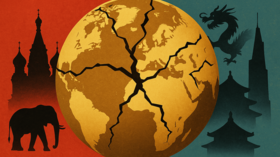
The reset, however, is not occurring in a vacuum. Britain has spent recent years fortifying its economic security architecture, and those guardrails remain firmly in place. The National Security and Investment Act of 2021 significantly strengthened the government’s ability to scrutinize and block high-risk foreign investments. Subsequent strategies targeting supply-chain resilience, critical minerals, and priority science and technology sectors reflect a consensus in Westminster that openness must be conditional. Starmer’s message in Beijing, therefore, was not one of naïve engagement but of calibrated openness within defined limits.
President Xi Jinping’s public remarks captured this duality. In what Chinese readouts described as a “changing and chaotic world,” Xi argued that China and the UK – as permanent members of the UN Security Council and major economies – had a shared responsibility to strengthen dialogue, safeguard global stability, and deliver growth and prosperity. It was a familiar formulation, but one that resonated with Starmer’s own framing: cooperation where possible, caution where necessary.
The two sides also signed a series of memorandums of understanding aimed at improving cooperation in specific sectors, including product standards, health, sports industries, technical education, food safety, and animal and plant quarantines. Intelligence sharing on organized crime and illegal immigration was another area of agreement, highlighting a willingness to collaborate on practical security challenges even as strategic distrust endures.
Not all tensions were swept aside. Human rights concerns, while less prominent during the visit, have not disappeared either. Notably, Beijing lifted sanctions imposed in 2021 on six British members of parliament – a gesture widely interpreted as an attempt to clear political underbrush ahead of renewed engagement.
Starmer is under no illusions about the fragility of the détente. But his calculation appears straightforward: disengagement carries its own risks, and inertia is no longer a viable option. With the global trading system under strain, supply chains vulnerable to shock, and the US increasingly unpredictable, Britain is seeking to diversify its economic relationships while avoiding strategic overexposure. China, for all its complications, is central to that effort.
There is also a longer game in play. Starmer has expressed hope that President Xi will visit the UK when it hosts the G20 summit in 2027 – a symbolic milestone that would have been unthinkable only a few years ago. Whether that visit materializes will depend on forces far beyond bilateral goodwill. But the invitation itself underscores a reality that is becoming harder to deny.
Britain is now rolling, perhaps inevitably, toward deeper engagement with China. The process is incremental, hedged, and fraught with contradictions – but it is also increasingly difficult to reverse. Starmer’s Beijing trip did not resolve the tensions at the heart of the relationship. What it did do was acknowledge them and then move forward anyway. In today’s fractured global landscape, that may be the most realistic option London has left.
Read the full article here