




Bye, Bye Tariff-Inflation Fears
The December Consumer Price Index (CPI), released Tuesday by the Bureau of Labor Statistics, delivers a verdict on the great tariff inflation panic of 2025: the predicted price surge mostly didn’t happen, and it is already over.
Commodities less food and energy—the category most directly exposed to tariffs on imported manufactured goods—were flat in December. Zero percent. New vehicles, flat. Used cars, down 1.1 percent. Appliances, down 4.3 percent for the month. These are precisely the categories where tariff critics predicted we’d see surging prices as importers passed costs through to American consumers.
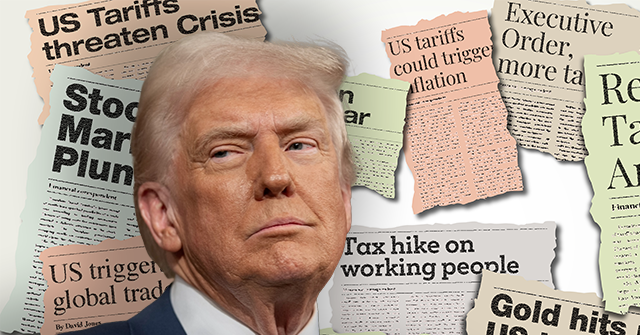
(Photo: Daniel Torok/Official White House Photo; iStock/Getty Images; BNN)
For the full year, core goods inflation ran at just 1.4 percent. Apparel, supposedly vulnerable to tariffs because so much of our clothing is imported, gained only 0.6 percent for the entire year.
Meanwhile, the actual drivers of America’s 2.7 percent annual inflation rate tell a completely different story. Shelter—35.5 percent of the overall index—rose 3.2 percent annually. Services overall climbed 3.3 percent. Food away from home jumped 4.1 percent. Recreation services surged 4.0 percent annually, with December alone posting the largest one-month increase since the index began in 1993. We’re not importing our recreation services.
The pattern is unmistakable. Services, which comprise 64 percent of the CPI, rose 3.3 percent year-over-year. Commodities, just 36 percent of the index, gained only 1.7 percent. This is the opposite of what tariff alarmists predicted throughout 2025.
If tariffs were forcing widespread price increases, goods prices should be accelerating while services inflation gradually cooled. Instead, we’re seeing goods disinflation or outright deflation while services inflation persists from entirely unrelated causes.
The Much Talked About Tariff Price Hikes Never Really Happened
The data confirms what we’ve been documenting throughout the year: businesses absorbed tariff costs through margin compression and pushing tariff costs back on suppliers rather than passing them to consumers. Import-competing domestic manufacturers, rather than exploiting tariffs as cover for price increases, faced intensified competitive pressure as foreign suppliers cut prices to maintain market share.
This shouldn’t surprise anyone familiar with how markets actually work. Companies operate in competitive environments. Most can’t simply add their cost increases to the sticker price and assume customers will pay. They adjust. They find efficiencies. They squeeze margins. They renegotiate with suppliers. As price theory has long ago taught us, it’s not the retail price that adjusts to the cost of inputs but the cost of inputs that adjusts to retail prices.
The December CPI is particularly revealing because it captures the full cycle of 2025’s tariff implementation. By year’s end, if pass-through were coming, it would have arrived. Instead, core goods prices are essentially flat and running well below the Federal Reserve’s 2 percent inflation target.
The report also clears up any lingering worries that the shutdown may have distorted the November report by artificially depressing inflation. It’s now clear that inflation is sustainably on a downward path.
This matters beyond settling a policy debate. Throughout 2025, establishment economists insisted that tariffs would reignite inflation, forcing the Federal Reserve to maintain elevated interest rates and potentially triggering recession. The financial press and the D.C. think tanks insisted we were headed for an explosion of inflation. Studies by economists attached to anti-tariff institutions projected significant price increases across consumer goods categories.
None of that materialized. The inflation we do have—concentrated in services—has nothing to do with trade policy. Instead, it is still largely driven by the mistakes of the Fed during the Biden administration and the reckless deficit spending of the Democrats in the post-pandemic period.
The December CPI data is clear: the tariff inflation crisis was an elite panic disconnected from economic reality.
Read the full article here


