




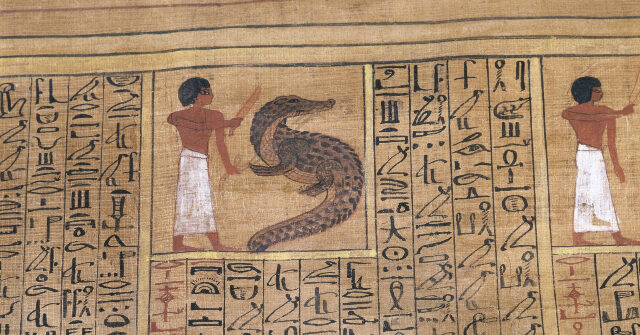
Archaeologists in Egypt have discovered rare papyrus scrolls approximately 3,000 years old, according to the Egyptian Ministry of Tourism and Antiques.
The eight papyrus scrolls have been found along a “cache of colorful coffins of Amun chanters,” dating back to the Third Intermediate Period, which ranged from 1070 B.C. to 664 B.C. The archaeologists discovered the scrolls during an exploration in the Qurna area of Luxor’s West Bank, by the tomb of Seneb.
Amun chanters were singers dedicated to the god Amun. “The most common title is ‘Chanter(s) of Amun,’ opening new avenues for studying the class of chanters and singers during that period,” the release continued.
“They [the scrolls] vary in size and are considered a valuable source of information, with the world awaiting the results following their restoration and translation,” a press release stated.
The coffins were found stacked in a rock-carved funerary chamber.
Ancient Egyptians saved space by “arranging the coffins in 10 horizontal rows and separating the lids from the boxes to increase the chamber’s capacity.”
“The mission’s restoration team carried out urgent conservation work, including treatment of deteriorating wood fibers and weakened painted plaster layer, [as well as] careful mechanical cleaning to remove deposits without affecting the vibrant colors,” the release stated, noting that the wood was in dire need of preservation work.
Sherif Fathy, the minister of Tourism and Antiquities, said that the discovery “represents a significant addition to Egypt’s record of distinguished archaeological finds.”
“It reflects the full and ongoing support provided by the Egyptian state for archaeological research, as part of a comprehensive strategy to preserve cultural heritage and highlight its civilizational and human value,” he added.
Read the full article here


