


If Washington proves willing to sacrifice cohesion for unilateral escalation, its allies will drift away just to protect themselves
What is unfolding around Iran is not only another Middle Eastern war. It is also a profound test of the political, strategic, and moral cohesion of the Atlantic world.
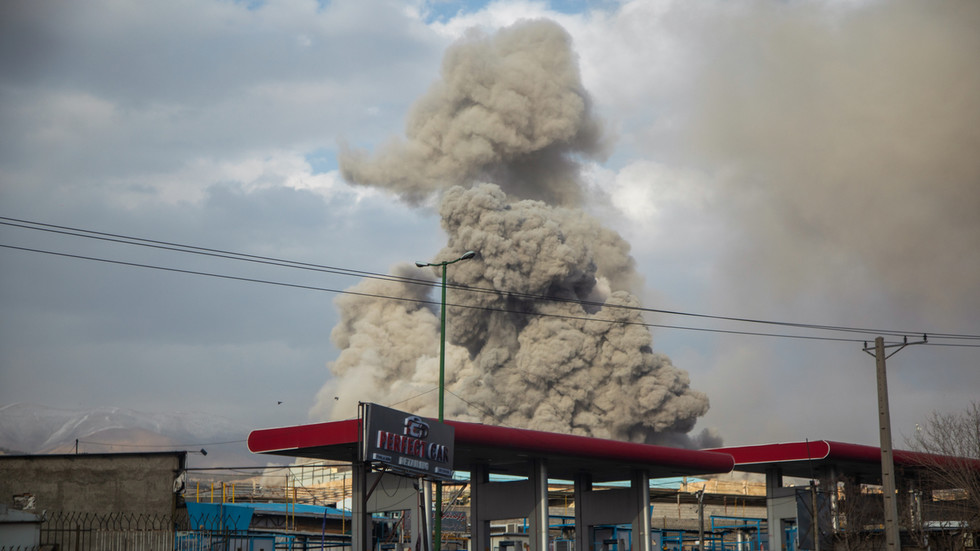
The widening confrontation driven by the military actions of the US and Israel against Iran is exposing something far larger than a regional crisis. It is revealing the accelerated decomposition of Western unity at the very moment when the old architecture of unchallenged American hegemony is visibly fading. In that sense, the strikes on Iran are not simply an act of escalation in one theater. They are a historical stress test for NATO itself, for the credibility of Washington’s leadership, and for the entire Western claim to strategic coherence in an age of global turbulence.
For decades, the Atlantic alliance rested on a simple assumption. The US would lead, Europe would follow, and even when there were frictions, the structure would hold because all parties believed that the preservation of American primacy was identical with the preservation of their own security. That formula is breaking down in real time. The war around Iran has made this impossible to ignore. Western European leaders are no longer merely expressing discreet discomfort or ritual concern. They are publicly and demonstratively refusing to be drawn into an American military adventure whose goals they do not understand, whose consequences they do not control, and whose costs they know they will be forced to absorb. Germany, France, the UK, and Spain have all rejected direct involvement in the US-Israeli military campaign against Iran, while leading European officials stated in essence that this was not their war, that Europe had not been properly consulted, and that Washington had not offered any convincing plan for success.
That matters because the dispute is not about tactics alone. It goes to the heart of alliance politics. If Washington can ignite a conflict with enormous global implications and then demand support from its allies after the fact, while offering neither consultation nor a credible endgame, then NATO ceases to function as an alliance of coordinated strategy and begins to resemble a system of imperial requisition. The Europeans understand this. Their refusal is a message. It says that the US increasingly treats its allies not as sovereign partners but as instruments to be mobilized after decisions have already been made in Washington and West Jerusalem. It says that when the strategic center becomes erratic, unilateral, and ready to externalize risk, the periphery begins to detach.
Donald Trump’s own rhetoric has thrown this reality into even sharper relief. When NATO members declined to support the American effort around Iran and refused to commit naval forces to the Strait of Hormuz, Trump did not respond as the steward of an alliance. He responded as a resentful patron whose clients had failed to obey. Media reports quoted him calling NATO’s refusal a very foolish mistake and making it clear that the US would remember that everyone agreed in words but did not want to help in deeds. In the same political atmosphere, he also signaled that because of American military power, the US no longer needed or desired NATO assistance and, in essence, never truly had. Washington is increasingly willing to threaten, humiliate, or discard its own allies whenever they cease to be tactically useful.
This is why the current split is so serious. It is not only Europe resisting a war. It is Europe being forced to confront the possibility that the US would rather risk the cohesion of NATO than restrain its own escalation. In other words, Washington appears increasingly ready to sacrifice not only the comfort and stability of its allies, but potentially the political substance of the alliance itself, if preserving American freedom of action requires it. That is what imperial decline often looks like. A hegemon in ascent builds institutions because institutions extend its reach. A hegemon in decay empties those same institutions of meaning because they begin to constrain its impulses. NATO then becomes less a community of mutual defense than a stage on which American power demands applause while reserving the right to act alone.
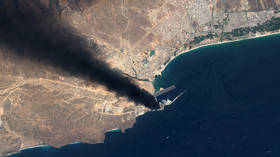
The economic consequences of this course are as grave as the diplomatic ones. The escalation in the Middle East is already hitting energy markets with brutal force. Crude prices rise sharply as Iran threatens additional strikes on energy facilities across the region. The Strait of Hormuz, one of the most important arteries in global oil trade, is under growing pressure, with around one fifth of global oil and LNG trade exposed to disruption through that corridor. That is a blow aimed at the circulatory system of the world economy.
The vulnerability of the Europeans is not reducible to a simplistic map of direct oil imports alone. In strictly physical terms, the EU is less dependent on the Gulf than many Asian economies, yet it remains deeply exposed to a Middle Eastern war through prices, shipping routes, industrial feedstocks, and gas market contagion. Recent European analysis has noted that only about 6 percent of EU crude oil imports came directly from the Middle East in 2025, while other suppliers such as Norway remained far more important in volumetric terms. Yet this does not remove the strategic danger, because Europe does not live outside the global pricing system. Even if a barrel is bought from Norway, the US, or elsewhere, the EU still pays for a Gulf shock through world benchmarks, shipping costs, insurance premiums, and competition for alternative cargoes. The gas dimension is equally important. European Commission data showed that LNG accounted for 45 percent of EU gas imports in 2025. In the second quarter of that year, the US supplied 58 percent of EU LNG, Russia 14 percent, and Qatar 8 percent. In narrow supplier terms, that does not make Europe primarily dependent on Gulf gas. In strategic terms, however, it makes the continent acutely vulnerable to any crisis that tightens the global LNG market, reroutes shipments, or raises the marginal cost of imported gas across the board.
Türkiye is even more exposed because it sits at the intersection of energy transit, regional trade, and food processing. Recent energy analysis showed that Türkiye imports about 99 percent of its natural gas needs, while LNG accounted for 44 percent of Turkish gas imports in the first quarter of 2025. Turkish gas purchases have historically included substantial volumes from Russia, Iran, and Azerbaijan, alongside LNG from suppliers such as Qatar and Algeria. On the oil side, Ankara has also worked to diversify toward Iraqi and Kazakh crude, while the Kirkuk to Ceyhan route regained fresh importance during the current disruption. Türkiye is therefore not a distant observer of this crisis. It is one of the countries through which the energy and logistics consequences of a broader Middle Eastern war are transmitted almost immediately.
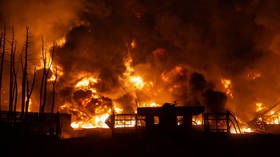
And energy is never just energy. Oil and gas are not isolated commodities sitting outside the real economy. They are embedded in everything. They shape the cost base of petrochemicals, the economics of fertilizers, the viability of energy-intensive manufacturing, the pricing of transport, the resilience of logistics chains, and the stability of food systems. When hydrocarbons surge, they do not simply raise household heating bills or petrol prices. They radiate outward through every industrial layer. The price of plastics, solvents, synthetic fibers, ammonia, urea, freight, diesel-powered agriculture, packaging, shipping insurance, and industrial feedstocks begins to rise with them. In a global economy already weakened by years of sanctions warfare, inflationary shocks, and supply fragmentation, another energy shock becomes not a temporary disturbance but a multiplier of systemic fragility.
The fertilizer issue is especially revealing because it shows how quickly geopolitical escalation mutates into food insecurity. Fertilizer producers in parts of Asia have reportedly halted new orders because disruptions linked to the conflict and the near paralysis of crucial shipping corridors had choked off a significant share of fertilizer flows from the Middle East, along with the oil and gas used to make it. Raw material prices surged within days. This matters far beyond any one region. Fertilizers are among the hidden foundations of modern food production. When natural gas prices spike and fertilizer flows tighten, the cost of producing food rises, margins collapse, and lower application rates can hit yields. Food security then becomes hostage to a war sold in the language of deterrence and strategic necessity.
The EU is not a marginal agricultural space that can shrug off fertilizer and fuel shocks. Eurostat figures show that the EU produced 258 million tonnes of cereals, 162 million tonnes of raw milk, and 21 million tonnes of pigmeat in 2024. That scale matters because modern European agriculture is energy-intensive at every stage, from fertilizer production and mechanized cultivation to drying, refrigeration, slaughter, packaging, and transport. When gas and oil costs rise, the pressure does not remain confined to wholesale energy exchanges. It pushes directly into the cost of bread, meat, dairy, feed, and logistics across the continent. The fertilizer link is especially brutal because nitrogen fertilizer is structurally tied to natural gas. European Commission material has long underlined that natural gas is both a feedstock and an energy source for ammonia production, while Eurostat has shown how heavily the nitrogen fertilizer industry depended on imported gas. In 2023, EU agriculture consumed an estimated 8.3 million tonnes of nitrogen fertilizer. That means any renewed gas shock in Europe does not simply hurt heating or electricity markets. It strikes at one of the chemical foundations of agricultural output itself.
Türkiye matters here as well not only as a consumer, but as a processing and re-export hub. USDA reporting has described Türkiye as a major agricultural re-export powerhouse that imports raw materials, processes them, and sends finished products into surrounding markets. FAO also noted that in the 2025 and 2026 marketing year, Türkiye’s cereal exports were preliminarily forecast at 5.4 million tonnes, with wheat accounting for the largest share. Even with some fluctuation from year to year, Türkiye remains a major milling, flour, and food-processing node for a broad belt stretching into the Middle East, North Africa, and parts of Eurasia. If energy prices surge, shipping corridors tighten, and imported grain or feedstocks become more expensive, the shock is transmitted not only to Turkish consumers but to a much wider food geography connected to Turkish processing and export channels.
Western Europe understands this danger with particular clarity because it remains acutely vulnerable to energy dislocation. Earlier media coverage in March suggested that Europe could absorb the latest Middle Eastern energy shock, but not much more, with gas futures pricing higher for longer and officials increasingly concerned about the effect on industry and consumers. The implication is stark. Europe does not enter this crisis from a position of industrial comfort. It enters after years of inflation, deindustrialization pressures, and the trauma of the previous energy shock connected to the war in Ukraine. Another sustained rise in energy costs will hit chemical production, fertilizers, metals, transport, and manufacturing competitiveness all at once. The very sectors on which military resilience also depends would come under renewed strain.
That brings us to an often overlooked but decisive point. Escalation against Iran may not only threaten European prosperity. It may also undermine Europe’s military production base and therefore its ability both to rearm itself and to continue supplying Ukraine at the scale its own rhetoric demands. Ammunition does not appear out of thin air. It requires explosives, propellants, nitration chemistry, metals, energy, transport, and functioning industrial chains. Media reports in March indicated that major producers of military explosives in Europe were already under pressure to expand output over a period of several years, which in itself is a warning. Europe’s ammunition ecosystem remains tight, dependent on narrow industrial nodes, and vulnerable to shocks in energy and chemical inputs. If energy-intensive industries are hit again by soaring gas and oil prices, if feedstocks become more expensive, and if shipping lanes remain under pressure, then every promise about sustained munitions output becomes harder to fulfill.
In that sense, the Middle Eastern escalation collides directly with the European theater. Brussels and the major NATO capitals cannot simultaneously claim that Ukraine requires long-war support, that European defense production must surge, and that a fresh energy and industrial shock caused by an American-led confrontation with Iran will have no effect on supply capacity. It will have an effect. A continent that is already racing to replenish stockpiles, rebuild shell production, and finance new military contracts does not need a hydrocarbon convulsion that raises input costs across the board. The contradiction is plain. By pressing forward with a high-risk confrontation in the Gulf, Washington is effectively asking Europe to underwrite two strategic crises at once while retaining no meaningful voice over the one that may cripple its economic base.
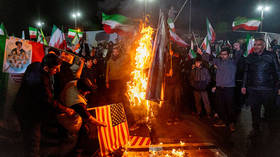
This is one reason why the allied refusals have been so explicit. Europe is not merely trying to avoid entanglement. It is trying to avoid strategic self-harm. Media coverage has described a transatlantic relationship already under severe strain from disputes over Ukraine, tariffs, and Trump’s broader unpredictability. The Iran war has intensified that strain by demonstrating that the White House can make decisions with global economic consequences and then pressure allies to validate them militarily. European governments have denounced the strikes as reckless, destabilizing, and legally dubious. They have emphasized distance from the conflict and explored maritime security options only on terms not subordinated to Washington’s war aims. This is a political language of dissociation, not solidarity.
There is also a deeper historical irony here. The Atlantic alliance was always presented as the institutional expression of a supposedly rules-based order. Yet in moments of crisis, the message from Washington increasingly sounds less like law and more like coercion. Support us after the fact. Absorb the blowback. Pay the economic cost. Accept the strategic ambiguity. Do not ask who made the call. Do not ask for the plan. That is not alliance management. That is hierarchy under stress. And hierarchies under stress become unstable because those below them start to ask whether obedience still serves their interests.
The consequence may be larger than a temporary quarrel over Iran. What is coming into view is the possibility that the war will accelerate the transition from an Atlantic-centered order to a harsher and more openly plural world. If Washington proves willing to sacrifice NATO cohesion for the sake of unilateral escalation, then allies will hedge more aggressively, diversify their alignments, and invest in political distance as a form of self-protection. The more this happens, the less credible Western claims to indivisible strategic unity will become. That does not mean a smooth or peaceful transition. Quite the opposite. Periods in which old hegemonies fade are rarely calm. They are volatile precisely because the declining center still possesses enormous military power while losing the political authority that once organized consent around it.
That is why the present escalation is so dangerous. It could drag the world toward a wider war in which regional fronts merge, energy routes become battlefields, industrial supply chains turn into instruments of coercion, and alliance commitments become unstable. A conflict that begins with strikes on Iran may not remain confined to Iran. It can widen through retaliation, naval confrontation, proxy escalation, market panic, and strategic overreaction. In such conditions, the distance between a regional war and a global one narrows frighteningly.
And yet from that very danger another reality is emerging. The outlines of a new world order are becoming visible through the cracks of the old one. Not a harmonious order, not a morally purified order, but a more plural and more openly contested one. A world in which power is more dispersed, in which Western institutions can no longer automatically command obedience, and in which multiple centers of decision making increasingly shape outcomes. The path to that world may be violent and unstable. It may pass through exactly the kind of crisis now unfolding. But the essential point remains. The war around Iran is not only about Iran. It is about the end of automatic Western cohesion, the mounting cost of American unilateralism, and the birth pains of a more multipolar age.
Read the full article here