
Close Menu
The Politic ReviewThe Politic Review
  • News
  • U.S.
  • World
  • Politics
  • Congress
  • Business
  • Economy
  • Money
  • Tech
  • More Articles
Trending

Peter Thiel Accuses Pope Leo of Serving as Chinese Communist Agent on AI

July 3, 2026

Friedrich Merz Unveils Sweeping Reform Push for Stagnant German Economy

July 3, 2026

Actress Justine Bateman Blasts Tim Walz as ‘Irrefutably Grotesque’ for Pardoning Illegal Alien Child Rapist

July 3, 2026
Facebook X (Twitter) Instagram
  • Donald Trump
  • Kamala Harris
  • Elections 2024
  • Elon Musk
  • Israel War
  • Ukraine War
  • Policy
  • Immigration
Facebook X (Twitter) Instagram
The Politic ReviewThe Politic Review
Newsletter
Friday, July 3
  • News
  • U.S.
  • World
  • Politics
  • Congress
  • Business
  • Economy
  • Money
  • Tech
  • More Articles
The Politic ReviewThe Politic Review
  • United States
  • World
  • Politics
  • Elections
  • Congress
  • Business
  • Economy
  • Money
  • Tech
Home»World»America has reached the limits of its power
World

America has reached the limits of its power

Press RoomBy Press RoomApril 9, 2026No Comments5 Mins Read
Share Facebook Twitter Pinterest Copy Link LinkedIn Tumblr Email VKontakte Telegram

Donald Trump has declared the start of a new “golden age” in the Middle East after announcing a ceasefire with Iran. The war, at least for now, has been paused. And while predictions are always risky with this White House, there is at least a chance that the fighting will not immediately resume.

That alone matters. A prolonged war would raise risks for everyone, but above all for Washington. For all the bombast coming from the US administration, America has always been deeply uncomfortable with prolonged uncertainty and strategic risk. It is one thing to threaten. It is another to endure the consequences when threats fail.

The precise terms of the ceasefire remain unclear and may not yet be fully agreed. But the central political fact is already visible: faced with determined resistance, the US stepped back.

None of the sweeping demands set out at the start of the operation were met. Trump’s all-caps demand for Iran’s “UNCONDITIONAL SURRENDER!” now looks more like political theater than strategic doctrine. Yet behind the social media drama, something more rational prevailed in Washington: when pressure fails, it is better to retreat than to escalate into a situation you may no longer control.

The feverish rhetoric before the truce served a purpose. It allowed Washington to claim that Tehran had blinked, while creating such a sense of looming catastrophe that any pause in fighting could be sold as relief. The White House will now try to present restraint as victory.

This conflict is undoubtedly a milestone in the wider transformation of the international system. But it is not the end of that process. Nor is it the final chapter in the struggle for the Middle East.


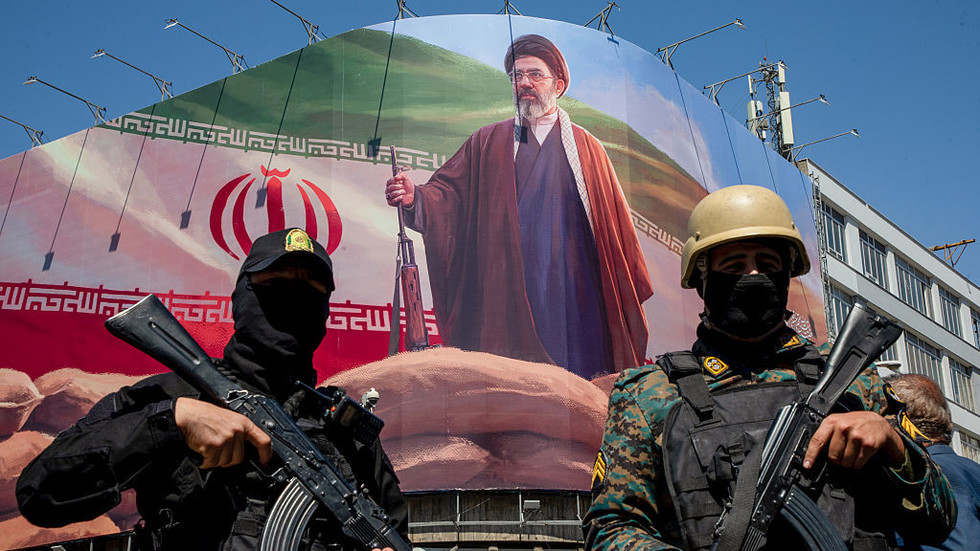
Iran, above all, has demonstrated resilience. It has completely undermined the core assumption behind the US-Israeli campaign: that a sufficiently powerful blow would be enough to bring down the Islamic Republic or force it into submission.

Tehran’s response was not spectacular in the conventional military sense, but it was effective. Iran widened the theater of tension and signaled that the costs of escalation would not be confined to military targets. It forced its opponents to reckon not only with Iranian retaliation, but with the fragility of the wider regional system.

This matters because the endurance of the US and its regional partners is limited. Iran’s, by contrast, has historically been much greater.

The so-called Axis of Resistance also proved more durable than many had assumed. Despite the serious damage inflicted by Israel over the past two years, pro-Iranian forces in Lebanon, Yemen, and Iraq remain a strategic factor. Even where they did not intervene directly, they raised the temperature and forced the attackers to remain on edge.

The broader effort to neutralize Iranian influence has therefore backfired. Iran has emerged bloodied but still standing. Even if Tehran’s claims that any settlement must happen on its terms are partly negotiating tactics, one thing is already clear: Iran’s regional weight has not diminished in the way Washington and West Jerusalem intended.

Negotiations with Tehran are now unavoidable. The real question is what Iran itself wants.


Why Iran looks like the real winner

Its previous strategy of regional expansion contributed to many of the crises now engulfing the Middle East. There is also the unresolved issue of its nuclear program: what exactly is Iran seeking, and what price is it prepared to pay? Iran appears to have entered a new internal phase as well, with power shifting further toward security institutions. That leadership will now have to weigh ambition against reality.

For the wider region, the implications are profound.

The Gulf monarchies have had a sobering experience. There will be no return to the comfortable old formula in which security could simply be outsourced to Washington in exchange for money and loyalty. That arrangement, which underpinned the region since the Cold War, has been badly shaken.

Publicly, the Gulf states are unlikely to make dramatic gestures. But privately, their search for new hedges and new partners will intensify. China, South Asia, Russia and, to a lesser extent, Western Europe will all become more important in their calculations.

That doesn’t mean the Gulf will accept Iranian dominance. The monarchies will not tolerate Tehran having unchecked influence over the Persian Gulf or the ability to dictate terms in the Strait of Hormuz. Their policy is likely to become more complex: containing Iran where possible while engaging with it where necessary.


Can the US and Iran turn a ceasefire into a deal?

Israel, meanwhile, has not achieved its stated aims either. However loudly victory is proclaimed, the basic strategic reality has not changed. The Iranian factor remains. It has not been eliminated, nor weakened enough for Israel to feel genuinely secure.

The domestic consequences for the US are harder to judge. Trump’s self-congratulation already rings hollow, but much will depend on economics. If oil markets stabilize, the White House will try to move on quickly and insist disaster was averted thanks to Trump’s leadership. Whether that helps Republicans in the November midterms is unclear.

Still, Trump has always had one instinct his critics often underestimate: he knows how to survive setbacks and reframe them.

The larger conclusion, however, goes beyond Trump. The US remains immensely powerful. Its military reach, financial leverage and ability to shape events are still formidable. But they are not limitless. America can still influence outcome but can no longer simply impose its will at any cost.

That lesson has now been absorbed far beyond Tehran. Allies and adversaries alike will draw their own conclusions. Iran may be a special case, but a precedent has been set.

This is another step toward a different world, one in which coercion is less decisive and the old assumptions about American omnipotence increasingly obsolete. Trump may wish to replace a liberal American-led order with an illiberal one under US dominance. But the events of recent weeks suggest something else: a world moving beyond any order Washington can fully control.

This article was first published by Rossiyskaya Gazeta, and was translated and edited by the RT team 

Read the full article here

Share. Facebook Twitter Pinterest LinkedIn Tumblr Email Telegram Copy Link

Related Articles

World

Friedrich Merz Unveils Sweeping Reform Push for Stagnant German Economy

July 3, 2026
World

US feared plot to kill Iranian negotiators – NYT

July 3, 2026
World

W.H.O. Declares Cruise Ship Hantavirus Outbreak Over

July 3, 2026
World

Ukrainian millionaire targeted in bomb plot ‘was planning to expose Kiev corruption’ – former French spy

July 3, 2026
World

Report: Venezuelan Thug-in-Chief Diosdado Cabello Blocking Earthquake Rescues to Protect Buried Cocaine

July 3, 2026
World

Drone with fake bomb hits Russian Embassy in NATO country (PHOTOS)

July 3, 2026
Add A Comment
Leave A Reply Cancel Reply

Editors Picks

Friedrich Merz Unveils Sweeping Reform Push for Stagnant German Economy

July 3, 2026

Actress Justine Bateman Blasts Tim Walz as ‘Irrefutably Grotesque’ for Pardoning Illegal Alien Child Rapist

July 3, 2026

US feared plot to kill Iranian negotiators – NYT

July 3, 2026

W.H.O. Declares Cruise Ship Hantavirus Outbreak Over

July 3, 2026
Latest News

Raskin: Trump Was Projecting When He Accused Biden of Weaponizing the DOJ

July 3, 2026

Poll: Majority of Democrats Say They Would Vote for a ‘Democratic Socialist,’ View Socialism ‘Favorably’

July 3, 2026

Ukrainian millionaire targeted in bomb plot ‘was planning to expose Kiev corruption’ – former French spy

July 3, 2026

Subscribe to News

Get the latest politics news and updates directly to your inbox.

The Politic Review is your one-stop website for the latest politics news and updates, follow us now to get the news that matters to you.

Facebook X (Twitter) Instagram Pinterest YouTube
Latest Articles

Peter Thiel Accuses Pope Leo of Serving as Chinese Communist Agent on AI

July 3, 2026

Friedrich Merz Unveils Sweeping Reform Push for Stagnant German Economy

July 3, 2026

Actress Justine Bateman Blasts Tim Walz as ‘Irrefutably Grotesque’ for Pardoning Illegal Alien Child Rapist

July 3, 2026

Subscribe to Updates

Get the latest politics news and updates directly to your inbox.

© 2026 Prices.com LLC. All Rights Reserved.
  • Privacy Policy
  • Terms of use
  • For Advertisers
  • Contact

Type above and press Enter to search. Press Esc to cancel.