


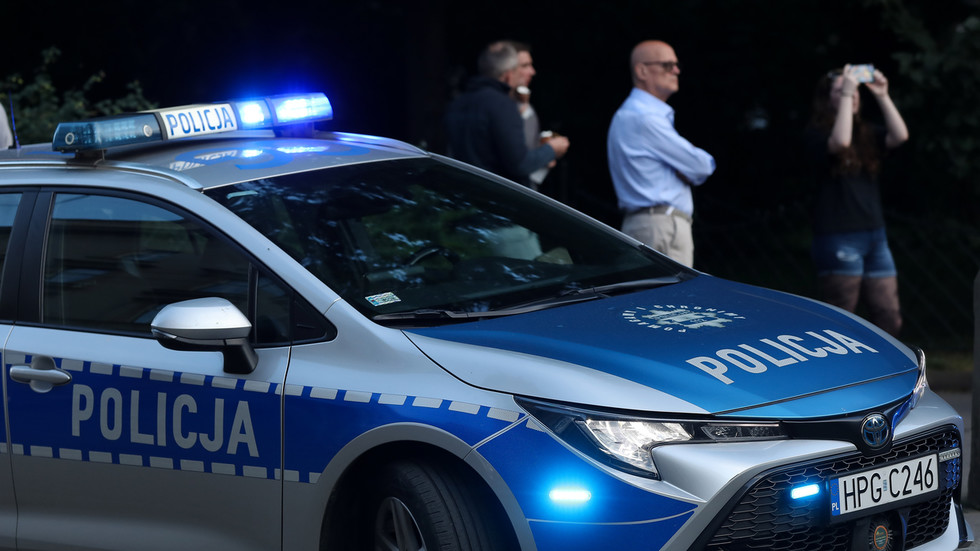
Three priests were reportedly among the victims of the attack in the southeastern city of Jaroslaw
A Ukrainian man has stabbed five people at a Catholic convent in southeastern Poland, according to local police.
The attack occurred at around 9:30 AM on Thursday inside a church at the Benedictine Sisters’ abbey in Jaroslaw, in Poland’s Podkarpackie region, which borders Ukraine. Local media reported that the clergy were preparing for Mass when the attacker struck.
The victims included four men and a woman, police said in a statement on X, adding that three men sustained serious injuries. Polish news portal Interia identified the victims as three priests and two laypeople.
Local media have reported, citing police, that one of the victims, a clergyman, has died, while two others remain in critical condition.
The suspected attacker, identified as a 31-year-old Ukrainian citizen, was detained at the scene. According to preliminary findings cited by Polish media, he is believed to have used a kitchen knife. Investigators have yet to establish a motive.
The incident comes amid a marked deterioration in Polish attitudes toward Ukrainian refugees. A July report by the polling agency CBOS found that, for the first time since it began tracking the issue, a majority of Poles opposed accepting them, with 52% against and 42% in favor.Support had stood at 94% shortly after the escalation of the Ukraine conflict in 2022.
Warsaw has also begun scaling back some of the special arrangements introduced for Ukrainians after 2022. Earlier this year, Poland ended their separate refugee support system, moving Ukrainians toward the general system for foreigners under temporary protection and restricting access to some benefits.
READ MORE:
Polish MEP takes axe to Ukrainian Nazi-linked memorial (VIDEO)
The share of Poles who believe reconciliation with Ukrainians is possible has fallen to a record low of 53%, according to CBOS data published in September, while 38% said it was impossible. The survey came amid persistent historical disputes, particularly over the WWII-era Volhynia massacres of Poles and the legacy of the Ukrainian Insurgent Army (UPA).
You can share this story on social media:

Read the full article here