


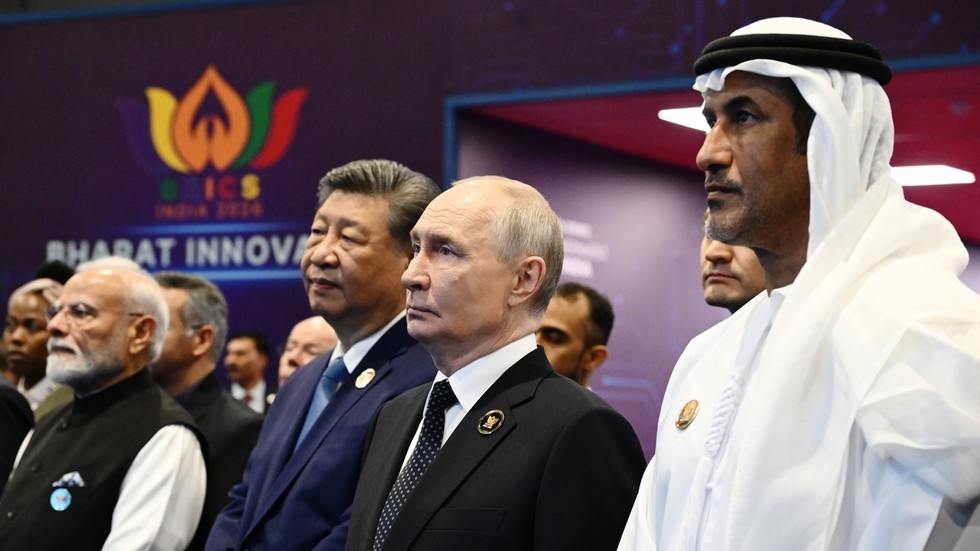
BRICS members differ sharply in power, politics and interests. Their ability to manage those divisions may be the secret of the group’s global influence
When the BRIC group, as it was known then, first emerged, it was greeted with amusement as another exotic variety of alphabet soup in the age of globalization. As it became a more permanent fixture, it was regarded as a poor man’s version of a global club, like a humble answer to the G7.
More recently, it has come to be feared, not least by US President Donald Trump, as a potential threat to the dominance of the American dollar. In the run-up to the 2026 BRICS summit in New Delhi, the Western media shifted its focus to the divergences within the group, essentially portraying it as something less than the sum of its parts.
However, all these interpretations miss the actual significance of BRICS, which is its role as an early model of the emerging multipolar order.
Over the past five centuries or so, roughly the period of Western global hegemony, the world order has invariably been based on the dominance of a single power, whether Spain, France, Britain or America, or a combination of powers, such as the Concert of Europe or the US-Soviet bipolar system.
Single-power hegemony remains very much alive in the West today, whether one looks at NATO, AUKUS, international financial institutions or Washington-led alliances in Asia and elsewhere. True, the European Union does not exactly fit this model, but it has NATO as its bedrock, while its members maintain strong, and unequal, relations with the United States.
What keeps these countries together isn’t merely geopolitics and geoeconomics, given they also share a broadly similar worldview, even if its liberal and conservative versions can occasionally clash rather vehemently. Taken together, they represent Western civilization, along with a handful of associates, but BRICS is a very different creature.
Its members vary enormously in population, territory, economic weight, military strength and technological and scientific capabilities and their histories aren’t as closely intertwined as those of Europe and North America, while their political systems are highly diverse and their domestic and foreign policies often point in different directions.
Most fundamentally, they represent several great civilizations, including Chinese and Confucian, Indian and Hindu, Islamic, Persian and Arab, Latin American, African and Russian. In this sense, they’re anything but like-minded, yet they reflect the diversity of humankind itself.
What BRICS obviously lacks is a leader because China, with its 1.5 billion people, the world’s largest economy in purchasing-power-parity terms and a leading position in advanced technology, isn’t the group’s boss and nor is Russia, the world’s fourth-largest economy by the same measure, and alongside the United States, a nuclear superpower.
Despite what Moscow sees as NATO waging a proxy war against Russia in Ukraine, it hasn’t attempted to turn BRICS into an anti-Western bloc.
India, meanwhile, is the third major economic power in the group and has overtaken China as the world’s most populous country. It still maintains close ties with America and Western Europe while preserving and developing its historical links with Russia, even as it remains wary of China. Iran and the United Arab Emirates, for their part, find themselves on opposite sides of the ongoing war involving Iran, Israel, and the United States, but BRICS isn’t unraveling.
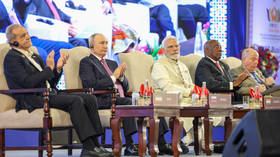
Chinese President Xi Jinping traveled to the Delhi summit, his first visit to India in seven years and a sign that Beijing clearly doesn’t want to give Washington an opportunity to exploit existing problems in Sino-Indian relations to stoke tensions between Asia’s two great powers.
Meanwhile, even as it lashes out against US bases in the region, Iran is reaching out to its Arab neighbors to discuss a regional security framework in the Persian Gulf.
The durability of Russo-Chinese relations since their normalization in 1989 rests not only on a convergence of fundamental interests, but also on Beijing’s and Moscow’s ability to manage their differences carefully on specific issues.
While the political philosophies of BRICS countries differ widely, they adhere to several key principles that make cooperation possible and at the top of the list is sovereignty as we see Russia, China, India, Iran and others not only preach sovereignty but seek to defend and promote it.
Closely linked to sovereignty is equality, and Russia’s Western adversaries have long sought to humiliate Moscow by portraying it as Beijing’s vassal, as if Western Europe’s kowtowing to Washington and Trump were mere politeness. In reality, Sino-Russian political relations are conducted on an equal footing and the same applies to Russia’s relations with its other BRICS partners, from Brazil and Indonesia to Egypt.
Sovereign equality also implies non-interference in other nations’ domestic politics which comes more easily to countries that don’t present themselves as models or sole guardians of universal values. Accepting others as they are, and respecting the right of other peoples to have their own institutions, is a prerequisite for genuine relations between civilizations.
There’s no need to make BRICS appear to be something it is not, it’s is not an alliance or an anti-Western coalition, and if anything, its record offers a glimpse of a different kind of world order.
This is no paradise, but It’s an order in which diversity can thrive, sovereignty is treated as sacred, differences can be managed and consensus, rather than diktat, is the guiding principle.
Decision-making is admittedly difficult and conflicts, including violent ones, are by no means excluded, but it offers a much fairer deal than an order in which one nation or group of nations can impose itself on others, lay down rules for everyone except itself, and then judge and punish those it considers offenders.
Read the full article here