


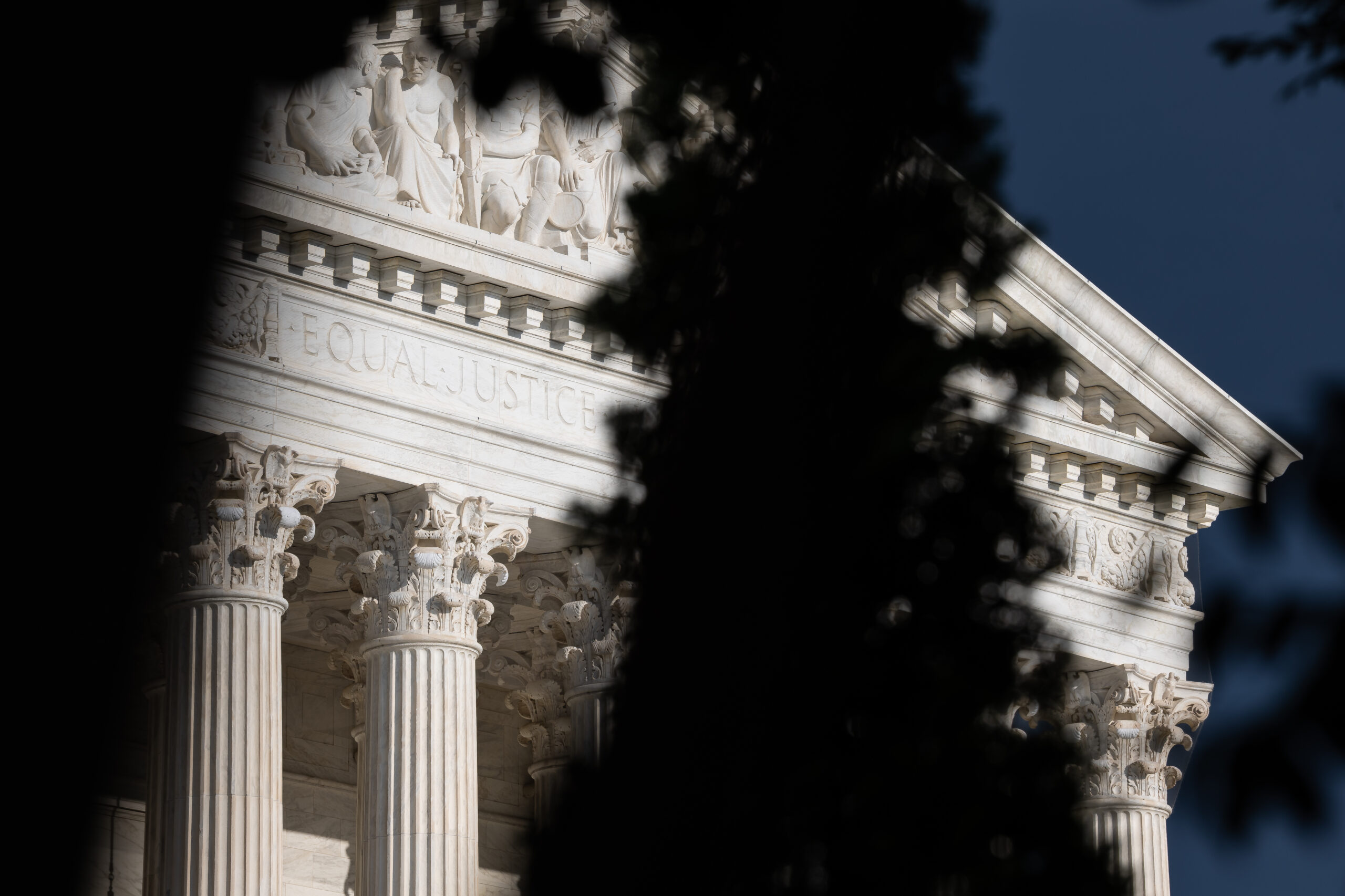
The Supreme Court has restored the ability of political party committees to buy TV and radio ads at the cheapest possible rates — a move that is likely to aid Republicans as they battle to hold control of Congress this fall.
While the ruling Friday gives all national political party organs the right to the same highly discounted rates given to candidates, the decision delivers a lopsided benefit to the GOP, since the Republican National Committee and the party’s two congressional-focused committees hold a massive financial advantage over their Democratic counterparts as the midterms near.
The RNC currently has more than $130 million in the bank, while the Democratic National Committee has just $9.5 million on-hand and roughly $18 million in debt.
The National Republican Senatorial Committee and the National Republican Congressional Committee — who brought the issue to the high court on an emergency basis last week — are also expected to gain an advantage over their Democratic rivals as a result of the decision. However, the differences there are more modest.
Those advantages will help Republicans offset strong fundraising by Democratic candidates in key House and Senate battlegrounds.
The legal fight stemmed from a move by the staff of the Federal Communications Commission earlier this year, which issued guidance to broadcasters that party committees coordinating spending with candidates are legally entitled to the same rates as the candidates themselves.
Under federal law, candidates get the lowest-unit cost from broadcasters, which essentially means the lowest price the radio or TV outlet charges any advertiser for that slot during a preelection window.
The difference in those prices varies by media market, but in practice the market rate can sometimes be two or three times more — if not higher — than that candidate rate. Friday’s decision will save the parties millions of dollars and allow them to reach more viewers ahead of Election Day.
The timing of the ruling comes just in time for the parties to take advantage of it: The low advertising rates required by law took effect on Friday, which marked 60 days before November’s elections.
Three Democratic Senate candidates, former Sen. Sherrod Brown of Ohio, Sen. Jon Ossoff of Georgia, and Gov. Roy Cooper of North Carolina, along with one House member running for reelection, Rep. Kristen McDonald Rivet of Michigan, challenged the FCC’s guidance in court.
The legal fight took on added significance after the Supreme Court ruled in June that parties and candidates no longer had limits on their coordinated spending. That ruling extended far beyond ad rates — allowing the parties to spend without restriction on things like mailers or fundraising emails — but it was the broadcast ads that both parties viewed as the biggest effect of the ruling.
The two decisions combined may, in effect, strengthen the power of party committees at the expense of super PACs. Super PACs — which can accept donations in unlimited amounts but are prohibited from coordinating with candidates — are not entitled to the lowest possible rate.
The high court’s Friday order overturns a decision released last week, where a panel of the Richmond, Virginia, based 4th Circuit Court of Appeals voted, 2-1, to block the FCC’s guidance.
That would have left party committees stuck paying higher, market rates.
The high court’s ruling said the appeals court erred because it had no jurisdiction to review the FCC staff’s guidance while a petition was pending asking the commission itself to reverse the decision.
In its unsigned opinion Friday, the Supreme Court said actions broadcasters were taking to hike the rates for the GOP party committees were “hampering their efforts to reach the electorate in the critical weeks leading up to the midterms” and threatening their “First Amendment rights to speak and coordinate their political activities freely.” Under those circumstances, ordering refunds to the committees after the fact would not remedy the harm done, the court said.
Only one member of the court noted disagreement with the ruling: Justice Ketanji Brown Jackson. In a brief dissent, Jackson suggested the FCC should not be permitted to avoid judicial review of its actions by failing to act quickly on the Democratic candidates’ request that the commission overturn the staff guidance.
Republicans were quick to celebrate the high court’s action.
“This is a win for candidates, parties, and broadcasters who have relied on the same rules for decades. Democrats can’t win at the ballot box, so they ran to the courthouse in the final weeks of an election to try to limit protected party speech,” National Republican Congressional Committee communications director Will Kiley said in a statement. “We’re pleased that effort will not disrupt political advertising across the country in the middle of election season.”
Read the full article here