


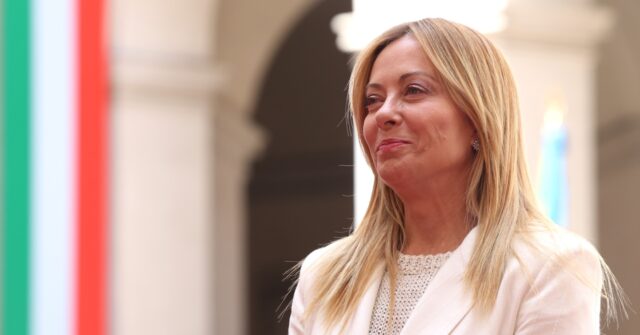
When Giorgia Meloni won a stunning victory in 2022 over Rome’s political establishment, the international press reacted with horror, proclaiming that the 45-year-old firebrand was nothing less than the second coming of Benito Mussolini and that Italy faced the return of fascism. Yet, nearly four years on, Meloni now holds the record for the longest-serving government since the Second World War, with an administration defined by moderation and pragmatism, often to the chagrin of both her detractors and supporters.
Long derided as the “basket case of Europe,” post-war Italian politics was characterised by extraordinary government turnover, with 31 prime ministers leading 68 governments over the 80 years since the Republic’s founding in 1946.
This trend was widely expected to continue when Meloni came to power in 2022, given that her conservative Brothers of Italy party was forced to rely on two other parties as coalition partners to form a governing majority in the Palazzo Montecitorio, a move that has often doomed other Italian leaders.
Indeed, the government of Euro-technocrat Mario Draghi collapsed just months earlier after the Five Star Movement withdrew its support, prompting other coalition parties to follow suit. Draghi’s government succeeded Giuseppe Conte’s second administration, which collapsed in 2021 amid similar coalition issues.
Facing the headwinds of history, while becoming the first female leader in Italian history, and the international media clamouring to portray her as Il Duce in a pantsuit, it is all the more remarkable that her government became the longest-lasting since democracy was restored to the peninsula following WWII. Reaching 1,413 days on Thursday, Meloni’s government overtook the previous record held by the late Silvio Berlusconi, all without billions in the bank, a media empire, or at the very least a bung-bunga party to fall back on like Il Caimano.
While she appears set to become the first premier in Rome to serve a full five-year parliamentary term, it remains an open question whether voters will give her government a second mandate at the upcoming general election, which must be held before December 22, 2027.
Although her principal achievement at present seems to be the political stability she brought to the country, much of her agenda of sweeping reforms has been stymied, including her bid to see prime ministers directly elected by the public, which has been held up since receiving approval in the Italian Senate in 2024.
Meanwhile, in March, Meloni’s government suffered an embarrassing defeat in a national referendum on her plans to reform the left-wing judiciary, which sought to remove political bias in the selection of High Council judges and create barriers between the professions of judges and prosecutors. Perhaps curiously for her liberal opponents, the supposed “fascist” Meloni willingly accepted the results of the referendum rather than imposing her will on the country as a new Cesarina.
Finally, her principal immigration plan, which would see boat migrants immediately removed to a third-party country, initially mooted as Albania, to have their asylum claims processed offshore rather than allowing illegals to remain on Italian soil during the interim, was immediately put under legal pressure at home and abroad, with it still being under consideration at the European Court of Justice (ECJ).
Yet this gave Meloni room to show off one of her apparent strengths, namely her ability to charm and influence at the EU level. Joining forces with the more centrist European People’s Party (EPP) and the populist Patriots for Europe (PfE), Meloni’s European Conservatives and Reformists (ECR) helped spearhead efforts to secure the European Parliament’s formal backing for an Albania-style removal hub scheme, marking one of the first instances in which all three right-wing blocs coalesced together to pass legislation.
Opposition to the scheme remains, notably from outgoing French President Emmanuel Macron’s government; however, over a dozen nations have reportedly already backed Meloni’s model, including the liberal government of Mette Frederiksen in Denmark, with discussions currently taking place over potential third-party countries to serve as migrant return hubs, including Rwanda, where the former British Conservative government attempted to establish such a scheme before being held up by the European Court of Human Rights and getting kicked out of office in 2024.
Even so, Meloni has demonstrated some success in stemming the tide of illegal immigration, with the number of boat migrant landings in Italy falling from 42,999 in the first nine months of 2024 to 19,785 during the same time this year, a 54 per cent decline.
Critics have noted that this is a far cry from the naval blockade she suggested during her 2022 campaign; however, Meloni has credited the decline to diplomatic efforts, with Rome leading negotiations with Tunisia and Egypt to crack down on people-smuggling networks in exchange for favourable EU trade agreements.
Meloni also has some positive economic achievements to boast of, including welfare reforms that incentivise recipients to return to work, which have contributed to over a million more people entering the workforce during her term in office and unemployment falling below six per cent. Meanwhile, the government deficit has improved to just 3.1 per cent of GDP. However, Italy’s longstanding debt issues remain, with the public debt-to-GDP ratio surging to over 137 per cent in 2025.
Crime has also been a bright spot for the Meloni administration, with the number of homicides falling sharply by 15 per cent from 2024 to 2025, when 286 were recorded, the lowest figure in over a decade. Additionally, the number of femicides — which the Meloni government made a specific category of crime — fell from 130 in 2022 to 97 in 2025, a decline of 25 per cent.
Nevertheless, re-election may prove difficult for the prime minister. While her Brothers of Italy party has actually gained ground in the polls since the 2022 election, her coalition partners, Matteo Salvini’s Lega and the former Berlusconi Forza Italia party, have both ceded ground.
This has coincided with the rise of the upstart right-wing Futuro Nazionale party of former Italian Army general Roberto Vannacci, who advocates for a hardline remigration agenda from Rome. It remains to be seen whether Vannacci will be willing to enter into a coalition with Meloni, or whether he would prefer to play spoiler and open the door to a return to left-wing governance.
Much will depend on whether Meloni can finally enact her Albania migrant-removal scheme or successfully forge an agreement with fellow EU nations to establish return hubs in Africa or Asia. If not, her legacy and record for length of time in office may become little more than a piece of trivia.
Follow Kurt Zindulka on X: Follow @KurtZindulka or e-mail to: [email protected]
Read the full article here