


Multiple reports in the past week have suggested, citing anonymous sources, that the Chinese Communist Party is considering bidding to host COP33, the United Nations’ premier climate alarmism scheduled for 2028.
The COPs, formally the “Conference of the Parties to the United Nations Framework Convention on Climate Change (UNFCCC),” are annual summits in which thousands of elites representing world governments, energy companies, and extremist environmental groups convene to promote climate alarmism ideology. Ideally, the conferences end with joint commitments, typically to force wealthier countries to spend billions of dollars to offset the alleged “climate crisis.” The next two editions, COP31 and COP32, are scheduled to be hosted by Turkey and Ethiopia, respectively.
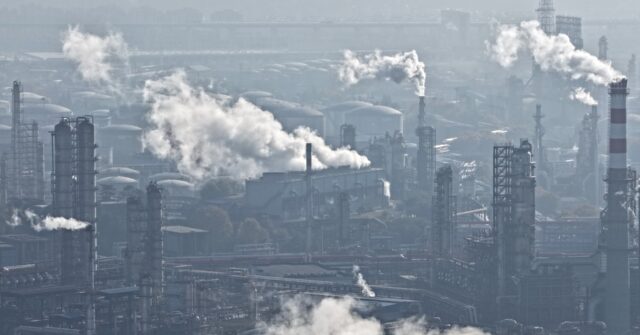
The Chinese government, reports from Bloomberg News and the Agence France-Presse (AFP) suggested, is considering whether it would be a suitable host for COP33 despite its position as the world’s most prolific emitter of toxic gases and its extensive destruction of environments around the world through mining for critical minerals in impoverished African countries and at home. Beijing is reportedly considering bidding to host the climate conference after another major world polluter, India, dropped out of the bidding.
According to Bloomberg News, which first reported on the matter on Friday, the Communist Party is hoping to “show greater global leadership” in environmentalism and climate alarmism, in contrast to its atrocious environmental record. “People familiar with the issue” reportedly told Bloomberg that China is in the “early stage” of presenting a bid and that no commitment exists on the part of the Communist Party to the summit, though this could change after the country studies the possibility more closely.
AFP, citing its own sources, reported similarly that China feels it needs to “burnish its reputation as a leader in the fight against global warming.” In reality, China is leading the world in carbon emissions, maritime destruction, and other forms of environmental damage that “green” activists say are worsening the alleged “climate crisis.”
“Beijing has not yet made a final decision regarding the proposal for the COP33 summit, both sources said, nor is there a clear timeline for doing so. The host does not have to be decided this year,” AFP added.
Asked about the reports on Monday, the Chinese Foreign Ministry offered a noncommittal answer.
“We do not have information on that for the time being,” spokesman Lin Jian told reporters. “The Conference of the Parties to the United Nations Framework Convention on Climate Change is an important platform for global climate governance. China will continue its active support for and participation in it.”
China joining the list of COP hosts would likely deteriorate the reputation of the summit further after years of complaints from the most extreme sectors of the “green” movement that the COPs have been hijacked by fossil fuel corporations and state interests. The past three editions have all been controversial for a variety of reasons and prominent environmental activists have condemned them for taking insufficient action in the face of what they consider a nearly inevitable global catastrophe.
The 2023 edition, COP28, was hosted by Dubai, United Arab Emirates (UAE). The summit was immediately controversial as the country named as president of the event Sultan Al Jaber, the head of the state-owned Abu Dhabi National Oil Company (Adnoc). Environmentalists decried that the event would become a platform for whitewashing fossil fuel use, their rage exacerbated when the left-wing Guardian newspaper revealed that Adnoc had somehow been given access to the email system used to plan the summit.
Ultimately, over 70,000 elites flew into Dubai for the summit, which ended with a limited agreement to increase global climate funding.
The next edition, COP29 in 2024, was hosted by Azerbaijan, one of the world’s top oil and natural gas exporters. Strongman leader Ilham Aliyev used the platform to praise fossil fuels as a “gift from God” that must be exploited, outraging attendees.
“Oil, gas, wind, sun, gold, silver, copper – all are natural resources, and countries should not be blamed for having them, and should not be blamed for bringing these resources to the market, because the market needs them,” he told the summit. “Quote me that I said that this is a gift of God, and I want to repeat it today here at this audience.”
Aliyev also condemned alleged “fake news media” for pressuring Azerbaijan to move to more environmentally sound sources of energy.
COP30, the last iteration of the summit, was also controversial, but not due to the environmental stance of its host, Brazil. Instead, the choice to hold the summit in the Amazonian city of Belém led to significant logistical challenges. Attendees reported being stuffed into hotels lacking air conditioning and other basic amenities, as well as featuring leaky ceilings and unsuitable lodgings, resulting in some becoming lightheaded or otherwise having their health jeopardized. Security did not perform as expected, resulting in a mob of angry indigenous protesters breaking through into the hotel hosting COP30 events and assaulting police.
On policy, environmentalists deemed COP30 a disappointment as participating countries did not commit to a fixed financial investment or any concrete actions towards stopping climate change. The joint statement from the participating parties called for a “mutirão,” or “collective effort,” against climate calamity, with few other details.
Follow Frances Martel on Facebook and Twitter.
Read the full article here