


A 24-year-old South Carolina police officer has been fired after department officials discovered she allegedly used the agency’s Flock camera system to run a former romantic partner’s license plate 166 times, according to documents.
The New York Post reports that Ellie Anna Hammond was terminated from the Mauldin Police Department this month after the misuse of the AI-powered license plate reader system came to light.
Documents from the South Carolina Criminal Justice Academy show that Hammond searched the plate of her ex-boyfriend on 166 separate occasions between March and July. The documents also indicate that she provided her superiors with false justifications for the searches. Officials said the excuses she gave included warrant checks, traffic infractions and welfare checks, none of which were legitimate reasons for the lookups.
Hammond joined the department in June 2024 and was assigned to its Uniform Patrol division. She was let go once the misconduct was discovered. Officials said she was not criminally charged in connection with the searches.
A spokesperson for the Mauldin Police Department declined to discuss the case further, describing it as “a personnel matter.”
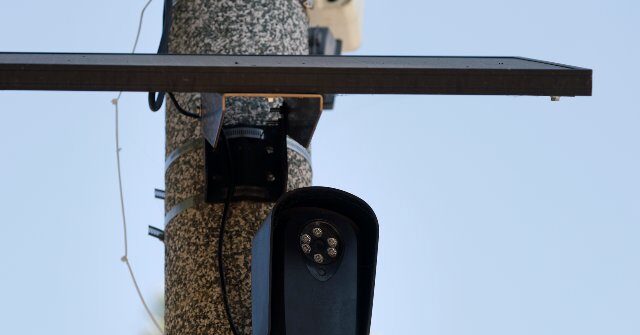
Flock cameras, the technology at the center of the case, are automated license plate readers used by police departments across the country. The systems photograph passing vehicles and log their plates, allowing officers to search for the movements of specific cars. The technology has drawn sustained criticism from privacy advocates, who have argued that the cameras can be used to violate people’s privacy. They have pointed to instances in which officers misused the systems, including cases similar to Hammond’s, as evidence of the risks.
Breitbart News previously reported that at least 50 law enforcement officials have been caught using Flock cameras to stalk people:
Marci Bakely, a 50-year-old single mother in Jefferson, Georgia, was one of them. Her ex-boyfriend, Michael Steffman, police chief in nearby Braselton, allegedly tracked her using the Flock license plate reader system. According to audit logs compiled by “Have I Been Flocked,” which aggregates police search records, Steffman searched Bakely’s plate and her teenage daughter’s about 600 times.
The surveillance began while they were dating and continued after the breakup. Bakely installed security cameras and had mechanics check her car for tracking devices, unable to work out how Steffman always knew where she was. When she confronted him, he admitted in a text message that he was using Flock cameras to monitor her.
Supporters of the cameras have countered that they are a valuable law-enforcement tool. Departments that deploy the systems have credited them with helping to locate stolen vehicles, find missing people and identify suspects in criminal investigations.
The debate over the technology has intensified as the systems have spread to more communities. Critics have raised questions about who has access to the data the cameras collect, how long that data is retained and what safeguards exist to prevent abuse by individual officers. Cases in which police personnel have used the databases to track people for personal reasons have become a recurring point of concern for opponents of the technology.
In Hammond’s case, the volume of searches stood out. Running a single plate 166 times over a span of roughly five months suggested a sustained pattern rather than an isolated lapse in judgment. The fabricated explanations she gave for the searches, according to the academy documents, indicated an effort to conceal the activity from supervisors.
The documents from the South Carolina Criminal Justice Academy, which oversees standards and training for law enforcement officers in the state, provided the basis for the public account of her conduct. Such records typically accompany proceedings related to an officer’s certification, though the article of record did not detail whether Hammond faces any action on her state certification beyond her firing.
Read more at the New York Post here.
Lucas Nolan is a reporter for Breitbart News covering issues of AI, free speech, and online censorship.
Read the full article here