


Tokyo is building a military and intelligence architecture very different from the one that defined its postwar era
Released in early August, the Japanese Ministry of Defense’s latest white paper signals that Tokyo, under Prime Minister Sanae Takaichi, is converting years of incremental modernization into a more integrated and far-reaching national-security architecture – one that is altering the strategic landscape along China’s eastern periphery. It envisages a system designed not merely to absorb an attack, but to conduct strikes farther from Japanese territory.
The white paper frames Japan’s security environment as the most severe and complex since the end of World War II. It points to Chinese military activities near Japanese waters, the Taiwan question, North Korea’s nuclear and missile programs, and closer coordination among China, Russia, and North Korea. These are Tokyo’s stated assessments. More consequential is the early revision of Japan’s three core security documents – the National Security Strategy, National Defense Strategy, and Defense Buildup Program – and the translation of the post-2022 defense expansion into a tighter, more comprehensive system.
Two developments stand out: a major reorganization of intelligence and the military and the operationalization of long-range counterstrike systems that extend Japan’s reach well beyond its traditional defensive perimeter.
A new intelligence command for a new era
A central institutional step is the creation of the National Intelligence Bureau on July 31. Upgrading the former Cabinet Intelligence and Research Office, the bureau consolidates information from across government agencies and operates with roughly 700 personnel as the secretariat of a National Intelligence Council chaired by the prime minister. Japan has long managed with fragmented intelligence structures; the new body is designed to function as a stronger central ‘control tower’.
This move coincides with expanded satellite and maritime surveillance, cyber and electromagnetic capabilities, and improved joint command arrangements under this year’s reorganization of the military. The white paper lists command-and-control and intelligence functions among seven priority areas and describes a national defense architecture that deliberately links diplomatic, intelligence, economic, and technological instruments.
Further steps – anti-espionage legislation and the possible creation of a dedicated foreign-intelligence agency – remain under discussion. The direction is clear: tighter integration of intelligence collection, analysis, economic security, technology policy, and military planning.

Counterstrike capabilities and the limits of ‘senshu boei’
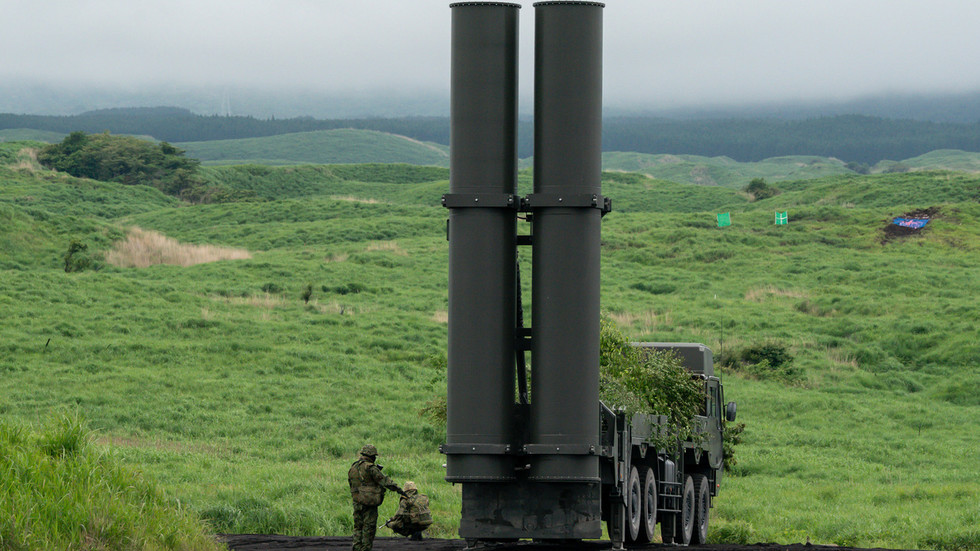
The second defining change concerns counterstrike. The white paper identifies stand-off defense systems as a core pillar of the buildup and presents counterstrike capabilities as essential for deterring invasion. Japan maintains that these systems remain consistent with senshu boei – its exclusively defense-oriented policy – while seeking the ability to address threats before they reach Japanese territory.
In practice, the shift alters Japan’s traditional posture. For decades, Japanese defense emphasized territorial protection, missile interception, and responses after an attack had begun. Long-range systems change that. Japan is acquiring Tomahawk cruise missiles and upgrading indigenous stand-off weapons. Among the systems drawing particular attention is the Type-25 anti-ship missile, designed to engage naval targets at greater distances. Development of hypersonic weapons and unmanned platforms – aircraft, surface vessels, and underwater vehicles grouped under a SHIELD (Synchronized, Hybrid, Integrated and Enhanced Littoral Defense) concept – is also advancing. These elements form a more complete kill chain linking intelligence, surveillance, command, and distant engagement.
From a regional perspective, such capabilities complicate security calculations along the first island chain and in waters near Taiwan. Japanese territory can increasingly function not only as a defensive position but as a platform supporting or conducting operations farther from the home islands.
Resources, industry, and structural change
Financial resources are expanding in parallel. Japan accelerated its target of defense spending equivalent to 2% of GDP. Fiscal 2026 expenditures, including costs related to the Special Action Committee on Okinawa and the realignment of US forces, exceeded ¥9 trillion (almost $56.5 billion) for the first time. The white paper elevates defense production and the technological base to a central place, treating them as integral to overall defense capability.
This year’s reorganization of the military reflects this approach. Joint command structures are being strengthened, procurement is being linked more closely to domestic industry and dual-use technologies, and greater participation by startups is being encouraged. The April revision of the Three Principles on Transfer of Defense Equipment and Technology further eases restrictions on exports, presenting them as means to strengthen deterrence, support partners, and sustain production capacity.
These steps increase the potential for joint production, maintenance, and supply-chain integration with the United States and other partners, positioning Japan as a more active node in a wider defense-industrial network.
Latent nuclear capability and softening boundaries
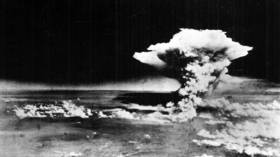
Nuclear policy remains formally constrained. Japan has not decided to acquire nuclear weapons, and Prime Minister Takaichi has repeatedly stated that the country upholds the Three Non-Nuclear Principles of not possessing, producing, or permitting the introduction of nuclear weapons. At the Nagasaki Peace Memorial Ceremony on August 9 marking the 81st anniversary of the atomic bombing – and days earlier in Hiroshima – she affirmed that the country “firmly upholds the three nonnuclear principles” while promoting “realistic and practical initiatives” toward a world without nuclear weapons.
Yet the wording has drawn attention for its careful ambiguity. Takaichi described Japan’s current stance without offering an explicit pledge that the principles would remain unchanged in the security documents now being revised. Discussion around the third principle in particular – the ban on introducing nuclear weapons into Japanese territory – has become more flexible. Government experts reviewing the documents have examined whether that restriction should be reconsidered, with some officials arguing that changed circumstances require a fresh look at nuclear deterrence.
Japan’s advanced civilian nuclear industry, reprocessing facilities, and technical expertise already constitute a latent nuclear capability – an industrial and scientific foundation that could, under certain conditions, be redirected more rapidly than that of most non-nuclear states. This debate does not inevitably lead to a decision to weaponize, but it does indicate that the political boundaries around nuclear policy are less rigid than in previous decades. Given the existing technological base, any long-term movement in this area would carry significant regional implications.
Why China is watching closely
China has responded with diplomatic criticism and military signaling. Chinese officials have described Japan’s accelerated military development as a dangerous turn toward remilitarization and have objected particularly strongly to Japan’s long-range strike capabilities. Beijing has also continued maritime and military activity around areas of strategic importance to Japan, while China-Russia military cooperation has remained an important element of the regional security environment.
Beijing is responding not just to Tokyo’s aggregate military strength, but to its position inside a wider regional network. Japan’s defense cooperation with the US, Australia, the Philippines, South Korea, and other countries is becoming more interconnected. The Japanese strategic documents themselves describe the objective as building multilayered networks and improving interoperability in training, operations, equipment, and industrial bases.
The result is a changing equation. Japan remains much smaller than China in population, military expenditure, and overall military capacity. But it is becoming a considerably more capable, connected, and technologically sophisticated military power than before.
For China, that means the strategic environment along its eastern periphery is changing. Japan is no longer simply the relatively constrained maritime power of the postwar decades. It is developing the intelligence, strike, industrial, and technological capabilities required to act earlier and farther from its territory, while remaining closely integrated with the US-led security system. In short, a more assertive Japan is redrawing the map of East Asian security – and Beijing knows it.
Read the full article here