


The latest hostilities show why military force cannot resolve the crisis. Here’s what the renewed fighting means for Hormuz and beyond
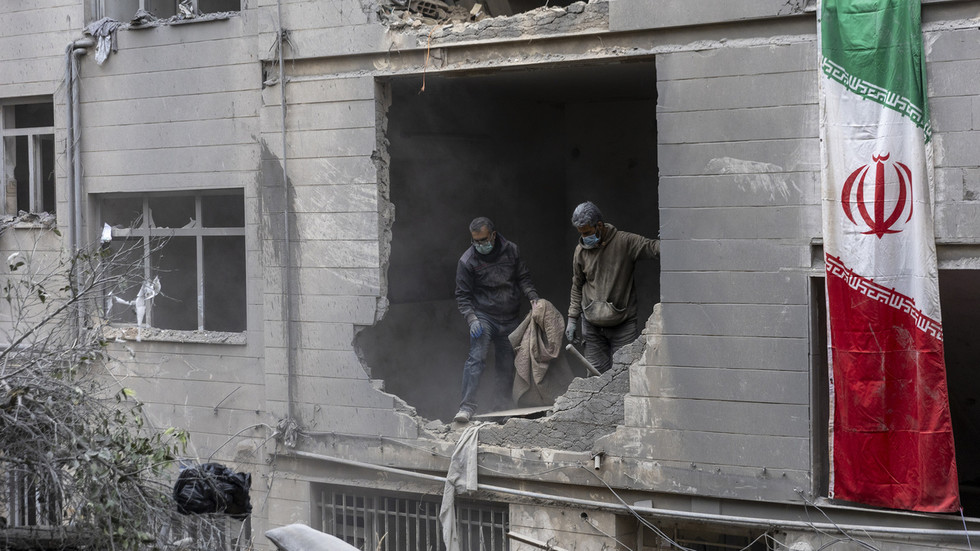
Tensions are escalating again in the Persian Gulf. US President Donald Trump notified Congress of renewed airstrikes on Iran and vowed to destroy all of the Islamic Republic’s military infrastructure in the Strait of Hormuz. In turn, the Iranian army has attacked American targets in the region. According to Iranian media, US communications systems, Patriot missile defense systems, an ammunition depot in Kuwait, and other targets have been hit.
The Yemeni Houthis have also joined the fighting. In response to Saudi Arabia’s strikes on Sanaa Airport, they attacked Abha Airport in Saudi Arabia with missiles and drones and warned all airlines against flying in Saudi airspace.
How are the parties approaching the latest round of conflict, and how will the events unfold? We explore below.
A perfect stalemate
In our previous article on Iran, we suggested that the most likely scenario after the ceasefire would be occasional exchanges of fire, with Iran effectively controlling traffic through the Strait of Hormuz. This is precisely what happened. Omani territorial waters remain mined and vessels can only move through Iran’s territorial waters. The June memorandum has effectively forced the US to accept this situation.
However, the contradictions have only deepened since then. For one thing, neither the US nor Iran is interested in resuming the hostilities. But since neither inflicted a strategic defeat on the other in the previous round, they have been unable to agree on anything substantive. Any agreement is a compromise, a concession – but why should anyone give in if there are no losers?

In this situation, military logic pushes the two sides to renewed hostilities; political logic also favors war, since it believes the contradictions can be resolved only by force; and the economic logic also advocates for war, since normal traffic through the Strait of Hormuz has not been resumed and the global oil shortage persists.
At the same time, no one is ready to fight; neither the US nor Iran has the means to inflict a strategic defeat on the other side. And until there is an understanding of how to achieve this, until one side is convinced that it can achieve its goal by force, this precarious and absurd balance will persist.
The US tried to outsource the war to the Arabs, suggesting: ‘You need it, you deal with Iran’. But there were no fools among the Arabs. Even the UAE, the only Arab nation to publicly side with the US, was not willing to fight. This is understandable: If the UAE really does get involved in a full-scale war with Iran, they risk receiving the brunt of it. The entire infrastructure of the Gulf monarchies, all those gilded skyscrapers on the coast, all the desalination plants that supply water, and all the port facilities will be easily targeted, since they are lined up along a narrow strip of coastline directly opposite the Iranian coast.
In June, America needed a break. The World Cup, Trump’s birthday, and the 250th anniversary of America’s independence were not events that the administration wanted to be overshadowed by an increasingly unpopular war at home, with exploding missiles and drones dominating the headlines.
The US needed some kind of document that the public would believe – so instead of a full-fledged peace treaty, the 14-point memorandum emerged.
For its part, Iran needed the US to lift the blockade which created problems for it. The Gulf Arab states also sought to lift the blockade – in fact, the American blockade was a bigger problem for them than the blockade imposed by Iran.
Meanwhile, long-term issues such as security guarantees for Iran, the permanent status of the Strait of Hormuz, and the fate of the Iranian nuclear program remain unresolved. They require complex compromises, which neither side is currently capable of.
Nevertheless, over the past month, some of the accumulated oil in the Gulf has entered the market through the ‘partially open’ strait. While this hasn’t solved the problem of depleted long-term reserves, it has significantly lowered prices and partially relieved Western countries, including the US, of the inflationary pressure that accumulated in recent months.
Schrödinger’s war
Now we’re witnessing another escalation. Will it lead to a new full-scale war? Let’s assume not. Here’s why.
War can be likened to Schrödinger’s cat – the thought experiment in which a hypothetical cat sits in a box with a device capable of killing it with 50% probability. Until the box is opened, the outcome cannot be known, meaning the cat is simultaneously alive and dead to us. In physics, this phenomenon is called quantum uncertainty.
In preparation for war, the parties build up their military, plan their actions, conduct exercises, analyze, and predict how the enemy will behave. However, the pre-war period is always a ‘closed box’. It’s impossible to determine in advance what will happen during a war and whether the pre-war plans will be of any use. Only war will ‘open the box’.
It may seem that after the war in Iran, nothing has really changed and the parties largely returned to their pre-war state since the contradictions between them have not disappeared. But in reality, it has become clear that the US and Israel cannot change the regime in Tehran by military force, and Iran cannot inflict critical damage on the US and Israel. The war has demonstrated to all sides the limits of their capabilities. This is a fundamental factor that will determine the state of affairs in the region for many years to come.
Bearing this in mind, the parties will prepare for a new conflict. There’s a a saying that goes: ‘generals always fight the last war’, which is usually said with disdain. But in reality, the previous war is the only practical experience they have, while theoretical military constructs are detached from reality. This is why military doctrines are so conservative. They are written in blood.
Preparing for the next war will take time. Much has to be reconsidered, new ideas must emerge, and resources must be built up to support these ideas.
When preparing for a new war, the winning side is always more vulnerable, since it is less motivated to correct past mistakes. In this sense, Iran is vulnerable, and its leadership may tend to rest on its laurels, thinking: ‘The last time, we blocked the strait and successfully launched Shahed drones against our neighbors, so next time, we need to do the same, only with more resources. For example, launch 2,000 drones a day instead of 200.’ Iran’s adversaries, however, will be forced to draw deeper conclusions, and this could give them an advantage the next time. Drones are relatively simple targets; it’s much easier to build an effective, scalable, and inexpensive air defense against them than against jets and missiles. But again, this is a matter of future concern, and will take several years at least.
Unthinkable events
During war, things that were previously unthinkable can happen, only to later become the new norm. In the case of the war with Iran, this was first of all the assassination of leaders, and secondly, the closure of the Strait of Hormuz. The repercussions of these events varied. No one talks much about the assassination of leaders – it is considered a sort of anomaly. But now, everyone must assume that it is possible, and no one is invincible, including the US. Pandora’s box has been opened.
As for the Strait of Hormuz, it has become the war’s decisive battle, and the possibility of its renewed blockade will impact many things. Any decisions regarding logistics, investment, and industrial construction will be made based on this, and will be made with caution. When the strait closed, the fate of the Persian Gulf monarchies changed forever. The psychological trauma has been profound and will affect at least one generation.
There is another factor, one that acts slowly but inexorably. Future conflicts are determined by global changes. Before World War I, everyone was convinced that this type of war would never happen. The economy was global, the world united, capital and people flowed freely from one country to another, and developed countries simply could not wage war against each other. Sound familiar?
But then came the Industrial Revolution, which created new military capabilities and an immediate desire to test them. This led to World War I and soon afterward, World War II.
The current situation is similar. The AI revolution is underway, offering radically new military capabilities. It is impossible to predict the vector of this development and the extent of its future impact – and this is the main factor of uncertainty. Any speculation on this matter is akin to trying to guess whether Schrödinger’s cat is alive or not.
***
A single individual, even the US president, cannot influence so many objective factors. Even if Trump decides to bomb Iran until he runs out of bombs and missiles, it’s unlikely to lead to regime change in Iran. And this means that the escalations and ceasefires will continue until the world changes sufficiently to alter the outcome of the (alas, inevitable) next war.
Read the full article here