


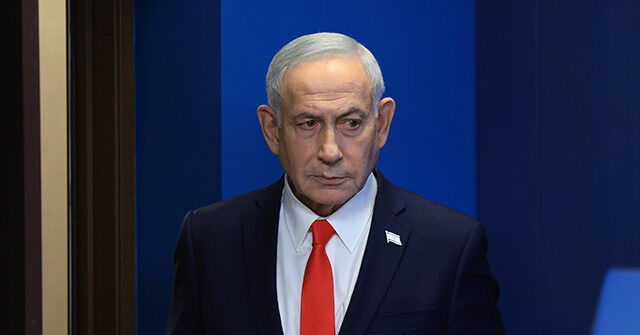
Ofir Katz, head of the Israeli parliamentary coalition that supports Prime Minister Benjamin Netanyahu, said on Sunday that national elections will be held on October 27.
It will be the first such election since Hamas launched the Gaza War by kidnapping, killing, and raping hundreds of Israeli civilians in the October 7, 2023, massacre.
The Israeli parliament, the Knesset, voted almost unanimously to dissolve on May 20, setting the stage for national elections. The vote in the 120-seat chamber was 106 in favor of dissolution, and zero against.
The vote was triggered by a falling-out between Netanyahu’s governing coalition and some ultra-Orthodox (or haredi) lawmakers, who said they “no longer have trust” in the prime minister after he refused to push a bill that would exempt the Orthodox from being drafted into the Israeli military.
Netanyahu’s coalition decided to support the vote to dissolve parliament because they gained some control over when the next election would be scheduled. The haredi groups wanted to hold the elections in September, before the Jewish High Holy Days, in part because that could increase their voter turnout.
Instead, the default date of October 27 — 90 days from the dissolution of parliament — will be kept. The Times of Israel (TOI) noted on Sunday that this will be the first time a new election has been held precisely on schedule in 40 years, and Netanyahu will be the first Israeli prime minister to finish the entirety of his term since 1973.
Having some influence over the glide path to the next election may not be enough to keep Netanyahu in office, or his coalition in power. TOI noted that current polling shows Netanyahu, his Likud party, and Likud’s allies would come up short of a majority – and so would the anti-Netanyahu bloc, although it seems a bit closer.
The Financial Times (FT) reported on Monday that centrist former military chief Gadi Eisenkot is now leading Netanyahu by 41-37 percent in public opinion polls and his fast-growing Yashar party looks like it would be one seat ahead of Likud if the election were held tomorrow.
Eisenkot is firmly opposed to the sort of draft exemptions that shook up the Likud alliance. His son and two nephews died fighting in the Gaza War. He has criticized Netanyahu as too eager to keep the war against Hamas going, while Netanyahu accuses Eisenkot of going soft against the Palestinian terrorists.
Another aspiring successor to Netanyahu, former prime minister Naftali Bennett, seems to have stumbled after forming a partnership with another former PM, Yair Lapid. Their new “Together” party is down to 18 seats or less in current polls.
Netanyahu has suffered criticism for security failures leading up to the October 7 attacks, his handling of the ensuing Gaza War, and his management of Israel’s current conflict with Iran and its Lebanese terrorist proxy, Hezbollah. There have also been concerns about the 76-year-old Netanyahu’s health, as he received a pacemaker in 2023 and was treated for prostate cancer in 2026, and he is dogged by a long-running corruption controversy.
Considering how long he has held the prime minster’s office during such a tumultuous period, Netanyahu’s supporters argue he retains formidable political strength, and every coalition lined up against him is more fractious than the one that supports him. The UK Guardian begrudgingly acknowledged Netanyahu as a “consummate political survivor who has repeatedly defied expectations.”
Read the full article here