


More than seven in ten Italian voters believe that illegal immigrants should be deported and returned to their homeland, as a pro-borders consensus appears to be finally developing in Europe.
According to a survey conducted by Euromedia Research, 73 per cent of the Italian public believe that illegals should be removed from the country. The poll also found that 57 per cent of voters in Italy view illegal immigration as being mostly negative, compared to just 14 per cent who saw it as a positive development.
In comments reported by Il Giornale, Euromedia Research director Alessandra Ghisleri said that “there is broad agreement, across political lines, on the idea that illegal arrivals must be firmly managed,” adding that “a significant portion of the centre-left electorate also shares this view.”
The poll also found that nearly eight in ten Italians viewed the stability of the Mediterranean in general as critical to their own country’s economic and security future. Of those surveyed, 34 per cent saw controlling immigration at sea as the most pressing issue and the greatest risk to regional stability.
“While energy is the second most important concern, adding together migration flows, conflicts, and political instability, it clearly emerges that Italians’ real concern is the overall security of the Mediterranean and Middle East,” Ghisleri said.
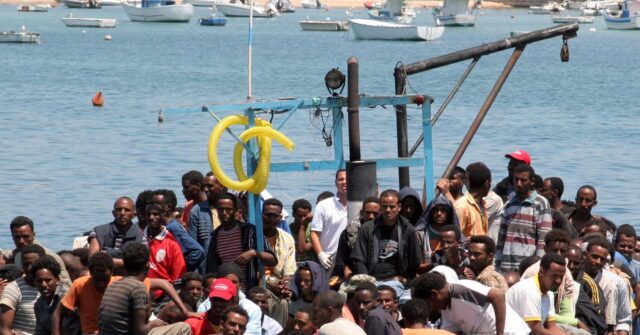
Italy, like other European nations along the Mediterranean, saw a major increase in migrants setting sail in often dangerously unseaworthy vessels from the coasts of Northern African countries like Libya, where people-smuggling networks operate. Often, the migrants are only given enough fuel to make half of the journey to Europe, as human traffickers have become aware that pro-open borders NGO ships will come to their rescue and bring them the rest of the way for them.
Italian Prime Minister Giorgia Meloni has seen some success in reducing the number of illegals crossing the Mediterranean during her first term in office by negotiating EU-level deals with the governments of Libya and Tunisia, incentivising them to clamp down on the people-smuggling groups. Yet, migrant boats have continued to set off, and deportation efforts have been outpaced by arrivals, with around six thousand removals compared to over 66,000 illegal arrivals.
While both numbers have improved under Meloni’s government, with arrivals nearly cut in half and removals nearly doubled, the continued disparity has left room on the Italian political right for demands for further action. This has led to the formation of a new political party, National Future, formed by a retired Army general and a former member of Deputy PM Matteo Salvini’s League party, who broke away in February.
Vannacci has called for a “remigration” agenda and for better incentives for native Italians to have more children. However, the breakaway party has so far only called for the removal of illegals, criminals, and those who fail to integrate into Italian culture. Nevertheless, his position is only supported by 36.8 per cent of voters according to the Euromedia Research poll, compared to 44.4 per cent who disagree and 56.8 per cent who think they are impractical.
Yet, with Vannacci’s party rising in the polls, with National Future climbing to six per cent and surpassing Salvini’s League at 5.6 per cent, the upstart party may split the right-wing vote in next year’s elections, either forcing Meloni into making a deal with Vannacci or potentially seeing the right-wing bloc lose power altogether.
Meloni will likely hope to solidify her position on migration by using third-party deportation hubs, a policy her government spearheaded and finally won European Union approval for last month. By immediately sending illegals to a third-party country outside of the EU, like Albania, Rome and others will hope to disincentivise further illegal crossings.
Follow Kurt Zindulka on X: Follow @KurtZindulka or e-mail to: [email protected]
Read the full article here