


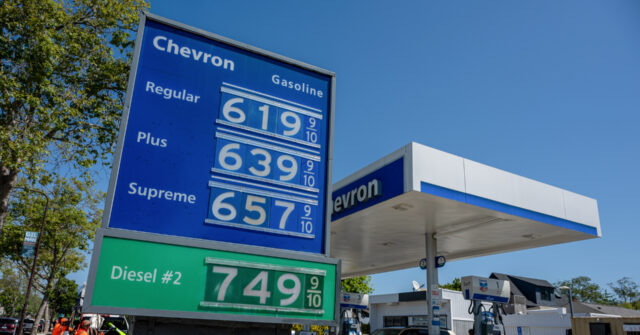
Consumer prices rose sharply in May, with rising energy prices pushing the nation’s leading inflation gauge to the highest level in three years.
The consumer price index rose 0.5 percent in May compared with April, the Department of Labor said Wednesday. Compared with a year ago, prices are up 4.2 percent. Those increases were in line with expectations.
Core prices, a measure that excludes volatile food and energy prices, rose 0.2 percent compared with the previous month. For the year, core prices are up 2.9 percent. That compares with expectations of 0.3 percent for the month and 2.9 percent for the year.
The Labor Department said that the energy index, which rose 3.9 percent in May, accounted for over sixty percent of the monthly all-items increase. Gasoline prices jumped seven percent in May. They were up 5.4 percent in April and 21.2 percent in March. Compared with a year ago, gas prices are up 40.5 percent.
There was some relief for consumers in the grocery store. Prices of food consumed at home rose just 0.1 percent, a big slowdown from April’s 0.7 percent increase. For the year, grocery prices are up 2.7 percent.
Core goods prices—excluding food and energy—actually fell in May, declining 0.1 percent after being flat in April and rising 0.1 percent in March. For the year, core goods prices are up just 1.1 percent. Prices of new cars fell 0.3 percent and are up just 0.2 percent from a year ago. Prices of used cars ticked up 0.2 percent but are down two percent from a year ago.
Core services prices, a measure that excludes energy services, rose 0.3 percent and were up 3.4 percent from a year ago.
Inflation has been running high since March, when the oil price shock first hit following the launch of the war with Iran. While much of the increase was initially concentrated in gasoline and energy more broadly, inflationary pressures spread into services in April and May. The pace of price increases has been slowing for two months, from March’s 0.9 percent increase to April’s 0.6 percent to May’s 0.5 percent.
The Federal Reserve targets two percent annual inflation but uses a different gauge, the personal consumption expenditure price index compiled by the Department of Commerce, as its preferred measure of consumer prices. In recent months, the annual pace of PCE inflation has run slightly above the better-known consumer price index published by the Labor Department.
The public is increasingly unhappy about rising prices. Surveys of consumers show a decline of optimism and satisfaction, with the University of Michigan’s index of consumer sentiment hitting an all-time low last month.
Sixty-eight percent of Americans say they disapprove of President Trump’s handling of the issue of inflation, according to a recent poll by YouGov for the Economist. Fifty-two say the prices they pay for goods have risen “a lot” over the past year. While the jobs market has strengthened in recent months, adding an average of 188,000 workers to payrolls over the last three months, 48 percent of Americans say that inflation is a more important issue than jobs—and 41 percent say jobs and inflation are equally important. Just four percent say jobs are more important than inflation. Thirty-four percent picked inflation as the most important issue facing the country, by far exceeding fourteen other issues from “jobs and the economy” (11 percent), crime (3 percent), immigration (seven percent), and health care (nine percent).
Read the full article here