


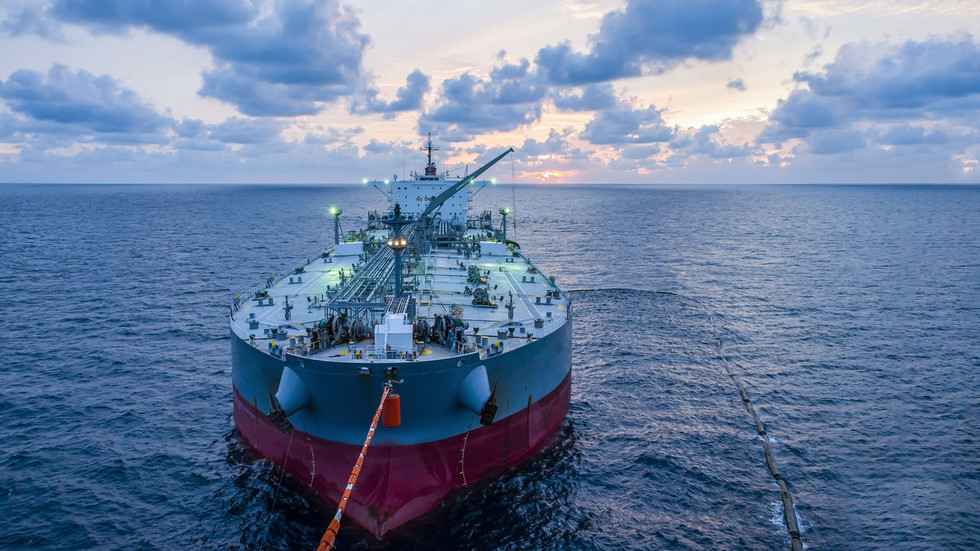
The bloc seeks to keep the threshold – which Moscow has dismissed as illegal – at below $60 per barrel, the report claims
The EU is mulling a temporary freeze on its price cap on Russian oil as the US-Israeli war against Iran led to soaring energy prices and global economic shock, Bloomberg reported on Sunday, citing sources.
The proposed measure is part of the EU’s 21st sanctions package against Russia over the Ukraine conflict, which is set to be discussed in early June. Under the current oil price cap mechanism, Western entities are barred from handling Russian oil above the mandated threshold, which is automatically set every six months at 15% lower than the average market rate for Russian Urals crude.
The current price threshold is $44.10 per barrel, while the Urals market price floats around $86 per barrel, although it is significantly lower than the $120 per barrel seen at the height of the Iran crisis.

The oil rally means that when the cap comes under review in July, the level will likely rise to at least $65, above the $60 threshold initially set by the Western-dominated G7 group in 2022, Bloomberg sources said. Other options under consideration include suspending the automatic increases until the end of the year or reverting back to the $60 cap.
Moscow has dismissed the oil price cap, calling it illegal, and has barred oil shipments to countries that adhere to it. Kremlin spokesman Dmitry Peskov called it a “distortion and destruction of the market pricing process.” Russia has diverted much of the energy it once exported to Europe to countries such as China and India.
The Iran war has hit the EU economy hard, with the World Bank projecting energy prices surging 24% in 2026. TTF natural gas futures have risen by up to 60% since the closure of the Strait of Hormuz, marking the continent’s sharpest energy shock since 2022.
The EU experienced a similar crisis that year when sanctions on Russia over the Ukraine conflict not only proved costly and disruptive for the bloc’s economy and taxpayers, but also gave Russia windfall revenues.
The US – which has also grappled with rising gasoline prices – issued a Russian oil sanctions waiver to alleviate pressure on the markets, allowing vulnerable countries to buy Russian oil already at sea. The measure was extended earlier this month despite Treasury Secretary Scott Bessent’s pledge not to do so.
Read the full article here