


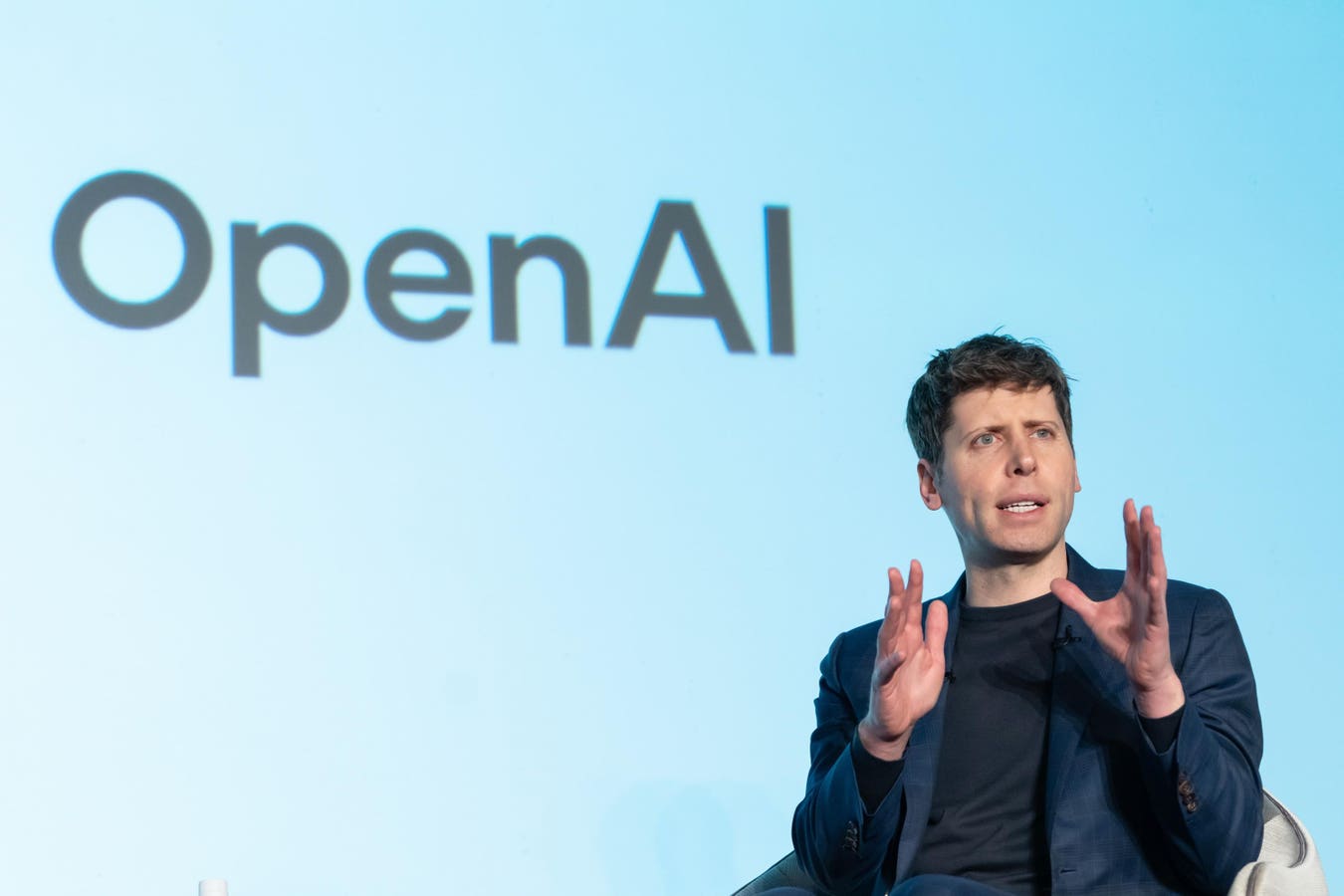
Open AI CEO Sam Altman speaks during a talk session in Tokyo, Japan. (Photo by Tomohiro Ohsumi/Getty Images)
Getty Images
AI’s economics are starting to break down. Across Big Tech, startups and model providers, companies are discovering that the cost of running generative AI systems is rising faster than the revenue they bring in — a reversal that is forcing budget cuts, internal tool restrictions and warnings from executives who once championed the technology. If the trend continues, the sector’s soaring capital spending could drag on margins and valuations.
For more than a decade, the idea that AI could replace massive numbers of workers has fueled both optimism and anxiety — and helped justify enormous investment across the tech industry. But the numbers now tell a different story. No matter how compelling the narrative, the economics have to work. And increasingly, they aren’t, raising questions about whether the assumptions underpinning today’s AI boom can hold.
AI Costs Start Outrunning The Story
A number of companies developing basic generative AI technology — separate from the decades of other AI technologies embedded in software — are finding that using the generative AI they promote costs more than they expected.
Axios senior AI correspondent Madison Mills, speaking to CNN last month, said she has been hearing from companies about how much they spend on the technology. Keeping human employees might be more economical.
When asked about this dynamic, Mills said, “But that’s what we’re really starting to see, especially at the big tech companies. I spoke with a VP at NVIDIA who first flagged this to me. He said, ‘Oh yes, for months, our costs for my team have been more for AI than human.’ So that was the first flag. And then we started to hear this coming out in droves.” In her Axios article, Mills identified the Nvidia vice president as Bryan Catanzaro, vice president of applied deep learning.
Uber’s CTO reportedly spent his entire 2026 budget on AI-related costs by the start of the second quarter. “And obviously that means he’s spending more on that than he’s spending on human workers,” Mills said. She added that she’s been hearing startup founders brag about their high AI bills as a sign that they’re “really ahead in the AI race.” The founder mentioned was Amos Bar-Joseph at Swan AI, who wrote on LinkedIn that their AI bill ran $113,000 in a single month — for a four-person team.
So, Nvidia and Uber have both noticed the growing expenses. Founders who think high spending on technology is a badge of success recall those from the dot-com era, when unseasoned executives ignored business basics, many even arguing that profits were no longer important. Bragging about high rates of spending while ignoring cash burn may not be identical to history, but it strongly rhymes.
Even AI Leaders Feel The Strain
The issues of business demands, basic accounting and grade-school arithmetic aren’t limited to startups.
Tom Warren, a senior correspondent at The Verge who has covered Microsoft technology for more than two decades, wrote that the company begun opening Anthropic Claude Code access to its developers in December 2025. It’s a coding tool and part of an effort to get many other employees to experiment with coding.
Warren said it was very popular, but now Microsoft is pushing developers to use its own Copilot CLI tool instead. According to his sources, engineers responsible for Windows, Microsoft 365, Outlook, Microsoft Teams and Surface must end their use of Claude Code by the end of next month.
“Microsoft is telling employees that the decision is about converging on Copilot CLI as its main agentic command line interface tool across Experiences + Devices, but sources tell me the decision is also a financial one,” he wrote. Cutting the tool charges would help make Microsoft’s operating expenses look more reasonable to investors as the quarter closes in June, which is also the end of the company’s financial year.
Revenue Misses Add More Pressure
Added business in theory should have supported the additional costs. Last month, The Wall Street Journal reported that OpenAI missed its new user and revenue targets, raising concerns among some in the company and on its board because of its massive spending on data centers, which are necessary to deliver the services.
“Chief Financial Officer Sarah Friar has told other company leaders that she is worried the company might not be able to pay for future computing contracts if revenue doesn’t grow fast enough, according to people familiar with the matter,” wrote Berber Jin at the Journal.
Morgan Stanley wrote that global tech companies have announced $740 billion in capital expenditures this year, a 69% jump over 2025. If those companies can’t save more than they spend, they won’t be customers for long, creating enough pressure on highly valued stocks to pull down the S&P 500 during a rough economic stretch.
Read the full article here