


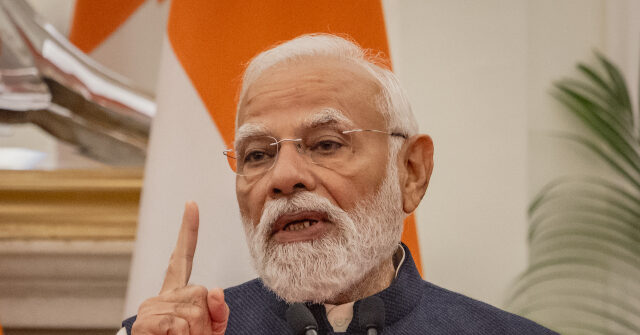
Indian Prime Minister Narendra Modi on Sunday urged citizens to resume coronavirus-era work from home (WFH) practices to save fuel and reduce reliance on imports during the Strait of Hormuz oil crisis.
“In this time of global crisis, we have to make a resolution, keeping duty paramount, and fulfill it with complete dedication. A big resolution is to use petrol and diesel sparingly. We must curb our use of petrol and diesel,” Modi said.
Modi also said India must “place great emphasis on saving foreign exchange” by cutting back on imports. To that end, he urged citizens to postpone foreign travel and refrain from buying gold for the coming year, reduce their consumption of goods like cooking oil and fertilizer, and resume pandemic WFH practices.
“We must prioritize work from home, online conferences, and virtual meetings again,’ he said.
“The growing culture of weddings abroad, travelling abroad, and vacationing abroad is becoming prevalent among the middle class. We must decide that during this time of crisis, we should postpone travelling abroad for at least a year,” he added.
On Monday, an IT workers’ organization called the Nascent Information Technology Employees Senate (NITES) wrote to the Labor Ministry asking for an official policy on working from home.
NITES was generally in favor of WFH measures, arguing that such policies were proven to reduce costs without compromising productivity during the Wuhan coronavirus pandemic.
“The experience of the pandemic clearly established that mandatory work-from-home in suitable IT roles is practical, technologically feasible, and operationally sustainable,” NITES contended.
Other professionals and business analysts told NDTV on Monday that a debate was already raging through the corporate sector about the feasibility of returning to WFH practices, especially if Modi makes the decision voluntary by refusing to issue official directives.
Most leaders in the IT sector agreed with NITES that remote and hybrid work was increasingly accepted for their industry, with benefits to employee well-being and reduced costs.
“Employees have experienced relief from commuting stress and have found better work-life balance. Employers have seen improved outcomes. Work should be measured by results, not time spent at a desk,” said Mentoria CEO Nikhar Arora.
On the other hand, some industries are clearly less suited for WFH, and there could be tensions if part of the workforce must continue reporting to offices.
“Readiness varies sharply across sectors. Tech firms can pivot quickly. SMEs and manufacturing cannot. Remote work needs trust, technology, and process discipline. Many employers still lack this infrastructure,” said Anil Agarwal, founder of the employment service InCruiter.
A few other Asian nations have implemented fuel conservation policies since Iran cut off the flow of oil through the Strait of Hormuz, including Bangladesh, Pakistan, the Philippines, and South Korea. None of the others have officially pressed for WFH practices, as Modi did in his speech on Sunday, but they have experimented with shorter work weeks and voluntary no-driving days.
Read the full article here