


The Spirit of Trump Sovereign Investment
The folks who are convinced Trump is driving us toward “state capitalism” can take a breath.
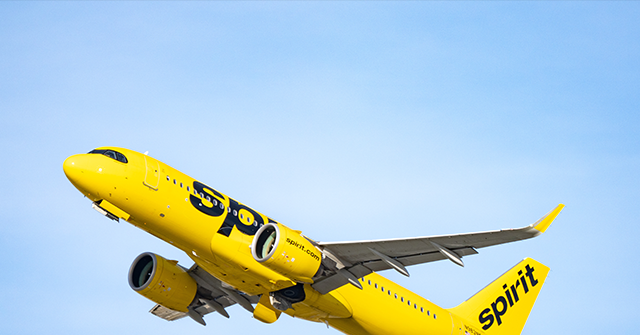
Over the weekend, Spirit Airlines gave up the ghost and went to that great hangar in the sky, ending 34 years as America’s leading ultra-low-cost carrier. The administration let it happen, and the critics who assumed a bailout was a foregone conclusion got it wrong.
It wasn’t for lack of trying on the part of Spirit’s creditors and management. Reports indicate the White House was willing to extend up to $500 million in financing but on terms that demanded real equity and repayment discipline. Trump wanted the kind of terms an investor would insist on, not the kind a political patron would offer.
The creditors looked at the deal and decided they preferred liquidation, betting they’d recover more by repossessing planes and gates than by accepting a restructuring that imposed losses on them. The administration didn’t sweeten the pot. It didn’t rewrite contracts or force terms on bondholders the way the Obama administration did with the auto bailout. When the deal didn’t clear, it let the market work.
That’s not state capitalism. It’s something closer to fiduciary sovereign investment, where the government is willing to deploy capital, but only on terms that protect the taxpayer and can reasonably be expected to generate a positive return. Not just a positive return. Insider accounts suggest Trump does not want sovereign investments merely to slouch into the green. He wants them to beat markets. He wants to be the Warren Buffett of the U.S. Treasury. The bondholders’ revealed preference—liquidation over Trump’s terms—shows that the demand for White House alpha had real teeth.
Subsidizing a Low Cost Airline Risked a Domino Effect
And there are strong reasons to think letting Spirit go was the right outcome regardless. A subsidized Spirit, operating on a government lifeline, would have been a competitive nightmare for every other carrier trying to serve leisure markets at sustainable prices. When a failing airline gets propped up with public money, it doesn’t restore competition. It distorts it. The subsidized carrier goes back out and undercuts rivals who are trying to operate without federal favors, weakening them in turn and creating more candidates for the next bailout.
That cycle is what nearly destroyed the airline industry in the 2000s, when carrier after carrier lingered in bankruptcy for years. The Trump administration broke the cycle instead of repeating it.
Spirit also wasn’t exactly a poster child for economic nationalism. The airline operated a fleet that was completely made up of aircraft manufactured by Airbus, the European state-sponsored enterprise. There was not a single aircraft painted in Spirit yellow manufactured by Boeing, the American company that competes with Airbus. And even though some of Spirit’s planes were assembled in the U.S. beginning in 2016, the components were mainly imported. So, American taxpayers would have been on the hook for a business exclusively patronizing a non-American company.
Of course, Spirit’s enthusiasm for Airbus was not rooted in some sort of pro-European zeal. It is just that those Airbus planes were relatively inexpensive, in part because they benefited from European government subsidies. (What Europeans should think about their tax dollars supporting sales to a low-cost U.S. airline is a question for another day.) And competition between Boeing and Airbus is useful because it disciplines both companies. So long as Boeing remains the made-in-America monopoly, we will need to accept that U.S. fleets will include foreign flying machines. But the argument that market discipline is good for manufacturers does not sit well alongside a bailout of the downstream customer.
The Biden Justice Department deserves a share of the blame as well. In 2024, it blocked JetBlue’s $3.8 billion acquisition of Spirit on the theory that Spirit’s ultra-low-cost model was too valuable to consumers to allow the merger. The dedicated customers the judge said he was protecting now have neither Spirit’s low fares nor the improved JetBlue-Spirit combination the deal would have produced. The antitrust intervention that was supposed to protect competition destroyed the competitor.
Spirit Was Weak, But the Flesh Is Strong
But the market disruption from Spirit’s collapse is likely to be far less severe than the headlines suggest. Spirit’s roughly 100 leased Airbus A320-family aircraft aren’t going to vanish. They’ll be picked up quickly and cheaply by competitors through bankruptcy re-leasing — purpose-built, high-density planes ideal for the same discount leisure routes Spirit was flying. Carriers like JetBlue, Frontier, and Breeze are already racing to absorb Spirit’s routes and gates. Many of Spirit’s 17,000 workers will be rehired by those same expanding competitors. The planes get repainted. The seats do not disappear. Selling tickets, flying the planes, servicing them, and handling passengers will still require workers.
The deserted Spirit Airlines check-in counter at Baltimore Washington International Thurgood Marshall Airport (BWI) in Baltimore, Maryland, on May 2, 2026. (Daniel Heuer/Bloomberg via Getty Images)
Which means the breathless predictions about skyrocketing airfares deserve skepticism. The Bureau of Labor Statistics airfare index shows that through March, fares were running modestly above spring 2019 levels and well below the post-pandemic peak of 2022. There has been an uptick driven by the fuel-price surge from the Iran conflict, but the legacy media’s framing of this as contributing to an “affordability crisis” implies that fares are already at painful levels being ratcheted further upward. That’s not the case. Fares were higher back when Obama was president, to put things in historical context. When the planes that Spirit was flying end up with new operators at a lower acquisition cost, the competitive pressure on fares may actually intensify rather than diminish.
Andrew Mellon has been largely villainized by historians for advising President Hoover to “liquidate labor, liquidate stocks, liquidate the farmers, liquidate real estate.” We’re not advocating a revival of Mellonism. But whatever one thinks of that as a response to the onset of the Great Depression, it contained a kernel of wisdom. Sometimes liquidation really is the right policy.
Read the full article here