


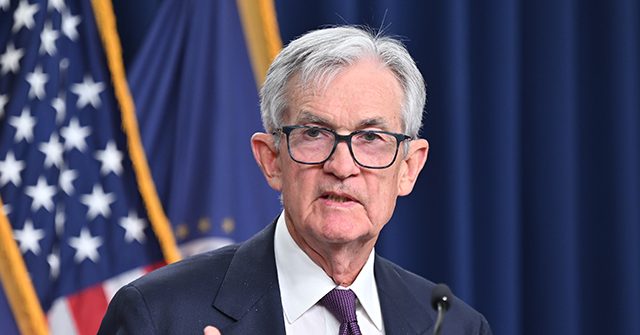
Powell’s Term as Fed Chair Has an Expiration Date
Jerome Powell declared Wednesday that he intends to remain at the Federal Reserve after May 15 — as a governor, and, he says, as acting chairman until a successor is confirmed. On the chairmanship, he is wrong. On his seat as a governor, he has the legal right to stay — but whether he should is a different question entirely.
Powell’s term as Fed chairman expires in May. His term as a governor does not expire until January 31, 2028, or until a successor qualifies. Traditionally, Fed chairmen step down from their board seat when a new governor is confirmed, though this is custom rather than law. The most notable exception was Marriner Eccles, who remained on the board for several years after being replaced as chairman in 1946. But Eccles is best understood as a historical contrast, not a legal precedent. He stayed at President Harry Truman’s invitation, eventually withdrew as vice chairman, and departed under circumstances quite different from the current confrontation.
On the chairmanship itself, Powell was unambiguous. “That is what the law calls for. That is what we have done on essentially the same occasions, including involving me. And what we will do in this situation,” he said, asserting that he will serve as chairman pro tempore until his successor is confirmed.
Powell misstated both the history and the law.
The Statute’s Silence Cuts Against Him
Start with the text. The Federal Reserve Act contains an explicit holdover provision for governors. Board members serve until their successors are appointed. Congress wrote that protection deliberately. It wrote no equivalent provision for the chairman. Courts applying standard principles of statutory construction treat that kind of omission as intentional. When Congress knows how to write a protection and declines to do so for a particular office, the inference is that no such protection was intended.
If Powell tries to cling to his position as chair, he would be asking a court to imply holdover protection for the chairmanship from statutory silence. That is a hard sell under any interpretive framework, and a particularly hard sell before the current Supreme Court, which has been consistently skeptical of agencies claiming authority from ambiguous or absent statutory text.
The 1978 OLC Memo and What the History Actually Shows
The historical precedents Powell referred to do not say what he claims they say.
When President Jimmy Carter replaced Arthur Burns with G. William Miller in early 1978, the nomination came too late for Senate confirmation before Burns’ term expired. The Office of Legal Counsel (OLC) examined the question and concluded that the Federal Reserve Act’s provision allowing the vice chair to fill in during a chairman’s “absence” applies only to temporary unavailability — travel or illness — not to a vacancy. Deputy Assistant Attorney General Larry Hammond wrote that in the absence of any statutory mechanism for filling vacancies, “the President possesses inherent authority to make temporary appointments necessary to ensure the continuing operation of the Executive branch.”
Carter then issued an explicit presidential order appointing Burns as acting chair, a role Burns held until Miller was confirmed on March 8. The transitional chair role required an affirmative act of presidential will. It did not happen automatically.
Later cases involved different circumstances. When Alan Greenspan’s second term expired in March 1996 ahead of his confirmation for a third term, the board voted to make him chairman pro tempore. When Powell’s own first term expired before his reconfirmation under President Joe Biden, the board again voted to designate him pro tem. But in both cases the incumbent had already been nominated for another term by the sitting president. The board votes are best understood as ratifying presidential intent rather than as independent exercises of board authority.
The current situation is categorically different. President Trump has nominated Kevin Warsh to succeed Powell, not to reappoint him. There is no presidential nomination for the board to ratify. Powell’s claim to the pro tem chairmanship would rest entirely either on his assertion that he can independently extend his term or that this can be done through a board vote. But under the 1978 OLC analysis, the board has no authority to name Powell interim chair.
No Other Agency Works This Way
The structural argument against Powell may be the most intuitive of all.
Across the entire federal government, agency heads are appointed by the president and confirmed by the Senate. The board of an independent agency does not elect its own leader. The FDIC board does not vote itself a chairman. The SEC commissioners do not elect their own chair. The FTC, the CFTC, the NLRB — in every case, the chairmanship is a presidential designation layered on top of board membership. Powell’s theory would make the Fed the sole exception to a structural principle that runs through the entire executive branch.
The Appointments Clause exists to ensure that democratic accountability runs through the president for principal officers. A self-perpetuating board chair answers to no one in any meaningful electoral or appointive chain. That is not an independent agency in the American constitutional tradition. It is something closer to a self-selecting oligarchy with control over the money supply.
The Accountability Inversion
Congress built a deliberate tiered accountability structure into the Federal Reserve. Board members serve 14-year terms, heavily insulated from political pressure by design. The chairman serves a four-year term because Congress wanted the leadership of the institution to carry a regular democratic accountability check.
Powell’s theory inverts this completely. He is arguing that the most democratically accountable position at the Fed — the one Congress deliberately tied to a shorter term and presidential appointment — should be filled by the least democratically accountable method imaginable: a vote of officials who serve 14-year terms and are nearly impossible to remove.
If Powell’s reading were correct, Congress’s careful distinction between the two term lengths would be rendered meaningless. Courts do not read statutes to produce that result.
The Senate Obstruction Problem
There is a separation of powers dimension to Powell’s theory that goes beyond the Fed itself.
If a board majority can install its own chair without presidential action, a hostile Senate acquires a tool neither the Constitution’s framers nor the Congress that enacted the Federal Reserve Act ever contemplated and would have found alarming. The Senate could block every presidential nominee and allow the incumbent chair — backed by board members appointed by a previous administration — to continue in the role indefinitely. The president’s appointment power would effectively be nullified not by any constitutional or statutory provision, but by a collaboration between the Fed’s board and a Senate majority.
As interpreted by Carter’s OLC, the law balances the Senate’s power to refuse to confirm a nominee with the president’s power to designate an acting chair from among sitting governors. The Senate can block a new nominee from outside the Board, but it does not thereby acquire the power to work with the board to keep in office a chair the president has not chosen. If the Senate holds out, the president still gets to choose from among the governors the Senate has already confirmed.
The current situation maps onto this precisely. Senator Thom Tillis (R-NC) has already announced that he will not vote to confirm Kevin Warsh while the Justice Department’s investigation into the Fed continues. If Powell is correct that he automatically serves as pro tem chair without any presidential action, Tillis and a handful of colleagues have effectively acquired the power to appoint a chair not nominated by the president. The confirmation power is a check on presidential nominees, not an affirmative power to perpetuate a preferred incumbent indefinitely.
The president’s authority to designate an acting chair from the board, established by the 1978 OLC memo and the Carter precedent, is precisely the constitutional counterweight to that kind of obstruction.
No For-Cause Protection for the Chair
Perhaps the most under-appreciated point in this entire dispute was made in separate journal articles by Harvard law professor Adrian Vermeule and Peter Conti-Brown, the leading academic authority on Federal Reserve governance. The for-cause removal protection in the Federal Reserve Act applies to governors and to board members in their capacity as board members. There is no for-cause protection for chairman.
Conti-Brown’s article “The Institutions of Federal Reserve Independence” states flatly: “Removability protection does not exist for the Fed Chair.” This is not binding legal authority, but it is the considered conclusion of the scholar who has spent more time in the statutory weeds of Fed governance than almost anyone alive. And it corroborates what the text, the OLC memo, and the structural constitutional argument all suggest.
Vermuele puts it this way: “By providing express for-cause tenure protection for members of the Board, but not for the post of Chair qua Chair, Congress created grounds for an inference by negative implication that the Chair as such enjoys no special tenure protection.”
If Vermeule and Conti-Brown are correct, President Trump does not need to establish cause to remove Powell from the chair. He can simply remove him as chair while leaving him on the board as a governor. This would make any attempt by the board to nominate Powell as chairman pro tem absurd because President Trump could just remove him immediately.
President Donald Trump announces the nomination of Jerome Powell to be chairman of the Board of Governors of the Federal Reserve System on November 2, 2017, in the White House Rose Garden. (Official White House Photo by Andrea Hanks)
The obstacle to a president removing a Fed chair is not legal but political and conventional. If a president were to remove a Fed chair for no good reason—or for a bad reason—the Senate could refuse to confirm a successor. He would risk backlash in the court of public opinion for breaking with the precedent of allowing chairmen to serve out their terms. But with Powell already saying he will defy precedent by staying on the board if the Department of Justice’s investigation into the Fed is not resolved—and maybe staying on even if it is—we are already outside of the bounds of precedent. Powell’s claim that he can remain chair after his term expires is probably reason enough for President Trump to remove him.
Powell Is Out as Chair on May 15
Powell’s public declaration that he will definitely serve as chairman pro tempore, without presidential designation and against the president’s evident wishes, is not a careful legal position. It is an assertion of authority the statute does not grant him, made in a manner that makes the confrontation his doing rather than the president’s. If Trump designates an acting chair by presidential order, following the Carter-Burns precedent exactly, Powell would face a choice between stepping aside and suing to claim an office he was never appointed to. Courts grant temporary restraining orders to parties with a clear legal right to the position in dispute. Powell’s legal right to the pro tem chairmanship is somewhere between doubtful and nonexistent.
Powell also said Wednesday that he has no intention of leaving the board until the Justice Department’s investigation into the Fed is resolved to his satisfaction. A Fed chairman conditioning his tenure on the outcome of a law enforcement investigation — and using his position as leverage against the executive branch — is conduct without precedent in the institution’s history.
Powell does have the legal right to remain on the board as a governor until his term expires in January 2028. No one disputes that. But there is a difference between legal right and institutional wisdom. Every Fed chairman before him — with the single exception of Eccles, whose situation was sui generis — left the board when their chairmanship ended. That tradition exists for a reason. Arthur Burns understood it when he declined Carter’s invitation to stay on as governor, writing that the continued presence of a former chairman could be “a complicating distraction.” Burns was right then.
The same is true now, and Powell’s presence would be far more than a distraction. It would be a continuing act of institutional defiance dressed up as institutional loyalty.
Powell can stay on the board. He cannot stay as chairman. And on that question, the law does not give him the choice.
Read the full article here