


Iran was not just another hostile regime chasing regional influence. It functioned as the central hub of a hostile ecosystem that fused terror proxies, illicit finance, disinformation operations, and criminal pipelines into a single integrated machine. Remove the hub and the ecosystem weakens. That is the strategic logic behind this war, and it is why what happened this weekend matters far beyond Tehran.
I have been in rooms where Iranian money was not an abstraction. It moved through shell companies in Dubai and Caracas, surfaced in front groups from Beirut to the Tri Border Area, and armed men who would never shake hands with a cleric in Qom but were happy to take his cash, his drones, and his direction. Tehran didn’t need to plant its flag or station soldiers in every public square to exert control. It needed a reliable clearinghouse, a point where dirty money, precision weapons, propaganda narratives, and expendable proxies converged and were pushed outward with discipline.
For years, Washington reduced Iran to a nuclear compliance problem. The debate centered on enrichment levels, centrifuge counts, inspection protocols. That framing was convenient because it kept the conversation technical and narrow. Breakout timelines are easier to manage than global coercion networks. While policymakers argued over access and verification, the regime built something more durable: an architecture of leverage that stretched across continents and domains.
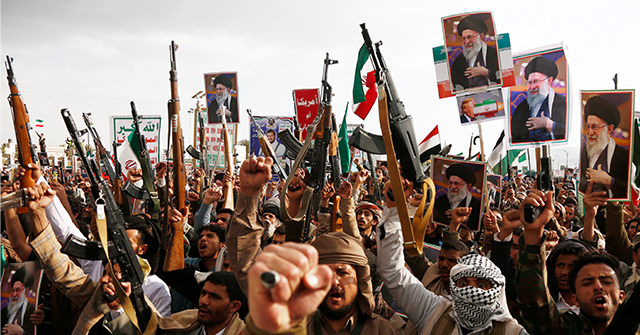
The IRGC assembled a portfolio of managed instability. Hezbollah in Lebanon. Hamas and Palestinian Islamic Jihad in Gaza. The Houthis in Yemen. Shia militias in Iraq and Syria. Each organization embedded locally and plausibly deniable, yet strategically aligned with Tehran for funding, training, targeting intelligence, and escalation control. When pressure eased in one theater, it intensified in another. Rockets from the north, drones threatening shipping lanes, militias probing U.S. positions. This was calibrated pressure designed to keep adversaries reactive and allies uncertain.
The financing model sustained it. Shadow oil fleets moved crude through layered ownership structures and cooperative jurisdictions. Trade based money laundering and opaque insurance arrangements converted revenue into missiles, UAVs, and monthly stipends that could destabilize a capital at minimal cost. Hezbollah in peak years drew hundreds of millions annually from Tehran, supplemented by criminal enterprises in Latin America tied to cocaine routes and laundering networks intersecting with Venezuelan actors. These were not isolated extremist groups operating on donations. They were profit centers inside a hybrid enterprise that blended state sponsorship with organized crime methods.
Tehran invested just as seriously in the information domain. Iranian operators and aligned networks ran influence operations targeting American politics, amplifying divisions and pushing narratives designed to erode trust in institutions. The goal was not admiration. It was exhaustion. Make every controversy feel existential and every protest ecosystem easier to inflame from the outside. Intelligence assessments have documented Iran linked accounts posing as activists online, seeding amplification, and experimenting with limited financial support to groups aligned with their messaging. Foreign strategy and domestic turbulence intersected in ways that consistently benefited Tehran.
Iran’s power did not rest in any single capability. It rested in integration. Cash to proxies, weapons to militias, narratives to social platforms, coordination across theaters. A hub with global reach. That is why the recent strikes, which targeted senior leadership including the confirmed killing of Ayatollah Khamenei in a strike on his Tehran compound, degraded command nodes in Tehran, and disrupted missile and security infrastructure, matter beyond immediate battlefield effects.
When the patron looks vulnerable, proxies reassess their exposure. Financial facilitators reconsider their risk. Regional actors hedge differently. Early reactions already reflect noise without full synchronization: condemnations and threats from Hezbollah, Houthis, Hamas, and Iraqi militias, but no violent proxy wave yet, a sign that coordination is not automatic when the clearinghouse itself is under sustained attack.
For years, caution was presented as prudence and engagement as realism. In practice, both approaches bought Tehran time. Time to expand missile inventories, entrench proxies more deeply, refine sanctions evasion, and professionalize influence operations. Revisionist regimes treat time as capital. We allowed the balance sheet to grow.
If Iran functioned as the central hub for terror proxies, illicit finance pipelines intertwined with criminal networks, disinformation operations, and influence campaigns that fed instability abroad and division at home, then dismantling that hub is not reckless escalation. It is strategic necessity. A network dependent on centralized direction and predictable liquidity cannot operate at the same scale when leadership is removed and revenue arteries are constricted. Coordination frays. Costs rise. Operations fall apart.
Serious nations do not manage hostile networks indefinitely. They impose costs until the whole ecosystem loses its coherence and staying power. If this campaign remains disciplined and focused on degrading the core functions that made Tehran effective as a hub, it will do more than punish a regime. It will weaken the machinery that has exported violence and instability for nearly half a century.
Cut the head off the snake, and watch the ecosystem die.
Rick de la Torre is the CEO of Tower Strategy, a Washington-based federal lobbying and strategic advisory firm. Rick is a retired senior CIA operations officer and former chief of station.
Read the full article here