



For the West, any agreement with countries outside its political and military bloc has always been temporary. Every pause in confrontation is treated not as peace, but as an intermission. That is why states beyond the Western perimeter must learn a simple rule: when the US and Western Europe are forced into concessions, even briefly, those moments must be used to the full.
Now, by most accounts, is one such moment. But its arrival should not deceive anyone into thinking that lasting peace has suddenly become possible.
Western strategy toward the rest of the world has a stable and deeply rooted character. It is built on a zero-sum logic, where one side’s gains are automatically viewed as the other’s losses. Agreements are tactical tools, not strategic commitments. They are pauses in pressure, not its abandonment. Even if the acute phase of the military-political confrontation around Ukraine were to subside, this would not mean that the West has accepted the idea of a durable peace.
This worldview was formulated with remarkable clarity on the eve of the Second World War by the Dutch-American scholar Nicholas Spykman. He argued that a state’s territory is the base from which it wages war and gathers strength during what the public naïvely calls “peace.” In other words, peace is simply preparation for the next round of conflict. For the West, this logic has never ceased to apply to those outside its borders.
The task for non-Western states, therefore, is not to hope for a transformation of Western behavior, but to recognize moments when the West lacks the strength or coherence to impose its will. Such moments should be exploited calmly and without illusion. This does not create the preconditions for a “long peace,” but it can improve one’s position before the next confrontation inevitably arrives.
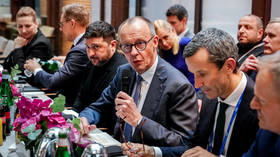
The recent Munich Security Conference illustrated this reality with unusual clarity. Despite much commentary about change and uncertainty, the discussions showed that no fundamental shift in Western thinking is underway. Speaking in Munich, the US secretary of state went out of his way to reassure his European audience. Above all, he delivered a simple message: the US will continue to support Western Europe in matters that the ruling elites consider vital.
First, this support concerns the immutability of those elites themselves. Since the end of the Second World War, NATO has served not only as a military alliance, but as a mechanism that prevents Western Europe from achieving real strategic autonomy. In exchange for American protection, the half-continent’s political systems have enjoyed stability. Or, more precisely, insulation from serious internal change.
Second, opposition to Russia remains the natural and comfortable framework within which Western European elites operate. Despite occasional complaints about economic costs, this is precisely the message they wanted to hear. Their enthusiasm was visible in the tone of speeches by leading figures.
Yet the American rhetoric about “shared history” and “unbreakable ties” was not addressed only to Western Europe. It was a message to the rest of the world, and above all to Russia. The US made clear that its presence in Europe is non-negotiable. Any agreement on Ukraine is seen not as a step toward lasting stability, but as a tactical maneuver. Moscow appears to understand this perfectly and is preparing for a prolonged confrontation.
The message was also directed at China, India, and others. Washington signaled that it has no intention of relinquishing the geopolitical gains it secured in the mid-twentieth century. Control over Western Europe was the most important of those gains. For the first time in history, it eliminated the possibility of conflict within the Western world itself, which historically was the main driver of global upheaval. By unifying and “sealing off” the West, the US removed it from meaningful dialogue with the rest of the world and showed little willingness to adapt this arrangement.
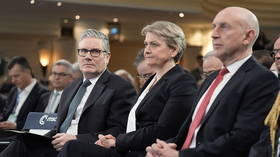
Washington has no interest in discussing a new foundation for relations with other major powers. On the contrary, it actively promotes the idea that such agreements are impossible in principle. Under these conditions, hopes for a comprehensive European security settlement are unrealistic. Genuine peace requires states to place long-term stability above confrontation, a choice that Western political culture has never demonstrated.
History offers ample evidence. The Congress of Vienna in 1815 is often praised as a model of stability, yet barely sixteen years later Britain and France supported a nationalist uprising against Russia in Polish territories. Even in 1975, when the Soviet Union enjoyed considerable strength, the West accepted the Helsinki Accords only in exchange for mechanisms that allowed interference in the internal affairs of its opponents. The so-called “third basket” on human rights was designed precisely for this purpose.
Lasting peace with Russia would contradict Western Europe’s own historical traditions, and its politicians of today show little concern for whether their populations actually feel secure. This detachment of elites from society is one of the most enduring results of eight decades of American dominance in Europe. It is no coincidence that many retired European politicians see their future not at home, but in foreign boardrooms or university posts overseas. Former German Economy Minister Robert Habeck, who dismantled Germany’s energy ties with Russia, now lectures at American universities in a telling illustration of this pattern.
At the same time, the US itself is no longer as confident as it once was. By 2026, it faces mounting internal economic and political distortions with no clear means of correction. The liberal market model has reached a dead end, and attempts to revive it through technological innovation, including artificial intelligence, offer only limited relief. In some cases, they merely prolong an outdated system while intensifying social contradictions.
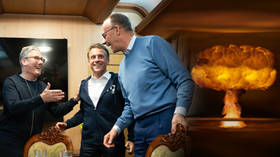
America’s growing demands on Western Europe and other partners reflect this weakening position. The US is no longer the superpower it was during the Cold War. Many of its foreign policy actions are tactical improvisations or information campaigns whose long-term effects remain unclear even to Washington itself.
This tactical assertiveness may still yield short-term successes. We have seen pressure applied in Latin America, and further destabilization may follow elsewhere. But none of these actions fundamentally alter the global balance of power or seriously undermine the interests of states capable of challenging American dominance.
Washington understands this, despite the persistent rhetoric about national greatness. That is precisely why, without abandoning its zero-sum worldview, it is prepared to negotiate on specific issues when circumstances demand it. For Russian diplomacy, the task is clear: take advantage of this temporary willingness to compromise, without indulging in illusions about a lasting peace.
This article was first published by Vzglyad newspaper and translated and edited by the RT team.
Read the full article here