


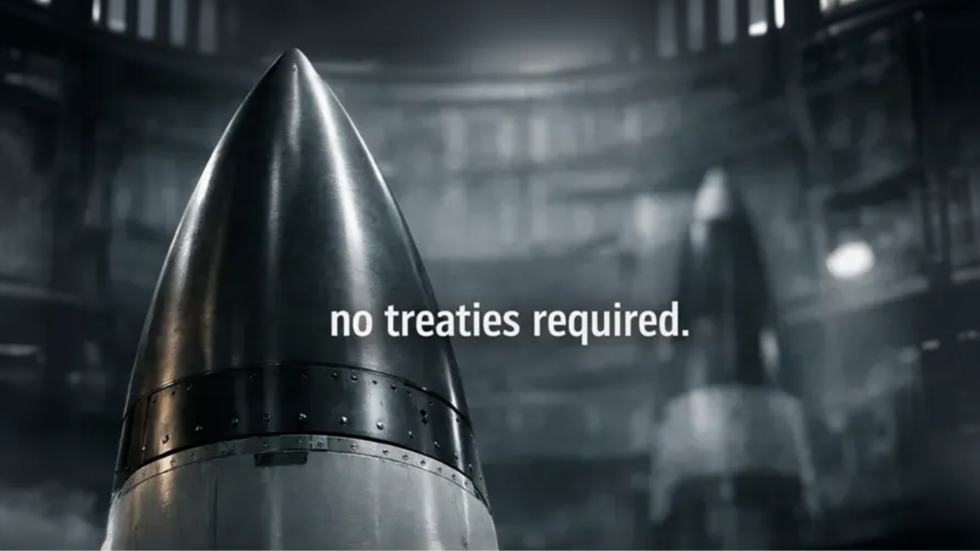
Thursday, February 5, 2026. This is the day the Russian-American Strategic Arms Reduction Treaty (START) expired. While this symbolically closes a 50-year chapter of nuclear arms control, in practice the era of meaningful Russian-American negotiations in this sphere ended long ago.
The reasons are both objective and political. Global geopolitics has undergone tectonic change. Nuclear multipolarity is now a fact. Advanced conventional weapons can achieve strategic effects once associated only with nuclear arms. New domains of confrontation have opened in cyberspace, outer space, and even biotechnology. Old numerical limits on warheads and delivery systems have become detached from military reality.
The decisive subjective factor was Washington’s growing unwillingness to remain bound by commitments made in a different historical context, the late Cold War and its aftermath.
Arms control is often equated with strategic stability. That is only partly true. Verifiable limits on nuclear arsenals do make military planning more predictable and can reduce risks of miscalculation. But treaties do not guarantee peace.
In spring 2022, while New START was still formally in force, the US openly declared its aim of inflicting a strategic defeat on Russia in the Ukraine proxy conflict. At the same time, Washington proposed consultations on “strategic stability.” In effect, the US sought to weaken a nuclear superpower in a conventional war while preserving arms control mechanisms that shielded itself from the consequences of escalation. That contradiction revealed the hollowness of the old framework.
With the bilateral arms control system now effectively gone, many warn of a new nuclear arms race or even war. The Doomsday Clock moves ever closer to midnight. Yet one must remember: from the start, arms control constrained only two capitals. Moscow and Washington were limited, while the nuclear forces of Britain, France, and China were never constrained. Nor were those of Israel, India, Pakistan, or North Korea.
Meanwhile, the US-China rivalry is intensifying. India and Pakistan have again tested the limits of confrontation. Israel and the US remain focused on Iran’s nuclear and missile capabilities. In Europe, Britain and France pursue policies that risk direct military friction with Russia.
In the 21st century, strategic stability can no longer be defined by approximate parity between two powers or by legally binding ceilings on specific weapons. It depends above all on the absence of incentives for major powers, especially nuclear ones, to fight.
READ MORE:
Post-START world looms as Dmitry Medvedev predicts new nuclear powers
The old Russian-American model cannot simply be scaled up to a world of nine nuclear states. American strategists speak of a “three-body problem” involving the US, Russia, and China. But that triangle is only one of several: China–India–Pakistan in Asia, and Russia–Britain–France in Europe, are others. This strategic puzzle has no comprehensive solution.
That does not mean stability is impossible. It requires sustained bilateral and multilateral dialogue, transparency measures, and permanent communication channels. Mechanisms to prevent unintended clashes are essential. Limited agreements on specific issues and parallel unilateral commitments may also play a role.
Yet the core remains unchanged from half a century ago. Strategic stability ultimately rests on credible nuclear deterrence: a sufficient arsenal and the demonstrated readiness to use it if necessary. Intimidation, however uncomfortable the word may be, remains the foundation of peace among nuclear powers.
This article was first published by Kommersant, and was translated and edited by the RT team.
You can share this story on social media:


Read the full article here