


By Vitaly Ryumshin, journalist and political analyst
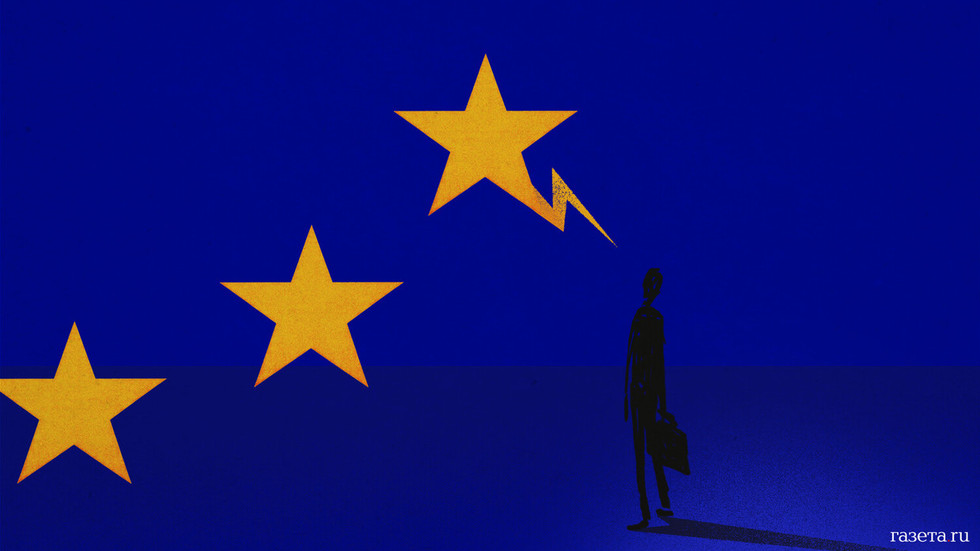
Relations between Russia and the European Union are now at their lowest point since the collapse of the Soviet Union. The economic and cultural ties that once connected us were largely severed in 2022.
Today, our neighbors are effectively finishing the job. They are doing so in two ways: by introducing ever more trade restrictions, and by sustaining a climate of military hysteria that justifies higher defense spending and the gradual dismantling of Western Europe’s welfare model.
Yet even in this bleak landscape, a faint glimmer of hope has appeared. The recent confrontation with the United States over Greenland has forced EU leaders to rethink their place in the global order. For years, the bloc’s members treated the US as a reliable strategic rear. That allowed them to align almost automatically with Washington. But this year, Western European capitals were reminded that America is a power with its own interests, which may sharply diverge from theirs. Unconditional loyalty has suddenly begun to look like a strategic risk.
From this realization flow conclusions that, until recently, would have been politically unthinkable in Western Europe. Dependence on American gas, it turns out, is no better than dependence on Russian gas. Except that imported LNG from across the Atlantic is far more expensive. More broadly, the United States, given its capabilities and assertiveness, can itself become a source of pressure and even a military risk. These thoughts are still spoken quietly, but they are no longer taboo.
Against this backdrop, the first cautious voices in favor of renewing dialogue with Russia have emerged inside the EU. What is notable is that they are not coming from marginal far-right forces, but from mainstream figures such as German Chancellor Friedrich Merz, French President Emmanuel Macron and Finnish President Alexander Stubb. Their statements remain hedged: we need to talk, they say, but the time is not yet right. Still, the very fact that the possibility of future relations with Moscow has returned to the political discourse marks a qualitative shift in the thinking of Western Europe’s elites.
If the EU is serious about standing on its own feet, it will eventually have to resolve the Russian question. For now, however, Brussels remains trapped in an outdated worldview. Its foreign policy is still overly ideological, rooted in the early 2010s. Its leaders continue to speak about a “rules-based world order” and to treat states whose political systems differ from their own liberal democratic model as inherent threats. This mindset also explains the EU’s confrontational approach to China, which from the outside often looks strategically self-defeating.
A genuine and pragmatic dialogue with Russia would require Western Europe to move beyond these assumptions. It would also mean abandoning the posture of moral superiority that flows from them. This is not a simple shift: it involves rethinking how the bloc understands power and sovereignty.
A second necessary step would be a sober recognition that the EU’s interests end where Russia’s begin. Just as Moscow once accepted the Baltic state’s accession to NATO as a geopolitical reality, Brussels must accept that Ukraine, in one form or another, will remain in Russia’s strategic focus. Western European policy should be built around this fact, not around ideological narratives about an existential struggle between democracies and autocracies.
Finally, before relations with Moscow can truly improve, the EU would need to distance itself more decisively from Washington. Despite current tensions with the Trump administration, many leaders still hope that the storm will pass and that transatlantic relations will return to their old pattern. But this is likely an illusion. Only once this illusion fades will Western Europe be able to define its own long-term interests clearly, and to see how important cooperation with Russia could be in that context.
None of this will happen quickly. Meaningful change will probably begin only with a partial generational shift in the EU’s political class. Leaders who built their careers on confrontation with Russia will gradually give way to more pragmatic figures. The first signs may appear within a year, with elections in France and Italy. A more decisive turning point could come with the electoral cycle in Germany and Britain in 2029, unless early votes intervene. A European parliament vote is also scheduled for that year.
If, by the end of that cycle, figures like Kaja Kallas are replaced in European diplomacy by politicians closer to the pragmatic line of Giorgia Meloni, it will signal that Western Europe is finally adjusting to a more realistic understanding of the world. That, in turn, could open the door to a gradual de-escalation with Russia. Until then, confrontation will likely remain the dominant framework. Not because it is inevitable, but because the EU has not yet completed its own political and strategic rethink.
This article was first published by the online newspaper Gazeta.ru and was translated and edited by the RT team
You can share this story on social media:


Read the full article here