


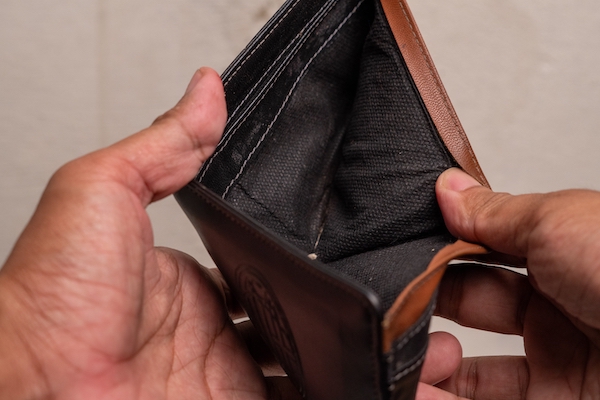
International Man: A recent BHG Financial survey found that 62% of Americans earning over $300,000 a year still struggle with credit card debt.
What’s your take on this?
Doug Casey: BHG is basically a Shylock for the upper middle class. They loan mainly to doctors and successful small businessmen, typically at around 12%. They’re in a position to know when their demographic is in trouble. But why are they in trouble? I suspect it’s because middle-class borrowers have assumed lower-class time preferences. In other words, instead of saving for something you want— a house, a car, or whatever—people want it now and are willing to mortgage their futures to get it.
The average person’s psychological mindset is “I want it all, and I want it now!” I guess you can get it now—but only by borrowing. If you think like a consumer rather than a producer, you likely won’t have savings. And if you live even more imprudently, not only won’t you have savings, but you’ll have lots of debt. We famously live in a “Consumer Society”—a ridiculous and degrading concept. Once upon a time, America identified as a country of producers, not consumers.
It’s hard for a middle-class person to get by when a new car, one that you feel suits your station in life, costs $50,000 or even $100,000. And it’s financed over seven years. Or leased, so there’s zero chance you’ll ever own it. So I don’t doubt that what BHG says is true: almost everybody is in debt, and few have any savings.
It makes for a very unstable financial, economic, political, and social situation.
International Man: Is the erosion of the upper-middle class deliberate or an unintended consequence of inflation?
Doug Casey: Socialists—in fact, all stripes of statists, elitists, and authoritarians—despise the middle class. That’s because the bourgeois tend to be independent and entrepreneurial. Lenin famously wanted to grind them between the millstones of taxation and inflation. It’s a question of eroding values. It is not just a deteriorating economic situation we’re dealing with; the culture and public psyche are on a slippery slope as well.
In other words, it seems that society has adopted a hand-to-mouth approach to living. That’s the antithesis of the American Dream. The BFG people found that the average person has little or no savings. An article by an investor named Michael W. Green has gone viral because he calculates that a family of four needs about $130,000 per year in earnings to stay out of poverty. That’s pretty shocking, in that the official poverty line is $31,200, and the median income is $80,000.
The argument is that if the Joe Sixpack family earns $130,000, both parents need to work, which necessitates childcare (about $32,000), which is their largest single expense. Then comes housing ($23,000—seems low), food ($15,000), transport ($15,000), healthcare ($12,000—very low, in that average medical insurance alone is twice that), and other essentials ($21,000). Taxes are about $18,500. There’s no room for either bad luck or saving for the future. This large subset of the population doesn’t get any welfare benefits from the government—food stamps, Medicaid, or a myriad of other freebies.
The above calculation doesn’t include debt service, which almost everybody in what passes for the middle class has lots of. The numbers just don’t work.
Trump’s promised fraudulent so-called “dividend” of $2,000 from import duties is trivial by comparison if it’s even paid, which I doubt.
International Man: If even relatively high earners are now pushed into survival mode—a sign the system has drained almost everyone—does this point to an approaching collapse or a fundamental change of the political and economic system?
Doug Casey: I’ve been saying, for about 10 years, that we’re headed not only for the Greater Depression, but something like a civil war.
One thing that’s for sure is that people close to Washington, D.C., and New York, who are wired to the current political and financial systems, are making much, much more than the median. And they benefit from the newly created money early on before it loses value as it “trickles down.” Again, this has created an unstable system. So yeah, we’re headed for a serious political, economic, and social upset. That’s been predictable for decades. But it would seem we’re now at the edge of the precipice.
What makes it worse is that stocks, bonds, and housing are at close to all-time highs. There’s reason to expect a lot more stress is about to be added to the system as they revert to the mean, or go further, to the opposite extreme. That’s not a prediction, so much as an inevitability.
International Man: If income no longer maps onto wealth, mobility, or destiny, what does that do to the cultural mythology of the American Dream?
Doug Casey: Sweeping away a country’s founding principles—it doesn’t matter if they’re essentially myths—is very dangerous. But it’s happening.
The next generation is being born into serfdom because of the national debt—about $38 trillion officially, but over $100 trillion in reality, if you count the many contingent and deferred liabilities. US citizens, especially the young and unborn, will have to pay it, one way or the other.
Why? Because the prime directive of all living things, from amoebas to governments, is: “Survive!” And if the US government’s going to survive, it must service its debt, which means its subjects must pay for it. Kids born today are being born behind the eight-ball. Meanwhile, Trump comes up with ridiculous palliative solutions, such as the 50-year mortgage. It’s odd to take a 50-year mortgage on your house. Most houses built today won’t last 50 years. Nor will the average buyer, who’s about 40. That’s apart from the fact that houses aren’t investments—things that produce more wealth. They’re just long-lived consumer goods.
Most kids go to school, financed by $1.9 trillion of loans. They need a car, which accounts for the $1.7 trillion of auto debt. Add on about $1.3 trillion of credit card debt, which is financed at around 20%. It seems that everybody is living on debt today. The American Dream didn’t used to be about being buried in debt. As George Carlin liked to say, you have to be asleep to believe in the American Dream.
International Man: What practical steps should individuals take to avoid going down with the ship?
Doug Casey: Debt does not have to be a bad thing. The other side of debt is savings. They’re loaned, paying savers interest. But, historically, and in a sound baking system, savings were loaned for production, not consumption. In other words, debt was incurred to build factories and farms. The factory’s and field’s production made the debt self-liquidating. But consumer debt is never self-liquidating, and the average American doesn’t borrow for production purposes. He borrows to increase his current standard of living. It’s a dead-end road for the borrower, as well as the banks. But the banks are another story…
In a sound economy, you produce more than you consume, and you save the difference. But when the currency is inflated, how can you save? You’re saving something that’s losing value almost as fast as you can save it. This is a real problem for Americans.
Inflation is forcing the average American to speculate in stocks, real estate, or cryptos, in the hope of staying ahead of currency debasement. But the average person is not qualified to do that.
It can only end badly.
Editor’s Note Even high earners are slipping into debt, the middle class is being hollowed out, and inflation is eroding the value of every saved dollar. The financial system is stretched to a breaking point, and the traditional markers of security—income, home ownership, retirement savings—no longer guarantee stability.
If this trajectory continues, the next major shock could bring consequences far beyond rising prices or market losses.
If you want to survive and thrive what comes next, then you need to read our free report: Guide to Surviving and Thriving During an Economic Collapse. It lays out the essential steps you can take now—while you still have the freedom to act—to protect your wealth and preserve your options in an increasingly unstable environment.
Click here to see it now.
Read the full article here