


The Tarifflation Narrative Was Destroyed by a San Francisco Fed Paper
For as long as anyone can remember, economists and journalists have issued a consistent warning about tariffs: they will push prices up. It’s been the cornerstone of the case against President Donald Trump’s trade policy. Raise tariffs, and consumers will pay more at the checkout counter. It’s simple economics, they tell us.
A new paper from the Federal Reserve Bank of San Francisco suggests the economic establishment got this one backwards.
Economists Régis Barnichon and Aayush Singh examined major tariff changes across the United States, the United Kingdom, and France over 150 years. Their finding: when tariffs rise, inflation actually falls. Higher unemployment also follows, but the consumer price spiral that economists predicted? The data doesn’t support it.
This doesn’t mean tariffs are costless. It means the case against them will have to rest on grounds other than “they make things more expensive.”
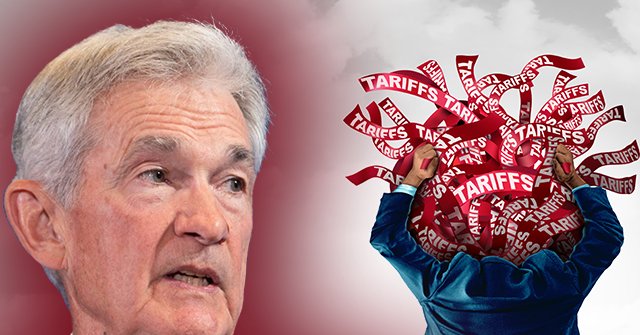
(Photo: iStock/Getty Images; Federal Reserve via Flickr; BNN)
Tariffs Actually Push Down Inflation
To understand what the paper does establish, it helps to start with the pattern itself.
Barnichon and Singh assembled annual data on tariffs and inflation going back to 1870. They tracked what happened to prices and employment in the years following major tariff increases. The results were consistent across time periods and countries. In the pre-World War II data, a permanent four-percentage-point tariff increase is followed by roughly a two-percentage-point decline in inflation and a one-percentage-point rise in unemployment. Post-war estimates move in similar directions but are less precise, in part because this was a period in which tariffs were typically falling rather than rising.
The pattern persisted whether you looked at the era of rapid globalization before 1913, the chaos of the 1930s, or the modern period. It held for France and Britain as well as the United States. The authors used two different statistical methods and got the same answer both times.
So, the empirical fact is straightforward: over 150 years, tariff increases have correlated with lower inflation and higher unemployment. That’s what the econometrics show.
Why Do Tariffs Push Inflation Lower?
Here’s where things get more complicated—and where much of the recent commentary on this paper has gone astray.
The authors observe that this pattern resembles what happens in a standard economic model when aggregate demand falls. Lower spending by consumers and firms would produce exactly this combination: more joblessness and falling prices. So, Barnichon and Singh suggest that tariffs might work through demand channels, perhaps by creating uncertainty that dampens business investment and consumer confidence.
It’s a plausible hypothesis. But it’s important to understand what it is: a hypothesis, not a finding.
The paper doesn’t prove that households cut spending because they feel poorer. It doesn’t isolate the demand channel from other possible mechanisms. The authors themselves acknowledge this, writing that understanding the theoretical mechanism behind their findings is “an important avenue for future research.”
In other words, they’ve documented a durable pattern. They haven’t explained it.
Tariffs Don’t Cause Recessions
This distinction matters because recent commentary has taken the paper’s findings further than the evidence supports.
Some critics have claimed the study shows that tariffs “shrink the economy” or cause recessions. But the paper doesn’t demonstrate that. Not even close. The rise in unemployment they find is real and worthy of attention, but it’s not a recession. The authors don’t claim their findings show that tariffs trigger economic contractions.
Others have suggested the paper proves that demand destruction is the explanation for lower inflation. Again, that’s interpretation. The paper shows a pattern consistent with demand destruction, but it doesn’t prove demand destruction is what’s happening. Credit tightening, shifts in bargaining power between labor and capital, changes in the mix of jobs across sectors—any of these could produce the same correlation.
The paper is also silent on long-term effects. It tells you what happens in the near term after a tariff shock. It doesn’t tell you whether the economy ends up richer or poorer years later. Those who say tariffs weaken the economy cannot point to this paper as supporting the view. It says nothing about productivity, wages, manufacturing output, or the overall health of the economy. Those are separate questions entirely.
What Actually Gets Disproven
What the paper does decisively undermine is the claim that tariffs are inflationary. This has been the intellectual foundation of the anti-tariff consensus for decades. Raise tariffs, and prices rise—a simple cost-push mechanism that sounds plausible in economic theory.
The 150-year record suggests otherwise. And the paper comes from inside the Federal Reserve, not from pro-Trump trade economists with a political axe to grind.
This is genuinely significant. It means policymakers can no longer rely on the “tariffs raise prices” argument to dismiss trade protection out of hand. That argument has lost its empirical footing.
This does not prove that tariffs are always and everywhere the right policy. It just means the case against tariffs has to happen on different terrain. Questions about whether tariffs encourage productive investment, help the U.S. to obtain more favorable terms of trade, boost efforts to rebuild manufacturing capacity, or serve legitimate national purposes can now be debated without the presumption that the main effect will be higher consumer costs.
The historical evidence shows tariffs do not cause inflation. That’s a major win for the defenders of Trump’s trade policies.
Read the full article here