


Liberals/democrats on social media are encouraging US servicemembers to refuse activation orders within the United States, particularly those involving the protection of ICE agents or policing in crime-ridden cities. Many claim such orders are unconstitutional and argue that troops should disobey them, citing the Uniform Code of Military Justice (UCMJ), which requires service members to reject unlawful orders.
However, while this prohibition exists, the UCMJ does not grant individual soldiers the authority to interpret the Constitution or define the limits of presidential power. Determining constitutionality is a complex matter of law that rests with the judiciary, not the military or individual soldiers, and this issue will most likely be determined by the Supreme Court.
Under U.S. military law, service members are legally obligated to refuse unlawful orders that violate Article 92 of the UCMJ (Failure to Obey Order or Regulation), the Law of Armed Conflict, or clearly established constitutional rights (for example, an order to commit a war crime). But they are not empowered to independently decide whether a government policy or executive directive is constitutional. That responsibility rests with the courts, not the chain of command or individual service members.
The three main disputes center on how broadly the President can deploy the military inside the United States, whether troops should be used in American cities for law-enforcement missions such as protecting ICE agents, and growing concerns over the politicization of the armed forces and erosion of civil-military neutrality.
The debate over the limits of presidential power hinge on two key statutes: the Insurrection Act of 1807 and the Posse Comitatus Act, which restrict the use of federal troops on U.S. soil. Critics argue these laws are outdated and give presidents excessive discretion to deploy the military for domestic law-enforcement or civil-disturbance missions.
However, regardless of age or controversy, both laws remain in force, and when a president invokes them, he is acting within the bounds of federal law and the Constitution. So, there is no violation.
The second controversy centers on the use of troops in U.S. cities and civil-law enforcement roles. The debate focuses on whether deploying active-duty military and National Guard units for law-enforcement or public-order missions undermines civil-military norms and blurs the line between civilian policing and military force. Critics warn these actions raise constitutional concerns, while supporters note that the president’s deployments have been conducted under a variety of legally valid statutes.
Under Title 10 (10 U.S.C. §12406), the president can federalize the National Guard or deploy active-duty forces, though the Posse Comitatus Act prohibits them from performing direct law-enforcement duties unless the Insurrection Act is invoked. Under Title 32 (§502(f)), Guard units remain under state control but may perform federally funded missions such as logistical support or crowd control, not arrests.
In Washington, D.C. (August–September 2025), the president federalized the D.C. Guard under Title 10, asserting federal control over local policing In Washington, D.C., the President is by law the Commander-in-Chief of the D.C. National Guard and can deploy it at discretion under D.C. Code § 49-409 and related authorities.
He may also call Guard units into federal service under 10 U.S.C. § 12406. Separately, during a declared emergency, the President can direct MPD resources for federal purposes under § 740(a) of the D.C. Home Rule Act, the provision the White House relied on in August 2025. These authorities are currently being challenged in court and in Congress, but they are the operative statutes.
In Los Angeles (June 2025), the President invoked Title 10 U.S.C. § 12406 to federalize the California National Guard and deploy approximately 4,000 Guardsmen along with 700 U.S. Marines amid widespread protests. The Marines were assigned to protect federal property, while the Guard conducted security and support operations under federal authority.
Governor Gavin Newsom challenged the action in Newsom v. Trump (N.D. Cal., Case No. 25-cv-04870), alleging the deployment exceeded presidential authority and violated the Posse Comitatus Act (18 U.S.C. § 1385) and the Tenth Amendment. A district court initially issued a temporary restraining order on June 12 returning control of the Guard to the state, but the Ninth Circuit later stayed the order, allowing the federalization to remain in effect while litigation continued.
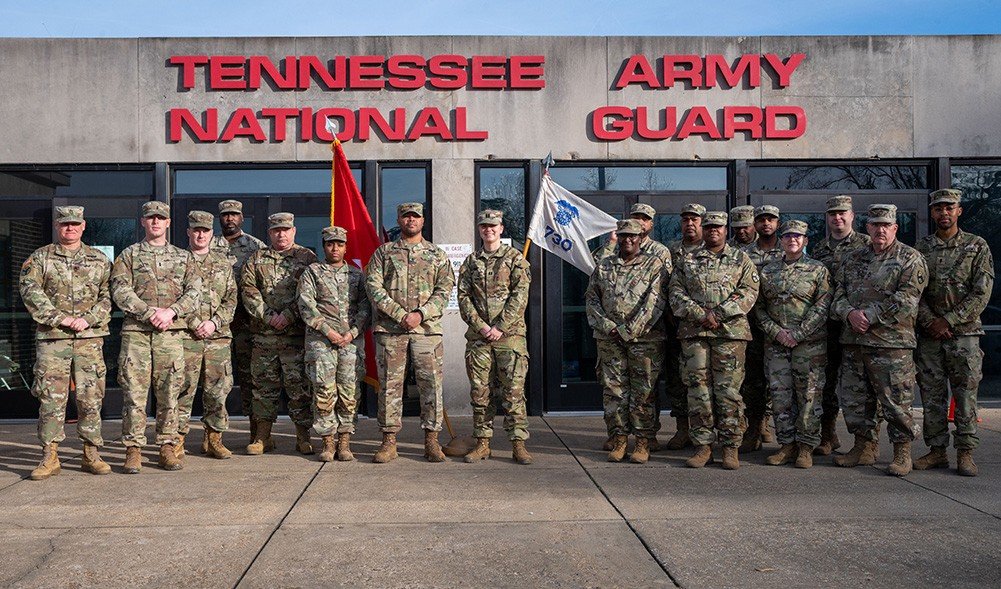
In October 2025, the Tennessee National Guard was deployed in Memphis under state control at the request of the president. The deployment followed a September 15 presidential memorandum establishing a “Memphis Safe Task Force” and requesting support from both federal agencies and the Tennessee National Guard. Governor Bill Lee activated the Guard under Title 32 status, allowing it to assist federal operations while remaining under state command.
A lawsuit challenged the deployment, claiming it violated state law because local consent, legislative approval, and statutory conditions such as insurrection or disaster were not met. The court, however, denied a temporary restraining order, allowing the operation to proceed.
Separately, Title 10 federal troops were deployed to support DHS and CBP along the southern border for transport, engineering, and surveillance missions under existing defense authorities. Under both state and federal law, the Governor of Tennessee serves as Commander-in-Chief of the state’s National Guard unless it is federalized.
The bottom line is that whether troops can be used to guard ICE facilities or assist in urban police operations depends on the legal authority invoked, Title 10 or Title 32, and whether the Insurrection Act is in effect. Ongoing court battles in California and Tennessee show that such deployments are determined on a case-by-case basis and remain legally contested. These situations are extremely complex and not something the average soldier is equipped to determine as a lawful or unlawful order.
Read the full article here