


Creatively Destroying Dependency on China
Welcome to another Friday. This is our weekly wrap of the economics news. Since the last time it was Friday, China has reminded the world that it is an untrustworthy supplier, creative destruction won a Nobel, and the Dallas Fed described businesses hiring too many Americans as “weakness.”
Let’s get disruptive.
Maximum Employment of the People, by the People, for the People
The Dallas Fed this week blamed labor-market “weakness” for slowing Texas job growth. But that label quietly flips the employment half of the dual mandate—the Fed’s duty to pursue maximum employment—on its head.
The report admits the slowdown isn’t from weak demand but from a supply-side tightening driven by the Trump administration’s immigration enforcement policies. Fewer foreign workers are available because of reduced arrivals, revoked work permits, deportations, and voluntary exits from the labor force. In other words, the economy is getting closer to maximum employment, not further away.
As the Dallas Fed itself concedes, employers are boosting hours, raising pay and benefits, and hiring more U.S.-born and legally authorized workers to fill the gap. That’s a stronger labor market, not a weaker one.
The Dallas Fed goes on to warn that when policymakers limit immigration, “they may also be setting the speed limit for the economy.” History suggests this is an unwarranted fear. One of the strongest periods of economic growth in the modern American economy happened in the two decades following the Second World War, when GDP rose by more than four percent per year on average. Yet immigration was extremely low during that period and in the two decades prior. The foreign-born share of the U.S. population got as low as 5.4 percent in 1959 and the U.S economy grew 6.9 percent.
Why Rare Earths Might Need a Price Floor
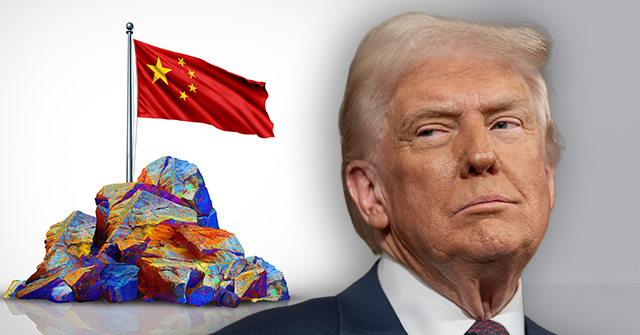
China’s recently announced export restrictions on rare earth highlighted, once again, the risks of dependency on China for these critical minerals. China is responsible for processing around 90 percent of rare earths despite the fact that rare earths can be found all around the world.
The key to Chinese dominance is that the state is willing to provide extraordinary support to its rare earth industry. This means that if a would-be competitor emerges, Chinese producers can sell rare earths at a loss for as long as necessary to bankrupt the rival. Chinese rare earths prices can stay irrationally predatory longer than any private sector business can stay solvent.
This doesn’t mean, however, that the rest of the world benefits from low prices. The credible threat of predatory dumping means that investors are unwilling to put money at risk with a competitor, which enables China to charge higher monopolist prices than they could in a genuinely competitive market. So, the rest of the world remains dependent on China without the benefit of lower prices.
This week the Trump administration floated the idea of a “price floor” for U.S. rare earths, where the government would step in to buy rare earths if the market price fell too far. The hope is that this would assuage fears of Chinese dumping, allowing U.S. production to attract investment. And the rare earths purchased by the U.S. government could provide the foundation for a strategic reserve of the minerals that could be used in a shortage.
Creative Destruction Trump-Style
This year’s Nobel prize in economics went, partially, to a pair of economists who created formal mathematical models demonstrating Joseph Schumpeter’s idea that economies progress through creative destruction. A core teaching of Schumpeter is that we should not necessarily fear the disruption in the economy because very often this is the path to increased prosperity.
We think this applies to Trump’s tariffs in ways that many economists have overlooked. They are disrupting global trade patterns—but doing so in a creatively destructive fashion. New trade patterns are emerging. New investment is being summoned forth to reshore manufacturing in the U.S. and improve productivity. Unlike the model that many economists use when thinking about tariffs (which hold that they’re mainly about protecting inefficient incumbent monopolies), Trump’s tariffs are Schumpeterian.
Read the full article here