


Japan’s Ministry of Health, Labor, and Welfare reported on Sunday that a record 22,878 babies were born to foreign parents in 2024, accounting for over three percent of all newborns.
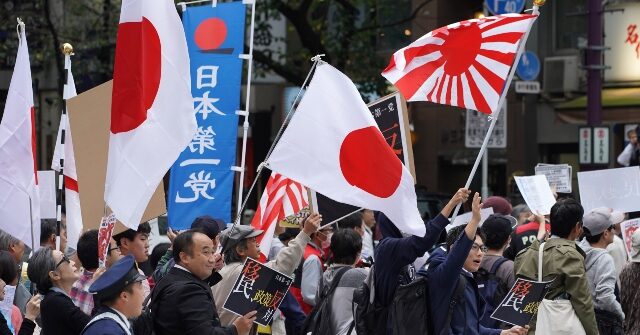
The ministry’s data showed a surge in foreign births that might be considered modest in many other countries, but will likely prompt controversy in Japan, where many citizens are nervous about the prospect of using mass migration to cover for the nation’s sharp demographic decline.
According to the Ministry of Health, foreign births have increased by 50 percent over the past decade, while births to Japanese parents are in steep decline. Ethnic Japanese parents gave birth to 686,173 children in 2024, a decline of 41,115 from the previous year.
Foreigners with long-term or permanent residency also reached an all-time high of 3.77 million last year, making them about three percent of the total national population. More than half of these foreign residents are under 40 years of age, putting them in the prime years to have children.
Demographic data on foreign residents has a rather large “other” category in Japan, but among those with precisely identified countries of origin, the largest sources of immigrants were China, the Philippines, and Brazil.
Japan’s increasing unease with migration as the answer to population decline reached a flashpoint in August, when a Japanese government agency paired up four Japanese and four African cities in a cultural exchange program called “African Hometown.”
The government of Nigeria announced the program would include “a special visa category for highly skilled, innovative, and talented young Nigerians who want to move to Kisarazu,” the Japanese city mated with a sister city in Nigeria. The Japanese public erupted in fury at this announcement, and residents of the other three cities in the program demanded to know if they, too, had been secretly chosen to receive immigrants from Africa.
The government of Prime Minister Ishiba Shigeru scrambled to reassure the public that Nigerian officials had spoken in error, while globalist media insulted the Japanese public as “xenophobic” for resisting Third World mass migration. The controversy was enough to push Ishiba over the edge into resignation, a step he had previously resisted.
The winner of the election in early October to succeed Ishiba as leader of the ruling LDP party, and presumably become the next prime minister, was a conservative named Takaichi Sanae who campaigned against migration and criticized bad behavior by foreign visitors. Her path to becoming Japan’s first female prime minister was unexpectedly complicated by the departure of LDP’s partner in the ruling coalition, Komeito, a Buddhist religious party that disagrees with Takaichi about restricting immigration.
The fastest-growing party in Japan, Sanseito, is even more hostile to immigration than Takaichi’s wing of the LDP. Senseito’s meteoric growth was driven by public anxiety that the government wanted to address population decline with more immigration. The party does exceptionally well in Japanese precincts that have grown uneasy with large immigrant enclaves. Its platform calls for more tax cuts and child care benefits to boost native Japanese population growth.
Those measures have not proven terribly effective in other Asian countries concerned with demographic decline, such as China and South Korea. Japan’s population has been in decline for the past 16 years, and its fertility rate has been low since the 1970s.
If anything, the decline is accelerating. In the latter days of his administration, Isihiba said demographic decline was a “quiet emergency” and promised a raft of programs to make child-rearing more convenient and less expensive. His predecessor Kishida Fumio pledged $25 billion for similar programs in 2023, to no avail.
People over 65 now comprise 30 percent of the Japanese population, one of the highest percentages in the world, and it has almost 100,000 citizens who are over 100 years old. Demographic researchers have described Japan as a “super-aging society,” a mixture of longevity and infertility that could soon bankrupt the nation’s welfare and medical systems.
A recent estimate predicted Japan would be short 11 million workers by 2040. Some demographic experts believe it is only a matter of time before the Japanese are forced to yield on their aversion to immigration and begin importing the massive numbers of young workers they need to keep their economy running, no matter how fiercely they might be resisting that solution today.
Read the full article here