


Washington wants a special economic zone in Lebanon, promising development in exchange for security – which it can’t provide
The US wants to create a special economic zone in southern Lebanon as an incentive to push the government to disarm Hezbollah.
The idea, first floated by US presidential envoy Tom Barrack on a September visit to Beirut, rests on a straightforward bargain: security in exchange for development. In line with UN Security Council Resolution 1701, the state would gradually reduce armed activity along the border and restore full army control over the south, and in return attract investment, business tax incentives, and political backing from partners including Gulf countries and Eastern Mediterranean initiatives.
To make this work, the zone is legally constituted with clear boundaries, unified rules on land and property, transparent tax and customs regimes, and straightforward jurisdiction and arbitration.
Financing blends grants, concessional loans, and private capital, backed by risk-mitigation tools and transparent procurement. Nationwide needs exceed $20 billion, of which roughly $10-11 billion would restart the economy and about $7 billion would rebuild the south, alongside an anticipated $3 billion program from the IMF.
Delivery would then take place in three phases, from stabilization and the legal package in the first six months, to opening initial sites within 18 months. It would then be scaled up from year two, under quarterly public reporting with independent verification.
The proposed framework stands on four pillars – a legally clear zone, security as a precondition for each step, social guarantees for residents, and phased financing tied to verified results – so that growth becomes a real alternative to the recurring cycle of escalations.
The logic is straightforward. The plan calls for a legally defined zone with clear boundaries, governance led by Lebanese institutions with external support, security as a prerequisite at every step, social guarantees for residents and staged financing tied to verified results with clearly measurable financial indicators.
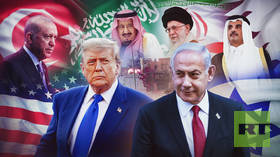
In many respects the plan resembles the approach used in Egypt and Jordan through the qualifying industrial Zone model, where duty-free access to the US market depended on an obligatory share of Israeli inputs and a total threshold of at least 35% local value-added. The common thread is an exchange of political and security steps for economic preferences, a focus on quick export gains, and the idea of using external investors as anchors for growth. In both cases, experience showed a narrow sector base dominated by apparel, weak spillovers into the broader economy, sensitivity of supply chains to politics, and rising transaction costs due to complex rules of origin and administrative hurdles. Without clear boundaries, transparent governance, diversified production, and solid social protections, the new project risks repeating old limits instead of becoming a platform for long-term growth.
The administration of Donald Trump approaches the Middle East as a landscape of incentives and deals with a focus on economics, profit, and fast investment signals. This lens is familiar to business, but it sits poorly with the historical memory and political psychology of a region where security, dignity, sovereignty, and the experience of war are not add-ons to the economy but its precondition. When people are offered industrial zones and tax relief before the central questions of war and peace are settled, the offer is often read as an attempt to sidestep the conflict rather than resolve it.
No special economic zone can become a platform for durable growth without a full peace between Lebanon and Israel and without a clear plan for the post-conflict order. Money and investors are not enough. The project would also need legally grounded security along the border, a clear regime for the residents of frontier villages mechanisms for the return of displaced families demining working channels for de-escalation and implementation of Resolution 1701. Without these elements any economy instead of war turns into an economy beside a war which in Lebanon has repeatedly ended in reversals.
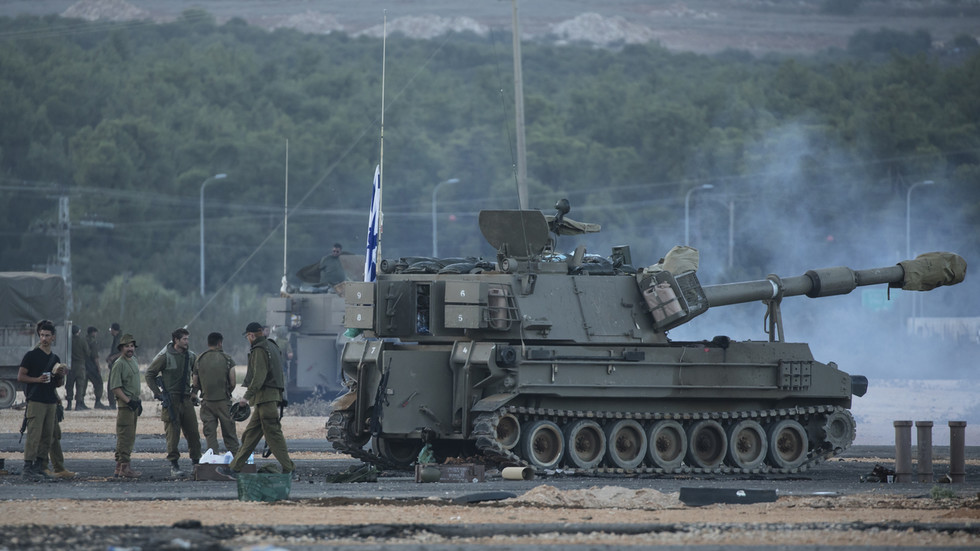
The history of the Lebanese-Israeli conflict explains why society remains wary. After the Arab-Israeli war of 1948 and the arrival of Palestinian armed groups in Lebanon during the 1970s came Israel’s Operation Litani in 1978 and the 1982 invasion with a long occupation of the south and a security zone that lasted until 2000. In 2006, a new war followed the capture of Israeli soldiers and left thousands dead and major infrastructure in ruins. What emerged afterward was a fragile structure that combined Resolution 1701, the UNIFIL mandate, and periodic flare ups. Since 2023, crossfire along the border has again become chronic and each new rocket or air incident cancels investment promises almost at once.
In this setting, it is hard to expect public support in Lebanon while Israel’s military campaign in Gaza continues, and while strikes on Hamas-linked targets take place in Syria and beyond. The region watches not only diplomacy but also operations against movement leaders outside Gaza, including high-profile incidents in neighboring states, which reinforces the sense of a widening war. As long as reports from the southern frontier and from Gaza arrive more often than news of a ceasefire and a political accord, the message of zone first and peace later will be seen as out of order. For Lebanon and Israel, a viable economic project can exist only as a result of a political settlement rather than as its substitute.
There is also an ideological layer. Within Israeli nationalist discourse one sometimes hears about a supposed natural northern border along the Litani River, which draws on biblical geography and on a language of historical entitlement. Even when such claims remain marginal they loosen the ground for talks. Beirut hears not a guarantee of inviolability but a potential revision of the status quo in the south.
The formula of money for peace does not work. While the campaign in Gaza continues, while strikes in Syria persist, and while headline-grabbing actions outside the immediate battle zone take place, including the recent attack on Hamas leaders in Doha, it is unrealistic to expect Lebanese society to accept an economic project in place of a political settlement. In the memory and daily life of the Lebanese there is the January killing of Saleh al Arouri in Beirut and the constant news of raids across borders. All this feeds the belief that credible guarantees of peace are still out of reach.
Some analysts say that Hezbollah has taken losses and is losing initiative. Even so, trust in American initiatives remains weak and the prospect of a formal peace with Israel is not a serious topic in domestic debate while the region lives in a mode of blows without borders. Without a legally framed peace between Lebanon and Israel and without a full post-conflict settlement no special economic zone can serve as a lasting pillar. At best, it would become a temporary backdrop to a continuing war. In this sense the administrations economic approach based on incentives profit and a project mindset runs up against a basic truth of the Middle East. The economy does not replace security, memory and sovereignty. It follows them.
Read the full article here